What’s happening on the stock markets? Which sectors and trends are currently popular on the market? Where is the global economy heading, and how are the latest economic developments affecting share prices? Here, our experts and fund managers provide answers to the most pressing questions for investors 👉
The pharmaceutical sector is counting on tomorrow’s blockbusters: Strong quarterly results, promising drug pipelines and a new wave of takeovers are creating a sense of optimism in the pharmaceutical and biotech sectors. We highlight the trends currently driving the sector.
Rising yields on French government bonds have drawn the capital markets’ attention to France. High budget deficits, growing public debt, political uncertainty, and a lack of reforms are causing nervousness. But how significant are the risks, really – and could the higher yields also present opportunities for investors?
The boom in artificial intelligence, cloud technologies and digital infrastructure has made technology shares some of the biggest winners on the stock markets in recent years. Following the sharp rises in share prices, attention is now increasingly turning to the question of where further potential lies, how to invest, and which risks investors should keep an eye on. These are the questions we aim to answer in this blog.
The ATX continued its strong performance in 2026, reaching new highs. But what lies behind this rise, and how is the Austrian stock market currently valued? Fund manager Bernhard Haas puts the latest developments into context and explains which companies and sectors are currently in the spotlight.
What opportunities and risks are currently emerging for investors? Which regions and sectors could shape stock market performance in the second half of 2026? And how should portfolios be positioned amid geopolitical challenges, high volatility, and growth opportunities? We posed these questions to two asset management equity experts, who painted a fascinating picture of the current situation in global stock markets.
Rising yields on French government bonds have drawn the capital markets’ attention to France. High budget deficits, growing public debt, political uncertainty, and a lack of reforms are causing nervousness. But how significant are the risks, really – and could the higher yields also present opportunities for investors?
The boom in artificial intelligence, cloud technologies and digital infrastructure has made technology shares some of the biggest winners on the stock markets in recent years. Following the sharp rises in share prices, attention is now increasingly turning to the question of where further potential lies, how to invest, and which risks investors should keep an eye on. These are the questions we aim to answer in this blog.
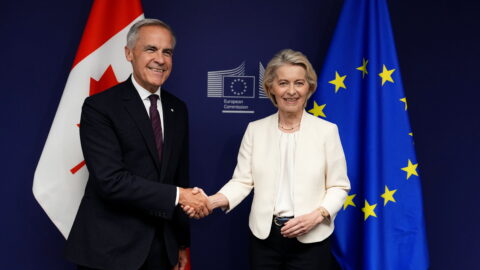
Canada and the EU are aiming for closer cooperation, with a joint goal of becoming less dependent on the major economic blocs of the US and China. What role does US President Trump’s tariff policy play in this? And what decisions might be made at the EU-Canada summit at the end of October?
The ATX continued its strong performance in 2026, reaching new highs. But what lies behind this rise, and how is the Austrian stock market currently valued? Fund manager Bernhard Haas puts the latest developments into context and explains which companies and sectors are currently in the spotlight.
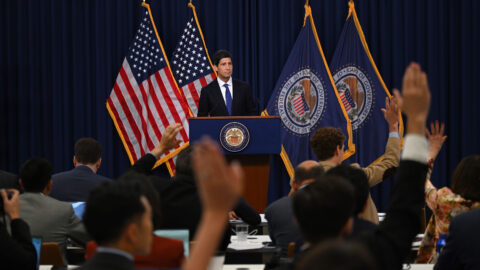
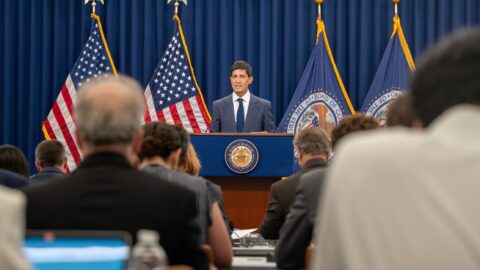
The US Federal Reserve (Fed) has raised its key interest rate by 25 basis points in response to persistently high inflation. But it is not only in the US that the outlook points to higher interest rates. Read our latest post on our Investment Blog to find out why central banks are tightening monetary policy and what “higher for longer” means for the economy and financial markets.
The fixed-income markets are coming under increasing pressure: in the US, yields on long-term government bonds have risen to multi-year highs, whilst US Treasury Secretary Scott Bessent is attempting to take countermeasures in the bond market. You can find out more about the current market assessment in our blog post.
The pharmaceutical sector is counting on tomorrow’s blockbusters: Strong quarterly results, promising drug pipelines and a new wave of takeovers are creating a sense of optimism in the pharmaceutical and biotech sectors. We highlight the trends currently driving the sector.
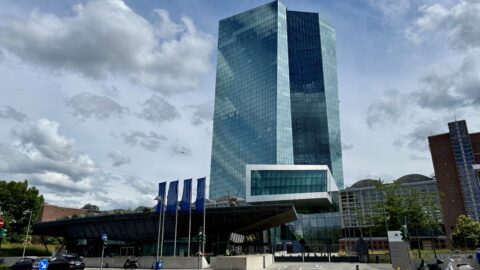
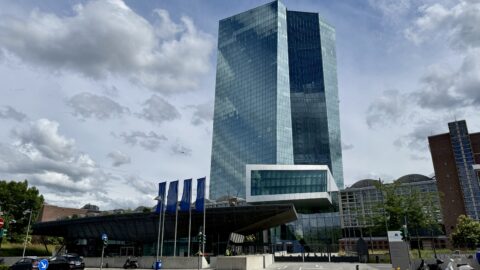
The European Central Bank’s monetary policy has a significant impact on the economy and financial markets. Key interest rates play a central role in this, as central banks use them primarily to steer interest rates at the short end of the yield curve. In this article, we explain the function of key interest rates, which rates are particularly relevant, and how they affect the economy and financial markets.
Hardly any other month is as feared on the capital markets as September. While May at least garners proverbial attention thanks to the saying “Sell in May and go away,” September has earned a particularly bad reputation in the statistics: Depending on the index and the time period under consideration, it ranks among the historically weakest stock market months of the year.
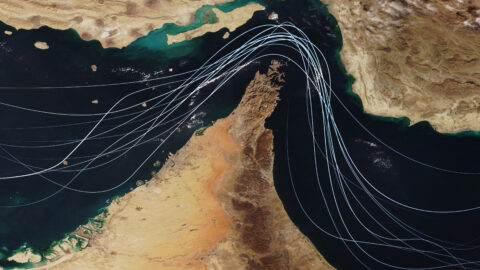
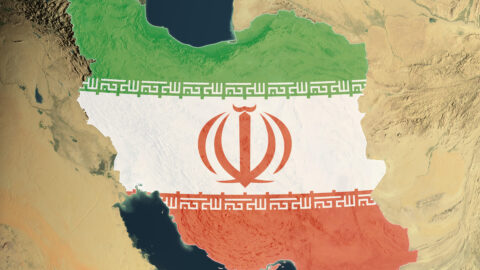
On the oil market, all eyes remain fixed on the war in Iran and the Strait of Hormuz. Iran’s peace talks with the US appear to have reached an impasse, and there is still no sign of an end to the war.
What opportunities and risks are currently emerging for investors? Which regions and sectors could shape stock market performance in the second half of 2026? And how should portfolios be positioned amid geopolitical challenges, high volatility, and growth opportunities? We posed these questions to two asset management equity experts, who painted a fascinating picture of the current situation in global stock markets.
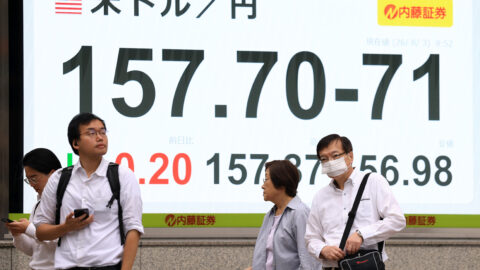
The yen is stabilizing after hitting a 40-year low: A coordinated intervention by Japan and the US has slowed the decline for now. However, interest rate and fiscal policies remain key headwinds for the Japanese currency.
The market environment remains generally positive, but the combination of persistent inflation, geopolitical tensions, and climate-related pressures calls for a nuanced perspective. Recently, attention has also been focused on currency intervention involving the Japanese yen. Read more in the latest market commentary by Chief Economist Gerhard Winzer.
When AI Meets the Real World: “Physical AI” combines artificial intelligence with robots, machines, and vehicles – and opens up new opportunities for industry, productivity, and long-term growth.
South Korea and Taiwan are among the most important hubs of the global semiconductor industry. Rising demand for chips, substantial infrastructure investments, and technological pioneers are creating new momentum—and opening up attractive opportunities for investors.
Geopolitical tensions, monetary policy decisions, and the AI investment boom shaped the first six months of the year. Here’s an overview of the key developments. from Gerald Stadlbauer, Head of Discretionary Portfolio Management.
Geopolitical crises, tariffs, and uncertainty frequently dominated the headlines in the first half of the year – yet the stock markets proved surprisingly resilient. Find out why this isn’t a contradiction and what investors should keep an eye on in the second half of the year in today’s market commentary on the mid-year 2026 stock market review.
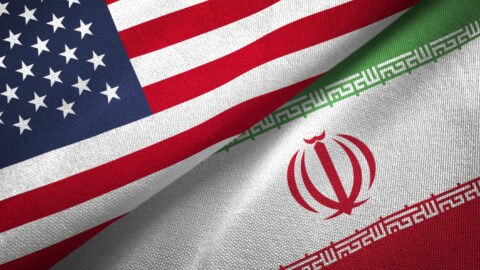
New tensions between the US and Iran are unsettling the markets. Nevertheless, the global growth environment remains robust. Read more in the weekly market commentary by Chief Economist Gerhard Winzer.
The recent heat wave had Austria firmly in its grip, setting new temperature records. Such extreme temperatures have long been a factor in the economy: They hamper productivity and energy supply – but they also draw attention to companies working on solutions in the fields of energy and cooling. Read more about this in today’s blog post.
While global growth remains robust, stock markets have recently taken a breather. Read the latest market commentary by Chief Economist Gerhard Winzer to find out why falling energy prices, the AI boom, and robust economic data point to a continued favorable environment – and what role inflation plays in this.
As World Cup host, the US is in the spotlight. While economic growth and the job market remain robust, inflation and high energy prices are weighing on consumer sentiment. Learn more about the latest economic data for the World Cup host countries in our new blog post.
The US and Iran have agreed to a ceasefire and the reopening of the Strait of Hormuz. The markets are reacting positively, but this does not mean that all risks have been eliminated.
The ECB is raising its key interest rate for the first time in three years. While this move comes as no surprise to the stock markets, what might the central bank’s next steps look like?
With the prospect of the Strait of Hormuz reopening, the environment for high-risk asset classes has become more favorable. This is because economic growth indicators and the AI boom point to a supportive growth environment. However, a successful outcome to the negotiations has yet to materialize, and the fallout from the Iran crisis must also be taken into account.
Reports are flooding in, the roadshow is underway – and on Thursday, 12 June 2026, Elon Musk’s space company SpaceX will be traded on the Nasdaq for the first time under the ticker $SPCX. A good moment to take a step back and take a sober look: What lies behind the valuation? Where are the opportunities – and where are the risks?
Interest rates are rising again in Japan. Find out what’s behind this trend and what role inflation, energy prices and the central bank are playing in it in our latest blog post.
Brazil is caught between industrial strength and political disillusionment: while companies are setting technological standards and the economy is growing solidly, polarization and election fatigue are shaping the mood ahead of the landmark presidential elections in October. A report by fund manager Thomas Oposich.
The latest data suggests that US inflation is likely to remain at a higher level for longer than expected. This has recently put the bond markets under pressure and shows that the first challenges await the new head of the Federal Reserve, Kevin Warsh.
Technology heavyweight Nvidia once again exceeded expectations with its quarterly figures. We spoke to fund manager Bernhard Ruttenstorfer about this and the current market phase in the AI race.
The US Federal Reserve has a new chairman in Kevin Warsh. While his predecessor Jerome Powell can look back on an eventful term in office, the change of chairman raises one question in particular: how will the Fed monetary policy change under Kevin Warsh?
Despite geopolitical tensions and rising inflation, the capital markets are proving resilient. Good US corporate earnings are supporting this trend. In this Discretionary Portfolio Management update, Gerald Stadlbauer explains why a balanced, risk-conscious investment strategy remains important.
Security is being redefined. Rising defense budgets, geopolitical tensions, and new digital threats from cyberattacks are making security a structural investment topic. Read our new blog post to learn what role cybersecurity plays in this and what it means for investors.
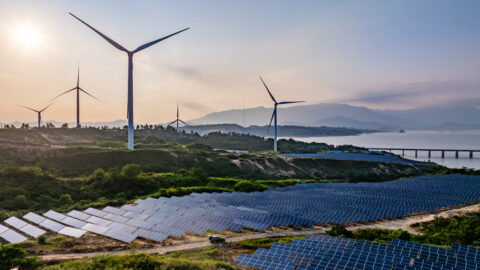
Since the beginning of the Iran conflict, the topics of energy independence and security of supply have been on everyone’s lips again. Renewable energies and environmental technologies can make a decisive contribution to this. This was also demonstrated at one of the most important industry meetings for renewable energies. Read more about this in the blog article by fund manager Alexander Weiss.
India’s economy is growing dynamically, with new trade agreements and investments expected to provide a further tailwind. The Indian market could also be increasingly worth a look for investors.
Although the extended ceasefire in the Iran conflict reduces short-term risks, the outlier risk for the economy and markets remains. Chief economist Gerhard Winzer explains in his weekly market commentary why potential energy shortages are becoming a key factor.
The Middle East conflict remains a key issue for global capital markets. Erste Group’s Group Chief Investment Office has analyzed the market implications in two scenarios. Read now!
The Iran war is not only affecting global supply chains, but is also increasing inflation risks worldwide. In today’s market update from Gerald Stadlbauer, Head of Discretionary Portfolio Management, you can find out which points are crucial now and how DPM is positioning itself in this environment.
The consequences of the war in Iran are increasingly affecting the global economy. Rising energy prices, disrupted supply chains, and higher transportation costs are increasing cost pressures along international value chains. Not all companies are facing the same level of pressure. To find out which sectors are particularly affected and where potential beneficiaries are emerging, read the new investment blog from Erste Asset Management.
With the outbreak of war in Iran, the rally in the price of gold has also stalled. Despite the geopolitical risks, the precious metal has recently been weak. However, there are a number of factors that could drive the gold price back into higher spheres, as portfolio manager Gabor Minarik analyzes in his article.
The US, Israel, and Iran have agreed to a two-week ceasefire. The markets have reacted positively, but does this mean lasting peace? Chief Economist Gerhard Winzer analyzes this in his weekly market commentary.
The situation in the Iran war has come to a head in recent days. While the real objectives of the USA and Israel remain largely unclear, the question arises as to how realistic negotiations in the near future are. Read more in today’s market commentary by Chief Economist Gerhard Winzer.
How does the ERSTE STOCK WORLD equity fund invest? Fund manager Andreas Böger explains the fund’s strategy, quality-focused approach, and current positioning—and why he believes the fund is well-positioned for volatile market conditions.
The events in the Middle East continue to have the markets in their grip: both equities and bonds suffered further losses. The price of gold is also falling in anticipation of rising interest rates. The duration of the fighting and the impact on the energy infrastructure in the region remain crucial.
Although China’s economy is expected to grow less strongly in the coming years, Beijing is focusing on quality and therefore growth in promising sectors. Read today’s blog post to find out why innovation, technology and key strategic industries are the focus of the new five-year plan and what opportunities this presents for investors.
Recent geopolitical developments in the Middle East have increased uncertainty across global financial markets. Rising energy prices, higher volatility and a fragile risk sentiment raise key questions for investors: are markets facing short‑term disruptions, or a more lasting shift in the economic outlook?
The sharp rise in energy prices remains the number one topic on the markets. While the medium and long-term consequences of the Iran war still depend on many unknowns, the upcoming interest rate decisions this week are also in focus.
After the weekend, energy prices continued to rise significantly amid the Iran war. How risky is the conflict for the global economy and how do we act in portfolio positioning? Chief economist Gerhard Winzer assesses the market situation at the start of the week.
The conflict between the USA and Iran escalated over the weekend. A large-scale series of attacks were launched against military targets in Iran, including the killing of the country’s spiritual leader, Ayatollah Ali Khamenei. What do the attacks mean for the markets and how do we position ourselves in response?
The UK is starting 2026 with optimism: falling inflation, improved sentiment indicators, and hopes of imminent interest rate cuts are driving momentum in the economy – and on the stock market. In today’s blog post, we take a look at the UK economy and stock market.
The US Supreme Court has put a stop to the majority of tariffs. The Trump government’s response: new tariffs – even if they already have an expiration date. Is uncertainty now increasing again?