

In early April, I was in São Paulo to attend the Bradesco BBI Investment Forum. This high-profile event provided numerous opportunities to speak with investors, analysts, and company representatives. It also offered valuable insights into macroeconomic developments, fiscal policy, and the impact of high interest rates on the corporate front.
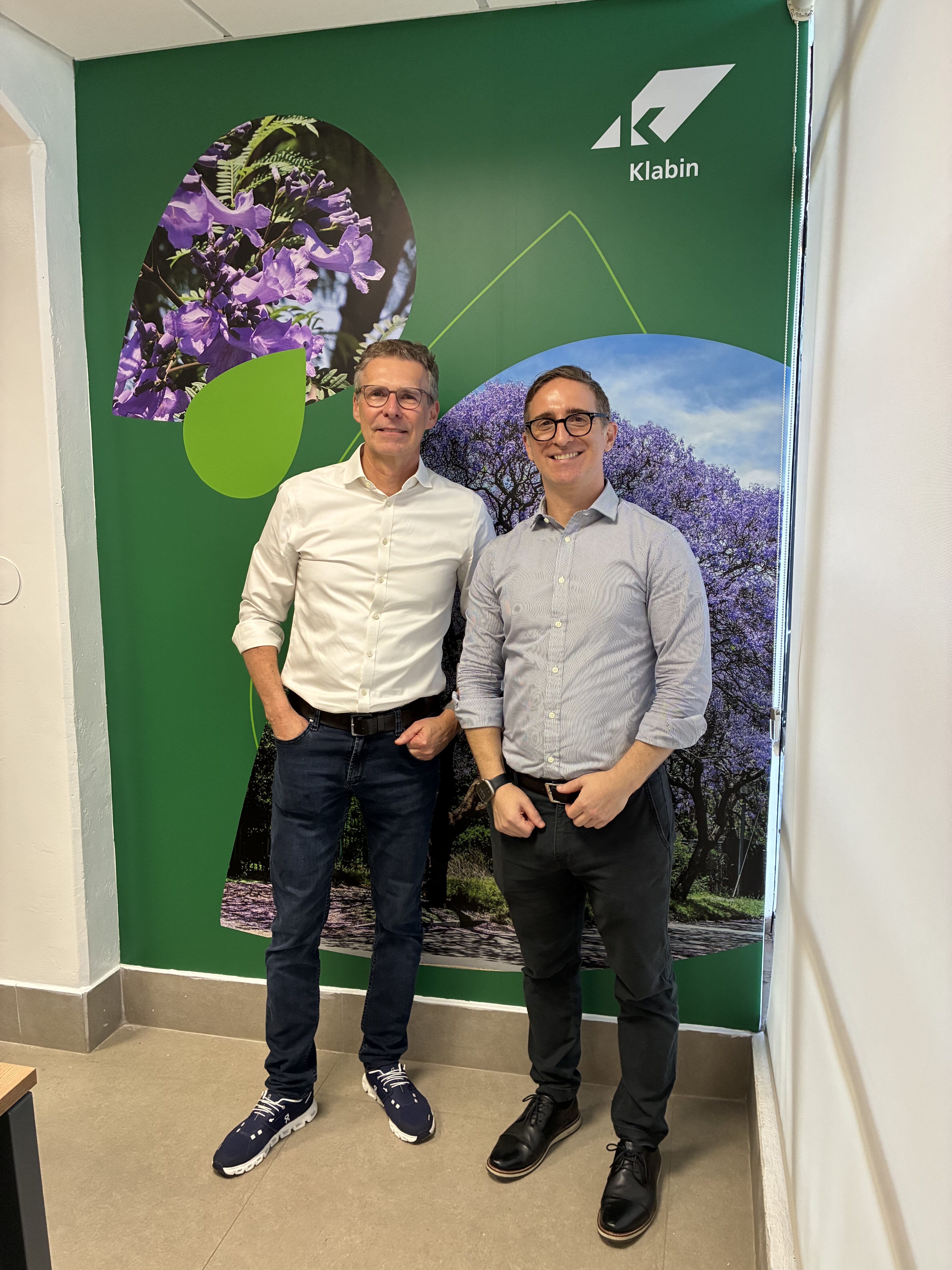
Alongside numerous discussions, the main focus was on a company visit: the Klabin SA plant in Piracicaba. What I saw there impressively embodies Brazil’s outstanding operational quality and industrial capabilities.
Please note: the companies mentioned in this article have been selected as examples and do not constitute investment recommendations. An investment in securities entails risks in addition to the opportunities.
Klabin in Piracicaba: a prime example of Brazilian industrial expertise
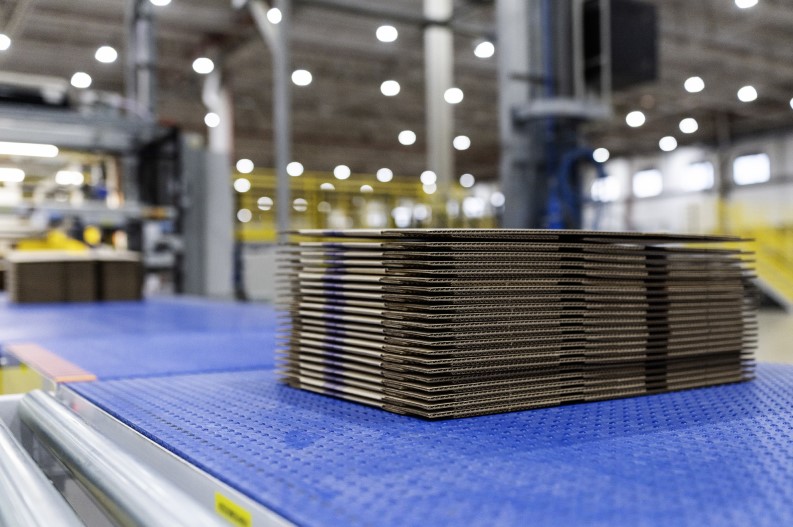
The new plant in Piracicaba, which opened at the end of 2024 on the site of a former sugar cane plantation, benefits from an ideal strategic location: it has excellent links to the motorway network and is situated in the immediate vicinity of the river (Rio) Piracicaba. With an annual capacity of 240,000 tonnes of corrugated board (abound 421 million square metres), it is the largest and most modern corrugated packaging plant.
The project, in which Klabin has invested BRL 1.56bn (N.B. Brazilian reais (singular: Brazilian real); approx. EUR 266mn), was officially inaugurated on 27 March 2025. It strengthens the company’s integrated business model and facilitates an even more efficient conversion of paper into finished packaging solutions. The plant’s high level of automation is particularly impressive: two modern corrugators with a working width of 2.8 metres achieve speeds of up to 450 metres per minute. These are complemented by nine state-of-the-art printing and die-cutting machines.
A fully automated high-bay warehouse – the first of its kind in Latin America – with a capacity of 2.3 million cubic metres optimises logistics. The plant also has space for 6,000 paper rolls (about 15,000 tonnes) and features 16 loading bays that can be used simultaneously, as well as a fully automated pallet system. Specially developed software makes up to 1.5 million decisions per minute.
This combination of technology and infrastructure makes Klabin’s competitive advantages difficult to replicate: over 80 years of genetic optimisation of forest stands, the unique ability to process both eucalyptus and pine fibres, a nationwide network of 16 centres of excellence, and a strong research and development department. The result is thinner, lighter, and yet more robust packaging, allowing customers to transport up to 22% more goods per lorry.
The continuous expansion of the company’s market share underscores the fact that, despite all the challenges, the Brazilian industry continues to possess impressive competitive strength.
Investing in emerging market bonds
The ERSTE RESPONSIBLE BOND EM CORPORATE invests in bonds issued by leading and innovative companies from emerging markets such as India, Brazil and Mexico. Note: Investing in securities involves risks as well as opportunities. Please note the fund-specific risk information at the end of the article.
The political reality: a „Eleição de Cansaço“?
Whereas the factory tour conveyed a sense of sheer industrial might, the panel discussions and expert roundtables in São Paulo painted a far more sobering picture of the political mood. The focus was on the presidential election on 2 October 2026: will it be an “Eleição de Cansaço” – an election of weariness and exhaustion – or will one candidate achieve the long-awaited breakthrough?
Looking back, the 2022 presidential election is regarded as an “election of change”, characterised by deep polarisation, high emotional tension and a certain sense of relief when Luiz Inácio Lula da Silva narrowly won the run-off against Jair Bolsonaro (49.10%) with 50.90% of the vote. The situation for 2026 currently looks like a weary, almost resigned rehash of this duel. The voter base is clearly segmented: about 35% are firmly on the left (Lulistas and non-Lulista left-wingers), a further 35% firmly on the right (Bolsonaristas and non-Bolsonarista right-wingers).
The real deciding factor lies with the roughly 30% of independent and swing voters. Of these, about 20% do not intend to vote at all – they see no attractive alternative and view the election as a frustrating choice between “two evils”. The remaining 10% or so are undecided, ideologically flexible and have voted for both Lula and Bolsonaro in the past – and regretted it both times.
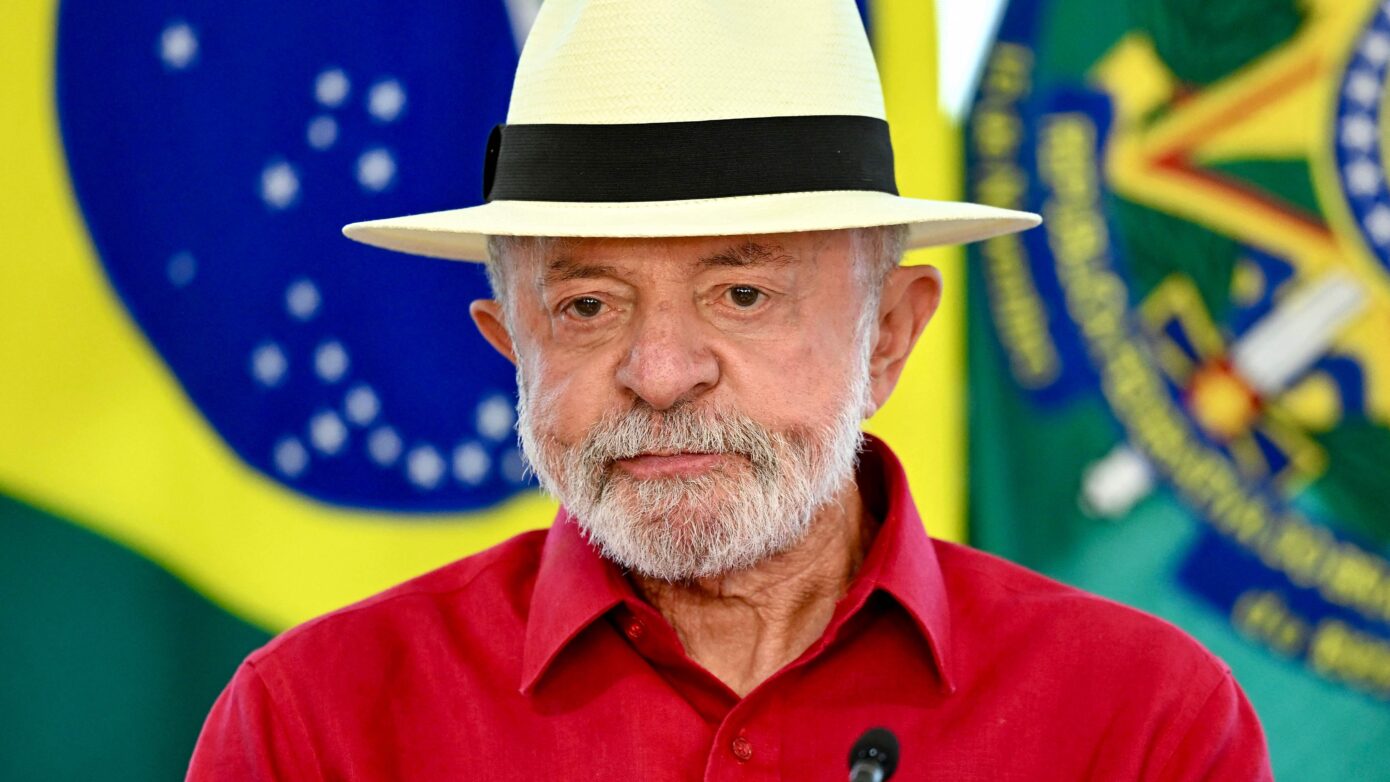
Lula und die Wahrnehmungslücke
Despite relatively solid macroeconomic data – real GDP growth of around 2.3% in 2025, inflation at 4.3% within the target range, and an average unemployment rate of 5.6% – many Brazilians do not feel that their personal circumstances have improved. Only 12% of those surveyed say their income has risen faster than the cost of living.
Three silent mechanisms are eroding disposable income: the creeping rise in household debt, persistently high prices for basic foodstuffs and energy, and the growing prevalence of online betting and gambling. Even the flagship “Bolsa Família” programme is no longer perceived as a generous gift from the state, but as a self-evident right to which one is entitled. Whereas Lula used to stand for social mobility and hope for a better future, his third term in office is primarily about redistribution and maintaining the status quo. For many, particularly in the lower middle class, this is no longer enough.
The right and the challenge of moderation
On the other side, Flávio Bolsonaro, son of former President Jair, faces a challenging three-pronged task: he must simultaneously project an image of moderation and respectability, develop his own clear political narrative, and defend his father’s government without remaining permanently in his father’s overwhelming shadow. The Bolsonaro family operates on social media as a highly professional “mega-cluster”, with Flávio, Jair, Eduardo, and Michelle specifically targeting different voter segments – from evangelical conservatives and libertarian economic liberals to hardline anti-establishment voices.
Since 2018, Brazil has shifted noticeably to the right in its social values: becoming more conservative, traditional, and family-oriented. The average voter no longer stands in the centre-left, as was the case a generation ago. Lula has already had to adopt more conservative positions in previous campaigns in order to reach broader sections of the electorate. His current strong left-wing stance now makes this strategic flexibility more difficult.
Both political camps currently lack a convincing, positive vision for the future. The election is appearing increasingly superficial and negative: many votes are based less on enthusiasm for one’s own candidate than on a rejection of the other side. Issues with the potential to break down this polarisation include concerns about raising children in an increasingly digital world, the reduction of bureaucracy, the high tax burden on businesses, the controversial role of the Supreme Court – the “Supremo Tribunal Federal” (STF) – and a growing anti-establishment sentiment across society. In particular, the Senate elections taking place in parallel could serve as an outlet for pent-up frustration with the STF.
Until October 2026, the political situation in Brazil remains highly tense – and, above all, wide open. The coming months will decide whether the “Eleição de Cansaço” actually materialises or whether a candidate will still find the strength to generate genuine enthusiasm.
Risk notes ERSTE RESPONSIBLE BOND EM CORPORATE
The fund employs an active investment policy and is not oriented towards a benchmark. The assets are selected on a discretionary basis and the scope of discretion of the management company is not limited.
Further information on the sustainable orientation of ERSTE RESPONSIBLE BOND EM CORPORATE and on the disclosures pursuant to the Disclosure Regulation (Regulation (EU) 2019/2088) and the Taxonomy Regulation (Regulation (EU) 2020/852) can be found in the current prospectus, point 12 and Annex “Sustainability principles”. When deciding to invest in ERSTE RESPONSIBLE BOND EM CORPORATE, all characteristics or objectives of ERSTE RESPONSIBLE BOND EM CORPORATE as described in the fund documents should be taken into account.
Legal disclaimer
This document is an advertisement. Unless indicated otherwise, source: Erste Asset Management GmbH. The language of communication of the sales offices is German and the languages of communication of the Management Company also include English.
The prospectus for UCITS funds (including any amendments) is prepared and published in accordance with the provisions of the InvFG 2011 as amended. Information for Investors pursuant to § 21 AIFMG is prepared for the alternative investment funds (AIF) administered by Erste Asset Management GmbH pursuant to the provisions of the AIFMG in conjunction with the InvFG 2011.
The currently valid versions of the prospectus, the Information for Investors pursuant to § 21 AIFMG, and the key information document can be found on the website www.erste-am.com under “Mandatory publications” and can be obtained free of charge by interested investors at the offices of the Management Company and at the offices of the depositary bank. The exact date of the most recent publication of the prospectus, the languages in which the fund prospectus or the Information for Investors pursuant to Art 21 AIFMG and the key information document are available, and any other locations where the documents can be obtained are indicated on the website www.erste-am.com. A summary of the investor rights is available in German and English on the website www.erste-am.com/investor-rights and can also be obtained from the Management Company.
The Management Company can decide to suspend the provisions it has taken for the sale of unit certificates in other countries in accordance with the regulatory requirements.
Note: You are about to purchase a product that may be difficult to understand. We recommend that you read the indicated fund documents before making an investment decision. In addition to the locations listed above, you can obtain these documents free of charge at the offices of the referring Sparkassen bank and the offices of Erste Bank der oesterreichischen Sparkassen AG. You can also access these documents electronically at www.erste-am.com.
Our analyses and conclusions are general in nature and do not take into account the individual characteristics of our investors in terms of earnings, taxation, experience and knowledge, investment objective, financial position, capacity for loss, and risk tolerance. Past performance is not a reliable indicator of the future performance of a fund.
Please note: Investments in securities entail risks in addition to the opportunities presented here. The value of units and their earnings can rise and fall. Changes in exchange rates can also have a positive or negative effect on the value of an investment. For this reason, you may receive less than your originally invested amount when you redeem your units. Persons who are interested in purchasing units in investment funds are advised to read the current fund prospectus(es) and the Information for Investors pursuant to § 21 AIFMG, especially the risk notices they contain, before making an investment decision. If the fund currency is different than the investor’s home currency, changes in the relevant exchange rate can positively or negatively influence the value of the investment and the amount of the costs associated with the fund in the home currency.
We are not permitted to directly or indirectly offer, sell, transfer, or deliver this financial product to natural or legal persons whose place of residence or domicile is located in a country where this is legally prohibited. In this case, we may not provide any product information, either.
Please consult the corresponding information in the fund prospectus and the Information for Investors pursuant to § 21 AIFMG for restrictions on the sale of the fund to American or Russian citizens.
It is expressly noted that this communication does not provide any investment recommendations, but only expresses our current market assessment. Thus, this communication is not a substitute for investment advice.
This document does not represent a sales activity of the Management Company and therefore may not be construed as an offer for the purchase or sale of financial or investment instruments.
Erste Asset Management GmbH is affiliated with the Erste Bank and austrian Sparkassen banks.
Please also read the “Information about us and our securities services” published by your bank.
More on the topic

Five years since Covid hit: a historic crash, and the lessons learned
This week marks the fifth anniversary of the low point of the coronavirus crash. In February and March 2020, global financial markets experienced one of the fastest downturns in history. The coronavirus crisis brought the economy to a virtual standstill and caused a massive decline in stock prices, unsettling many investors.
Our new blog post looks back at the events that led to this crash and analyses what lessons investors can learn from the Covid crash. Because as quickly as prices fell, they were also largely able to recover the losses.