
Latest Posts

The Life of Plastics – Investment Board
The Erste AM Investment Board gives a form to the responsive dialogue with and among sustainability research agencies.

“Disposable plastic is mostly responsible for plastic waste in the seas”
Interview with Axel Hein, marine expert at WWF Austria.

Company of this edition: Tomra Systems
The Company of the Month is selected due to recent developments and in connection with the topic ”Plastic”.

Plastic planet
79 % of the produced plastic waste are currently spread across the environment or in landfills. More facts about plastic can be found here…

Plastic in our Environment
The world consumes resources more quickly and at larger quantities than our population is growing.

A Brief History of Rubber
Lasting Words: “Everything used to be better. What is plastic today was natural rubber back then,” says Gerold Permoser, CIO and CSIO of Erste AM.

Responsible investment universe
The definition of the investment universe is the most important step in the construction of a fund

Certified Erste AM Funds
The Erste AM RESPONSIBLE funds are subject to constant scrutiny with regard to their sustainable quality.
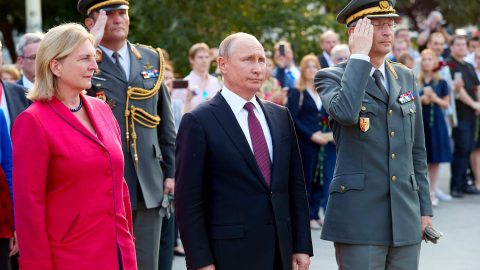
Russia back on growth path prior to the World Cup finals, but no reason for euphoria
At the kick-off for the World Cup finals on 14 June, Russia will move to the public limelight for four weeks. Time for a closer look at the Russian economy and equity market.
30 years of falling interest rates – what is ahead of us?
Let’s start with a trip down memory lane: Do you remember the scenery 30 years ago – on the financial markets, and in our personal lives? The 1980s – many of the older generation are still thinking back to the “good old times”. There were no smartphones and no data kraken. Instead, we had shoulder […]

Is Turkey about to run into a balance of payments crisis?
The Turkish central bank was forced to raise its most important interest rate by 300bps and to re-align its monetary instruments. What are the reasons for this nosedive?

Italy: slipping into a crisis in confidence
The heightened uncertainty over whether Italy will repay its debts and whether it will remain a member of the eurozone has led to a sell-off in securities. Our chief economist Gerhard Winzer gives an overview.

Financial Markets Monitor May: positive opportunities outnumber negative ones
Positive opportunities still outnumber the negative ones on the capital markets – that was the conclusion of our Investment Committee. Our willingness to take risks is still optimistic and also moderately higher than in April.
Rising interest rates in the USA
The sentiment of the financial market participants has deteriorated in the past months, with the losses across numerous asset classes in the year to date seemingly the driving factor. Now we have to ask ourselves: are we at the outset of a new trend, or is this just a case of increased volatility? The general decline in prices has gone in conspicuous tandem with the increase in three important financial market ratios:

Croatia hits fever pitch
No, this is not an article on football, and any football reference is purely coincidental. This is an article on the football nation whose economy is (finally) showing positive trends and has (finally) been awarded a one-notch rating upgrade by two rating agencies, S&P and Fitch, this year. Only one notch away from the much-desired investment grade rating, the Croatian economy remains on sound footing before tackling its last challenge.

Sell in May and go away?
Every year at the beginning of May, investors are faced with the question of whether they should leave the stock exchanges and take the profits generated up to that point, and return at a later date in autumn. But is the old stock market adage “Sell in May” still valid?
IMF conference in Washington: cautiously upbeat sentiment about emerging markets
Senior Funds Manager Felix Dornaus summarises his learning points from the presentations by the International Monetary Fund in Washington on 20 to 23 April 2018. Who were the winners and who the losers?

Turkey´s astonishing rush to early elections
Amalia Ripfl, Senior Fundmanager explains Turkey´s rush to early elections: who profits and what does it mean for the equity market?
Bleaker sentiment on the financial markets
The environment on the financial markets has become a bit bleaker. Growth rates of industrial output and the survey-based indicators for economic growth are falling, while the trade conflict between the USA and China and the tense geopolitical situation in the Middle East has caused the risk for global growth to increase further. Will the environment remain generally supportive to risky asset classes?

Judging Managers’ Character
It is often overlooked and due to its elusive nature, there is no standardized way to judge someone’s character. The topic rarely appears in textbooks or professional courses, and investors are generally skeptical about their ability to asses it. Which leads to the following question: Is it knowable? In other words, is there some reliable way to judge someone’s character?
Financial Markets Monitor April: upside-down scenario
On 3 April, we held our monthly Investment Committee meeting. Only three weeks after the previous one – three weeks that were tightly packed with issues, as we can see in the performance data of the most important asset classes. Equities and high-yield bonds have lost value, whereas Eurozone government bonds and emerging markets bonds have recorded gains. An upside-down scenario, compared to previous months.

Helping people to help themselves
There are investments that create a better world. Microloans give people in the Third World a chance to a better life and facilitate a stable yield for domestic investors.
US Fed tightens its monetary policy
The most important central bank of the world, the US Fed, increased the Fed funds rate on 21 March and also published projections for economic key indicators. Even though this does not sound like much, the implications for the markets are significant.

World Water Day 2018: Smoke on the water – the water footprint of sustainable investments
The World Water Day was first introduced on 22 March 1993. The goal was to anchor the meaning of water and thus the efficient use of this critical resource in the collective consciousness. Despite the long history, the importance of water from the point of view of risk has only recently gained in relevance.
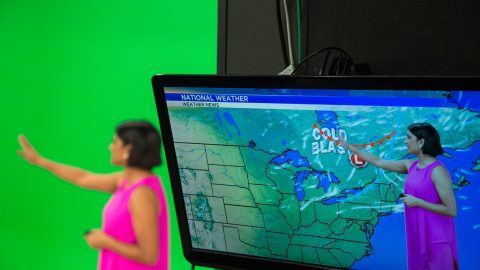
Knowing the Future: parallels between weather and financial forecasting
Google ‚forecasting future‘, and over 28 million hits appear. Clearly, knowing what will happen before it happens is big business: from financial markets to the weather, and anything in between, says Rosmarie de Wit, Austrian center for meteorology (ZAMG).
Financial Markets Monitor: we have stepped up the risk of our asset allocation by a notch
On 14 March our Investment Committee met, and as always, we started out on a discussion of our risk stance, i.e. our risk assessment. From my point of view, four findings of the discussion are worth bringing up here:
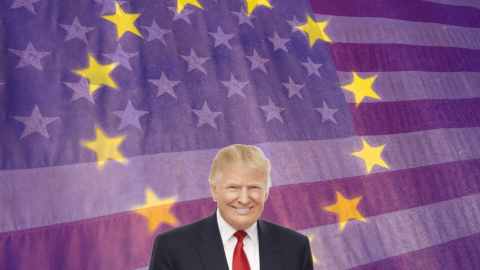
Protectionism: Risk of a trade war with the US?
The announcement by the US President, Donald Trump, to levy import tariffs on steel (25%) and aluminium (10%) has made waves. Can the favourable economic environment be toppled an will we see a trade war between the US and the EU?

Equity returns and dividends: it depends on the market phase
To most people, the notion of the performance of shares relates to changes in the share price. This does not take into account the second component of return, i.e. the dividend. Simply looking at the share price development seems too one-sided to me. After all, dividends may account for up to a third of total return, as is the case for example for the shares listed on the Vienna stock exchange. However, shares with strong dividends do not generate the highest total return in every phase of the market.

The source of life (Editorial)
Gerold Permoser is Chief Investment Officer (CIO) of Erste Asset Management. In this function he is in charge of the asset management activities and investment strategies of all investment funds of the Erste Asset Management Group in Austria, Croatia, Czech Republic, Germany, Hungary, Romania and Slovakia.

Sustainable use of water (Investment Board)
The Erste AM Investment Board gives a structured form to the ongoing and responsive dialogue with and among sustainability research agencies. The Board offers the chance to integrate in-house and external research. It also discusses rating details, the ESG’s assessment of the IPOs of new issuers and sustainability issues in general.

More than a drop in the bucket?
The World Water Day was first introduced on 22 March 1993. The goal was to anchor the meaning of water and thus the efficient use of this critical resource in the collective consciousness. Despite the long history, the importance of water from the point of view of risk has only recently gained in relevance.
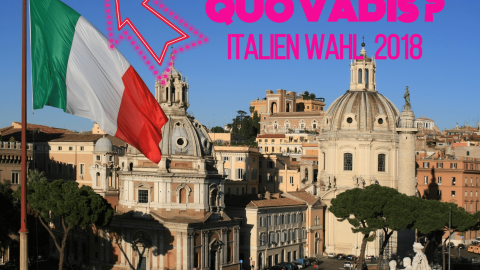
Quo Vadis Italia? – The 2018 general election in Italy and its importance to the economy
The economic environment for Italy remains challenging. The fundamental problem is the low economic growth. Although the composition of the future government is still unclear, the party programs imply a persistent reform deadlock.
Equity investors’ interest rate fears may be overblown
Fears of rising interest rates are back. Was the recent 9% correction in global equities just a market blip, amplified by technical factors related to the trading of volatility products? Or something more serious – a regime shift signalling the end of the equity bull market as many have argued?
Ten new determining factors for the capital market
The economic environment for the capital markets is subject to change as we speak. About one and a half years ago, the global economy shifted from recovery to boom, which was very advantageous for the markets. The features were strong, broadly based economic growth, low inflation, very supportive monetary policies, good earnings growth, and limited price fluctuations on the markets. We have now started leaving this best of all worlds (“Goldilocks scenario”) in more and more categories.

Investment stories in Latin America
The BBVA Latin American Local Markets Conference in London gave Christian Gaier, senior fund manager of government bonds of emerging markets, the chance to talk to local Latin American representatives. In our blog he shares some of the insights he gained and the narratives that may affect 2018.
Market Monitor: After the market correction, confidence outweighs
The year 2018 had started on such a promising note – is what we all were thinking. But at the beginning of February, the market taught us a lesson. As a result, the discussions at our first Investment Committee of the year at the beginning of February were interesting ones.
How does inflation work? – Part 2: Inflation drivers
There are many factors that may affect inflation. Also, the weights of certain factors may vary across countries. Take the development of the exchange rate, for example.
Inflation worries burdening stock exchanges – part 2: the macro perspective
Equity indices have undergone a global correction in the past days. The Dow Jones index has shed more than 10% from its January high. What is the macro-economic reason for the correction?

Strong growth and rising rates
At the beginning of 2018, economic indicators are confirming the recovery scenario. Above all, the yields of government bonds are on the rise. Why is that the case, and what does it mean for the financial market as a whole?
Inflation: a general overview – Part 1
At the moment the environment on the markets is very supportive. The economy is booming, the big central banks are still buying government bonds on aggregate and are thus keeping yields low, and the tax reform in the USA has improved the sentiment further over the past weeks. In addition, most asset managers agree on the status quo. Given this background, people ask “when will the party end?”. An increase in inflation is (one of) the usual suspect(s).
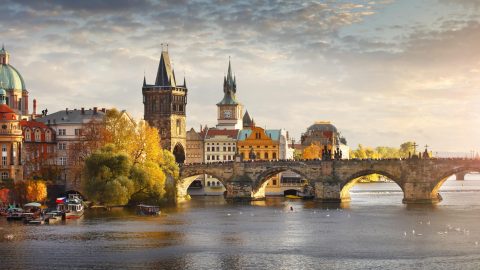
Czech Presidential Election and the reaction of the markets
With both rounds of the Czech presidential election behind us, we can now take a look back at some of its highlights. Incumbent Milos Zeman reaped a narrow edge over his challenger Jiri Drahos.
Global equities: Five charts on where we stand
2017 was an excellent year for stocks. Developed markets were up more than 16% in local currencies, emerging markets almost 28%. How will the markets develop in 2018?
European banks: Outlook for 2018
European banks (as measured by the Stoxx 600 Banks Index) had a decent year in 2017: the index climbed more than 8%, slightly outperforming the broader European market (Stoxx 600 Index). The strongest positive impulse came from the French elections in April last year, where the populist threat was successfully defeated by Emmanuel Macron, arguably the most market-friendly candidate among the contenders. A robust European economy and a solid business sentiment throughout the year also helped banking shares go higher.

Interview: “Future 2050 – the era of sustainability and smart machines”
Interview with Ulrich Eberl, one of the most renowned German-speaking scientific journalists and futurologists. Among the books he has published are “Zukunft 2050 – wie wir schon heute die Zukunft erfinden“ (“Future 2050 – how we are inventing the future today”) and “Smarte Maschinen – wie Künstliche Intelligenz unser Leben verändert“ (“Smart machines – how artificial intelligence changes our lives”).
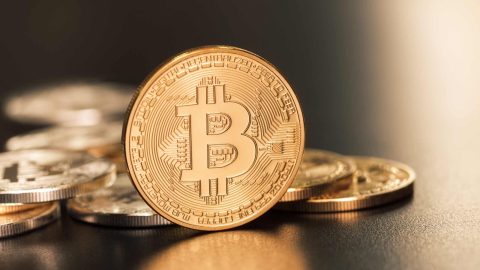
Bitcoin Basics
Bitcoins were developed in 2009 as a virtual, digital currency by one person or group with the pseudonym Satoshi Nakamoto. Bitcoins are not physically tangible and are thus also difficult to grasp mentally for many.

Ten economic hypotheses for 2018
The current environment is very positive for the capital markets: strong growth, low inflation, supportive monetary policies, good earnings growth, and low volatilities, i.e. fluctuations. Also, the numerous risks have not had a significantly negative impact on prices. However, the phase of rising prices started as early as March 2009.

Best of Erste AM Investment Blog 2017
2017 was a positive year on the global capital markets. We have analysed which blogs were the most popular ones last year.

2017: a positive year on the global capital markets
Capital markets recorded a positive year of 2017. The performance of the various asset classes was of the textbook variety: the higher the risk, the higher the return.
Market Monitor: risky markets have come far
Earlier this week, we convened the last Investment Committee of 2017. The general risk appetite of the team has not changed vis-à-vis the previous month (from 78.85 percent to 79 percent on our 0 – 100 percent scale). The team continues to see the future optimistically, with a resulting “risk on” stance.

Capital markets outlook for 2018: Will the party hold on?
2017 is drawing to an end, and the bottom line is positive. The outcome is significantly better than we had expected. Since the financial crisis in 2008, the global economy has never expanded more quickly and especially concertedly than in 2017. Also, inflation has surprised on the downside, falling short yet again of the expectations held by central banks and analysts.