
Latest Posts
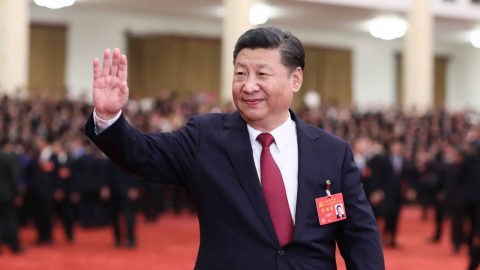
Xi Jinping’s New Era
Certainly, the National Congress of the Communist Party of China held every five years in Beijing is an important political event, but this year’s Party Congress was a milestone. It marked that a new era has begun in China. President Xi Jinping cemented his power further as China’s paramount leader, a leader, who might rule the country on the coming decade, a leader, who has high ambitions.

Emerging markets – not a pure commodities story any longer
The global economy is experiencing significant growth, and the emerging markets have felt the increased economic growth rates as well. Even in problematic countries such as Brazil or Russia, the situation has been picking up due to the increased oil price.

Equities: Optimistic, but cautious
2017 has been another bumper year for global equities with the MSCI All Country Index gaining ca. 18% in the first ten months in dollar terms. November, however, has not started well for risky assets.
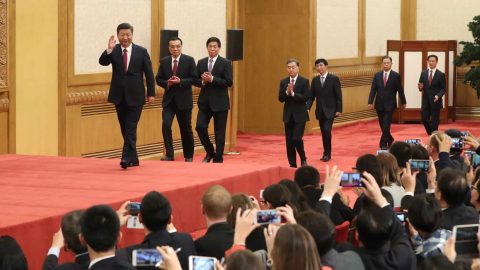
China on the way to new strength
Driving through Beijing you will see megalomania without limits – in houses, traffic, and people. A trip in a tuk-tuk, which looks like a motorcycle on three wheels, allows you a short glance into the past. It is at these moments that the rift between rich and poor becomes obvious.

Hyperinflation in Venezuela
Venezuela is in a difficult situation. Hyperinflation describes the economic environment best. For 2017, the IMF estimates a consumer price inflation of 650% y/y, and for 2018, the estimate is 2,300%.
Market Monitor: Optimism on the rise
This week we held our monthly Investment Committee meeting. Although only little has changed with regard to the overall economic picture, we were having a few interesting discussions that we would now like to share with you.

An impressive stunt
The Council of the European Central Bank pulled an impressive stunt at the monetary policy meeting on 26 October. ECB President Mario Draghi announced to reduce the extremely supportive monetary policy in the near future while …

IMF-meetings in Washington: positive outlook for emerging markets
The following points reflect my impressions at the presentations that I attended at the IMF-meetings in Washington from 12 to 15 October 2017.

Disruption from Catalonia
The events in Catalonia are a new disruptive political element on the capital markets. The basic question is whether the generally favourable environment for risky assets is sustainable.
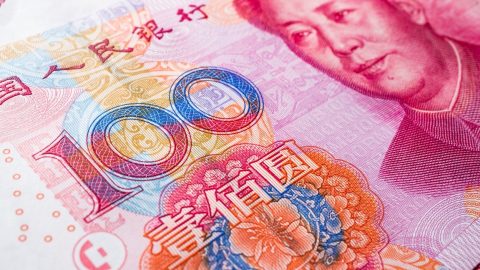
Renmimbi – a managed currency
Long enough we have heard about the depreciation of Chinese currency Renmimbi (RMB), but this year RMB has showed rather unusual movements.
Market Monitor: positive for risky asset classes
Once a month the Investment Committee of Erste Asset Management convenes in order to discuss the medium-term market outlook. We are going to start a new blog, where we will report on what drives our investment professionals and what risks they see.

Urbanisation in Asia: challenge and opportunity
Asia’s cities are growing and growing, presenting the urban infrastructure with great challenges. Thanks to technical progress, the relevance of environmentally friendly transport solutions is on the rise. Investors can benefit from this trend, as Gabriela Tinti points out in an op-ed article for the magazine “Global Investor”.
US central bank will start reducing bond holdings in October
The most important central bank in the world, the Federal Reserve of the USA, has announced a historic decision as a result of its FOMC meeting on 20 September: the central bank balance sheet, hugely inflated in the wake of the bond purchase programme, will be gradually reduced from October onwards. Generally speaking this is […]

Economic scenarios 2018
Q3 is drawing to its end. Traditionally, this heralds the development of a strategy for the next year, an important part of which is the creation of scenarios. On the basis of the status quo, we have drawn up three further different scenarios in this blog entry.
European bank shares picking up
After years of drought, European bank shares have shown a solid performance in the year to date.
US debt ceiling keeping the financial markets on their toes
The Trump administration should be keeping the financial markets on their toes in the coming weeks. Yet again, the issue is the government debt which will soon reach its statutory maximum.

Tailwind for biotechnology companies
Biotechnology shares have been among the top performers in the past ten years. After the above-average performance from 2010 to the beginning of 2015, hedge funds set off a consolidation that is now coming to an end. The NASDAQ biotechnology index, the most important barometer for biotech shares, has gained 25% in the year to date (source: Reuters Datastream, as of 31 August 2017).
Global stock markets: Break, correction or worse?
The probability that there is another leg up for global equity markets is bigger than a significant correction in the near-term. However, there are no guarantees when it comes to investments in stocks in contrast to, as somebody said, the purchase of a vacuum cleaner. In case that the earnings momentum is cooling down or, for example, the macro-backdrop deteriorates, an extended period of equity markets going sideways or a correction cannot be excluded.
Growth picking up in the emerging economies
Economic growth has increased significantly on a global scale and is broadly supported. According to our preliminary estimate, global GDP recorded a growth rate of 3.7% from Q1 to Q2 (annualised). While the developed economies have presumably grown by 2.7%, the emerging economies posted a growth rate of 5.2%. In this article, we would like to take a closer look at the emerging markets on the basis of classic economic indicators.

Solid Growth
Some ten years after the outbreak of the Great Recession, global economic growth is positive and broadly based, inflation is low in the developed economies and falling in important emerging economies, and monetary policies are very supportive, cautious, and predictable. At the same time, company earnings growth has increased significantly, and the volatilities of many asset prices are low. This environment is generally positive for risky asset classes.
Quo Vadis, Federal Reserve? – Part 3
I will be upfront about it: to me, the Taylor rule is still a helpful tool to assess the future monetary policy of the US central bank. However, it should not be used as blueprint without thinking it through. Instead, it should be seen as heuristic tool that helps structure one’s analysis.
Quo Vadis, Federal Reserve? – Part 2
Since 2008, the key-lending rates in the USA seem to have been significantly too low as measured by the Taylor rule. With some economists blaming Alan Greenspan’s loose monetary policy as partially responsible for the financial crisis of 2008, the question is whether we are in for a déjà-vu.

Style management in practice: part 2
Having defined and explained various management styles in equity management in part 1, we will now have a look at the specific styles and their return/risk ratio over time.
Quo Vadis, Federal Reserve? – Part 1
The US central bank has embarked on a cycle of interest rate hikes. The question is: by how much will the interest rates increase still, and at what point will it reach a level detrimental to the economy, where equities should be regrouped into asset classes less sensitive to the economic cycle?
Style management in practice: part 1
A clear sense of style is not only important in fashion, but more and more so in equity management as well. But what does “style” mean in equity management? Do stylistic preferences change over time, like in fashion? If so, what triggers those changes? Questions upon questions, but before we go into detail in part 2 of this series, let us first clarify what we mean by style(s).

Alternative investment strategies: part 3
In Part two of this series on alternative investment strategies, we described the most important strategies “trend following”, “global macro”, and “long/short equity”. In this Part three, we will be looking at approaches that are less well-known but equally tried and tested.

Which factors drive equity markets?
It is almost impossible to speak with fund managers and not address the economy or monetary policy. Why is that so? This blog entry will try to answer the question on the basis of data from the US equity market from 1950 onwards.

Monetary policy of central banks is tightening up
Volatility has increased on the markets. The main reason for this has not occurred often in the past years: statements by the central bankers according to which the extremely expansive monetary policy will be reeled in. Are we going through a trend reversal?
China makes A-shares accessible to the global market
China has been increasingly opening up to the global market. Last year the Renminbi was taken into the currency basket of the International Monetary Fund in October 2016. Now, another step towards liberalisation has followed. China has cleared A-shares for international trade via trading platforms.

Germany: is the economy about to face a hot summer?
The IFO business climate index calculated by the Munich-based IFO Institute is regarded as the most important German economic indicator. At 115.1, the value released for June last week was the highest since the launch in January 1991. It was also clearly above the value that had been expected by the financial analysts on average. The signs for substantial economic growth in Germany seem favourable.
Alternative investment strategies: part 2
After illustrating what alternative strategies are in part 1 of this series, how they work, and what benefits and disadvantages they come with, we would now like to discuss some of the most important representatives of this set of strategies. In the following strategies (also called hedge funds), the majority of the capital invested is allocated to alternative models.
After the interest rate hike is before the interest rate hike?
Imagine a fairy that grants you three wishes. What would you wish for? The answer would be very easy for me. I would just like to know if the economy is caught up in a recession of has embarked on an expansionary phase a year from now…
Financial know-how – this is how an equity fund works
Shares (equities) and equity funds – the same or not? Only a small minority of Austrians invest directly or indirectly (via equity funds) in shares. Is it the fear of losses or the lack of knowledge about this asset class that make investors shy away from it?
Increase in inflation has come to an end for now
Two developments are prominently noticeable on the markets at the moment: on the one hand, the indicators of real economic growth suggest a stable real economic growth rate of about 3%. On the other hand, we have seen global consumer price inflation decline since the beginning of the year. The reflation phase, i.e. the general increase in inflation in the second half of 2016, seems to be over (for now).

A niche product with solid returns: hybrid and subordinated bonds with investment grade rating
Author: Christin Bahr, Product Management Securities Erste Group It has been half a year since the launch of the new hybrid bond fund. Reason enough for us to talk to Roman Swaton, Senior Fundmanager.
Alternative investment strategies: part 1
Author: Christian Süttinger Senior Fund Manager Multi Asset Management In the USA, gradually rising interest rates have already become reality. In Europe and in another large economic area, i.e. Japan, the subdued economic development has prevented interest rates from increasing to date. The European Central Bank manages interest rates in such a way as to […]

The global economy based on the Goldilocks principle
The global economy is growing moderately, inflation is low, and the monetary policy is loose. This environment supports many asset classes from bonds to equities. The political uncertainty has been absorbed rather well so far too. Will this situation last?

Bribery accusations put shock to Brazilian capital markets
Last Thursday, incriminating video and audio tapes emerged that linked current President Michel Temer to bribery. The accusations have thrown Brazil into a deep political crisis, and the capital markets have lost massively.
The best global equity funds under one roof
Markus Jandrisevits has been the manager of our global flagship equity fund since 28 February 2002. The performance to date is impressive on an international scale. I asked Markus what was special about his investment approach and how he has positioned himself in the current stock market phase of high political risks.

Curves (part 6) – provider of yields
Have you ever been to a Californian beach? If you have, you may have noticed the hoards of “searching”, elderly people. They would usually be holding a metal rod that beeps, looking for valuables that no-one else has found. And sometimes somebody finds a lost golden watch on the beach. But most of the time the things that turn up are only worthless beer caps.

Afterthoughts on the Turkish referendum
After the ballots were counted on 16 April 2017, the state-run Anadolu news agency reported that “Yes” had won by securing 51.4% of the votes, which was later also confirmed by the Electoral Commission. Serious concerns were raised by the OSCE. It is also important to note that the referendum took place during a “state of emergency”. That is to say, in a highly repressive climate in which the President and the government controlled the media, jailed critical journalists and leaders of pro-Kurdish parliamentary opposition, and arbitrarily detained and prosecuted the President’s opponents. The result of the referendum has paved the way for the most controversial changes that Turkey has faced in its history.

What investors can learn from Maria Theresia and the Vienna stock exchange
Austria celebrates the 300th birthday of Maria Theresa. She was born on 13 May 1717 in Vienna. It was her who founded the Vienna stock exchange in 1771 on the basis of an imperial patent (see image), after an earlier, failed attempt in 1761. Even though a lot has changed politically, economically, and technically since then, the eventful history of the Vienna stock exchange is still very instructive for every investor.
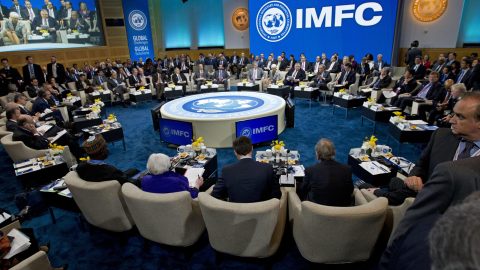
My impressions from IMF meeting in Washington: Emerging markets “alive and kicking”
The spring meeting of the International Monetary Fund was held in Washington from 20 to 23 April. This event was the reason for an investor conference that I attended in order to get an idea of the status quo of the global economy as well as of risks and opportunities.

Curves (part 5) – the offensive decides the match
Football has two strategies. Some prefer focusing on the defensive so as not to concede a goal – i.e. they try to maintain the status quo. Other teams favour the offensive and actively engage in a fight for victory – i.e. they take risks. The strategies on the bond markets are similar. Credit-safe government bonds are preferably used to protect one’s wealth, whereas risky corporate bonds are chosen to produce surplus gains.

Macron wins French elections
The elections are over. The next President of France will be Emmanuel Macron. This strengthens the camp of the liberal EU supporters. What does this result mean for the capital markets?

Curves (part 4) – the premium, or spread, is the clincher
The interest rates, or coupons, that bonds pay differ due to a variety of parameters. If bond A pays a higher interest rate than bond B, this premium is referred to as spread.

Stock exchange rules – myth or reality
Who has not heard of the old stock exchange rule “Sell in May and go away” – sometimes complemented by “but remember to come back in September”. We had a closer look at this adage and have analysed the performance on the global stock exchanges over the past 48 years.
ECB takes another tiny step
Economic growth in the Eurozone has embarked on a clear upward trend. At the same time, the fear of falling wages and prices has disappeared for now. The worries over a possible break-up of the European Union have also eased. Against this backdrop, the ECB President Draghi issued a slightly more optimistic growth forecast yet again on 27 April at the press conference of the European Central Bank. This is another tiny step indicating a possible reduction of the monetary support in the medium term.

Curves (part 3) – peaks and troughs
Investing for the long or the short term? This is the question bond investors ask. In this blog, we will have a look at German government bonds with a remaining time to maturity of two years (2Y; short) and ten years (10Y; long). More specifically, we are interested in the yield differential between the long- and the short-term interest rates. The technical term here is the “slope of the yield curve”.
Curves (part 1) – not only a topic for race drivers
Have you ever been to the Monte Carlo F! Grand Prix? If so, you may have witnessed the problem of turning into a curve too late. The race car hits the crasher barrier faster than the driver can react, and a lot of money has to be thrown at the repair job.