
Articles about “USA”

Market-Update: “I am the house now”
The fixed-income markets are coming under increasing pressure: in the US, yields on long-term government bonds have risen to multi-year highs, whilst US Treasury Secretary Scott Bessent is attempting to take countermeasures in the bond market. You can find out more about the current market assessment in our blog post.

Prospect of a prolonged closure of the Strait of Hormuz sends oil prices rising again
On the oil market, all eyes remain fixed on the war in Iran and the Strait of Hormuz. Iran’s peace talks with the US appear to have reached an impasse, and there is still no sign of an end to the war.

The AI Boom, Valuations, New Opportunities and Risks: What’s Next for the Stock Markets?
What opportunities and risks are currently emerging for investors? Which regions and sectors could shape stock market performance in the second half of 2026? And how should portfolios be positioned amid geopolitical challenges, high volatility, and growth opportunities? We posed these questions to two asset management equity experts, who painted a fascinating picture of the current situation in global stock markets.

Weekly Winzer: Positive Market Environment Facing Challenges
The market environment remains generally positive, but the combination of persistent inflation, geopolitical tensions, and climate-related pressures calls for a nuanced perspective. Recently, attention has also been focused on currency intervention involving the Japanese yen. Read more in the latest market commentary by Chief Economist Gerhard Winzer.

US Economy: Growth Is Robust, but Sentiment Could Be Better
As World Cup host, the US is in the spotlight. While economic growth and the job market remain robust, inflation and high energy prices are weighing on consumer sentiment. Learn more about the latest economic data for the World Cup host countries in our new blog post.

Weekly Winzer: USA and Iran Reach Agreement
The US and Iran have agreed to a ceasefire and the reopening of the Strait of Hormuz. The markets are reacting positively, but this does not mean that all risks have been eliminated.

Risk assets on the rise – despite the fallout from the Iran crisis
With the prospect of the Strait of Hormuz reopening, the environment for high-risk asset classes has become more favorable. This is because economic growth indicators and the AI boom point to a supportive growth environment. However, a successful outcome to the negotiations has yet to materialize, and the fallout from the Iran crisis must also be taken into account.

Weekly Winzer: Escalation in Middle East
After the weekend, energy prices continued to rise significantly amid the Iran war. How risky is the conflict for the global economy and how do we act in portfolio positioning? Chief economist Gerhard Winzer assesses the market situation at the start of the week.

Escalation in the Middle East: How we protect your portfolio – and what you should do now
The conflict between the USA and Iran escalated over the weekend. A large-scale series of attacks were launched against military targets in Iran, including the killing of the country’s spiritual leader, Ayatollah Ali Khamenei. What do the attacks mean for the markets and how do we position ourselves in response?

Weekly Winzer: Is the situation between the USA and Iran escalating?
Tensions between the US and Iran have intensified again in the past week. Is there a threat of escalation and what impact will the conflict have on the financial markets?

USA demands control over Greenland: What are the possible consequences?
After US President Donald Trump continued to demand that the US gain control over Greenland, he has now announced further tariffs against certain EU countries. How might the Greenland issue develop, and what are the possible consequences?
The United States – a country in transition?
About a year after Donald Trump was elected US president, it is clear that his second term in office will bring many changes to the US – from numerous regulations to an aggressive tariff policy. The effects of these measures are being felt in many areas. Where are the United States heading?

US attack on Iranian nuclear facilities
Last weekend, US fighter jets and submarines attacked three important nuclear facilities in Iran. The impact of the latest developments in the Middle East on the financial markets will depend primarily on Iran’s response and the associated development of oil prices.
Section 899: How Trump’s tax plans could affect international investors
With the ‘One Big Beautiful Bill Act’, US President Donald Trump wants to push through extensive tax cuts. Section 899, among others, is viewed critically. The passage could primarily affect foreign investors in the US and thus also weaken the US capital market.

What role will the dollar and US government bonds play in the future?
Against the backdrop of the debt debate in the US, yields on US government bonds have risen recently. Rising debt and political uncertainty are also weighing on confidence in the US dollar. Could the greenback even lose its role as the global reserve currency?

Trade conflict between the USA and China eases
The US and China have agreed to suspend high tariffs for 90 days. While the markets are reacting with relief, some uncertainties remain.

Trump on fire!
Donald Trump is getting serious and imposing temporary tariffs on his major trading partners. He is also escalating the war in Ukraine and increasing the pressure on Europe, which will hopefully soon be galvanized into unity with a new German Bundestag.
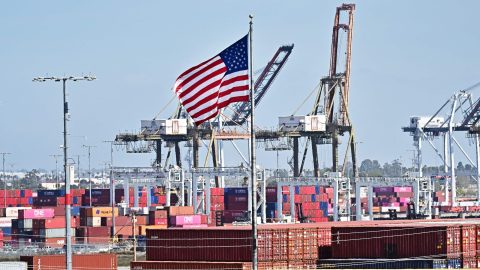
Winzer of the week: It’s getting more extreme
The new tariffs imposed by the US government and the reactions from Mexico, Canada and China make a trade war more likely. At the same time, the US economy is showing the first signs of weakening. All of this could mean a headwind for the financial markets.

Trump and green stocks – Interview with fund manager Alexander Weiss
Environmental stocks have corrected sharply in some cases as a result of the US election. We discuss with Alexander Weiss, fund manager of the ERSTE GREEN INVEST, how our fund management is positioned and what opportunities are arising for renewable equities.
USA – a country is voting on its future
The day of the US election has arrived, bringing an end to a long, intense and exciting election campaign. What economic course could the US enter after the election and what impact can be expected on the country’s already high debt level?
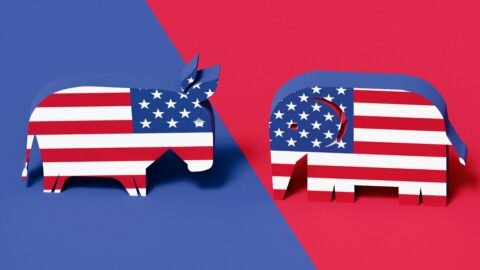
US elections: are the billions of investments in green technologies at risk?
Two years ago, the USA initiated its energy transition with the Inflation Reduction Act. This was followed by billions in subsidies and investments in renewable energies. What will happen to the Act if Donald Trump makes a comeback to the White House? Is the “Green Rush” in danger of coming to an end?

Autumn on the stock markets will be anything but boring
Election campaign, interest rate turnaround, sluggish growth in Europe – there should be no sign of autumn fatigue on the stock markets. What will the coming (and certainly exciting) weeks bring for the markets and how can investors prepare for them?
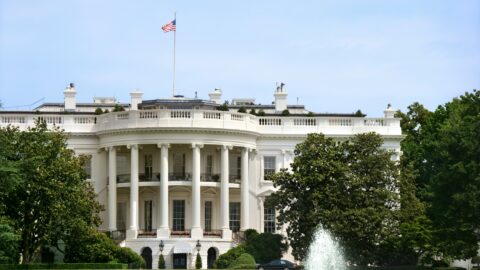
Best of Charts: The road (in)to the White House
Three weeks before election day, the race for the White House is wide open: While Kamala Harris is ahead in the nationwide polls, Donald Trump is currently likely to be ahead in the crucial “swing states”. In any case, the economic situation and mood in the USA are likely to play an important role in the race for the presidency.

Strong US labor market report: just an outlier?
In September, the US labor market performed surprisingly well, with significantly more new jobs created than expected. This has pushed back concerns about an impending recession, which is positive for the financial markets. Was the strong labor market report just an outlier, or is the US Federal Reserve perhaps on the right track to achieving the hoped-for “soft landing”?

The Sahm Rule: What is behind the recession indicator?
The Sahm Rule, an important recession indicator in the US, was triggered at the beginning of August – causing uncertainty on the markets. We explain what is behind the indicator and why everything could be different this time.

Shift in risks
Both the markets and central banks are pointing to a shift in economic risks from inflation towards growth. The focus is currently on the US labor market.
Losses on the stock markets: an overview of the reasons and consequences
There was little to cheer about on the stock markets at the start of the week: there were significant price losses in both Europe and the USA and the Japanese Nikkei-225 recorded one of the biggest daily losses in its history. What were the reasons for Monday’s sharp sell-off, what impact could the latest events have on the markets and what will happen with the increasingly weak economy?
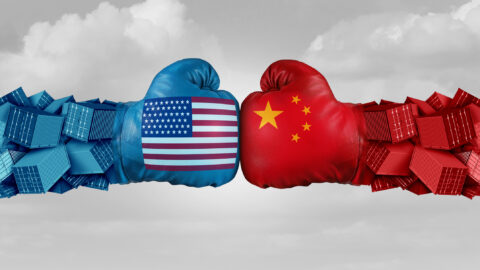
The new age of protectionism
The path towards a clearly fragmented global economy is continuing. Recently, the increase in tariffs on Chinese electric cars in the USA and the European Union has been particularly noticeable. What impact is the rise of protectionism having on the global economy?
Soft landing beats political uncertainty
With the surprising fall in inflation in the US, the scenario of a “soft landing” has become more likely. Meanwhile, the shocking attempted assassination of US presidential candidate Donald Trump at the weekend will likely have an impact on the current election campaign.

Market commentary: What will the second half of 2024 bring?
The second half of 2024 has already kicked off on the financial markets – but what can investors expect from it? After expectations of interest rate cuts in the US were pushed back further and further in the first half of the year, the scope for the US Federal Reserve could increase again in the remainder of the year. The main focus is likely to be on upcoming political decisions – which could also lead to greater fluctuations.

Signs of a slowdown: more scope for central banks?
Economic and political uncertainty is increasing. Nevertheless, inflation is falling in the USA and the eurozone. This increases the scope for central banks to react to a slowdown in economic growth by lowering key interest rates.
US interest rates: What are we to expect in the coming months?
As the latest data shows, the US economy continues to grow strongly – despite the significant interest rate hikes in the past two years. What impact will this have on the Federal Reserve’s future interest rate policy and when could the first rate cuts follow?

Inflation, interest rates, markets: 10 topics for 2024
After the price rally at the end of last year, the markets started 2024 with price losses. The ongoing positive correlation between bonds and equities is striking. Both asset classes have fallen equally recently, which makes diversification in a portfolio more difficult. But the year has only just begun. We therefore take a look at 10 key topics for 2024 that could be helpful when putting together a portfolio.
US elections 2024: The United States and its debt
In 2024, all eyes on the financial markets are also focused on the US elections in November. After years of expansionary fiscal policy, the debt situation in the United States is also coming back into focus in the run-up to the elections. What are the political and economic implications of the growing budget deficit?

Encouraging fall in inflation
Since the beginning of November the prices of both risky security classes such as equities and credit-safe government bonds have been on the rise. The market appears to be increasingly pricing in a so-called “soft” landing for the economy. The probability of this actually increased over the course of the year. However, the economic data published in recent weeks and months does not contradict the “hard” landing scenario.

Soft-landing optimism might be in for some disappointment
The financial environment has become slightly more relaxed since the beginning of November. This fact is manifesting itself on the market in the form of falling yields and rising share prices. This week, two indicators relating to the US economy in particular could provide clues as to the sustainability of this trend since the beginning of the month: retail sales and consumer prices.

Holiday sales: Hopes for record season in the US
The robust labor market and many special offers give hope for another record Christmas season in the USA. The latest market research data also shows that, despite inflation and high interest rates, Americans are once again planning to spend more over the holidays this year.

India and the West – at the crossroads?
India was recently in the spotlight as the venue for the G20 summit. Shortly thereafter, however, the relationship with the major Western states cooled. How will the West’s relationship with India develop and what role will the country play in the future?

Middle East Conflict continues: worries about expansion to other countries
Roughly two weeks after the surprising terrorist attacks by the radical Islamic Hamas ruling the Gaza Strip, on targets in Israel, the military conflict in the country continues unabated. The war in the region also continues to dominate the financial and commodity markets, with global concerns that the conflict could possibly spread to other countries in the Middle East being the main driver of uncertainty.

Market commentary: Is the interest rate peak reached?
“Higher for longer” has become the mantra of the powerful central bankers in recent months. Monetary policy is likely to remain restrictive longer than originally expected. Regardless of whether the major central banks will follow up with a final interest rate step in autumn, the interest rate peak has probably been reached and “the worst” is behind us.

How restrictive are the current interest rate policy and financial environment really?
In line with the surprisingly strong economic indicators in the US, government bond yields have risen significantly in recent months. This is putting pressure on the prices of many classes of securities and intensifying discussions about how restrictive interest rate policy really is. Could the higher level of yields make the central bank’s job easier in the form of further interest rate hikes?

Hopes for a soft landing
In the past, sharp hikes in key interest rates often triggered a recession. After the latest economic and labour market data, hopes are growing for a soft landing of the economy.
What are the lasting results of the central bank meeting in Jackson Hole?
At the annual meeting of central bankers in Jackson Hole Federal Reserve Chair, Jerome Powell, summed up the uncertain environment as “navigating by the stars in a cloudy sky”. This relates, among other things, to the uncertainty about the level of the neutral interest rate, the lagged effect of key-lending rate hikes on economic growth and inflation, and the drivers of inflation.

Soft landing with risks
Currently, the most important indicators point to average global economic growth and falling inflation. The probability of an immediate recession has decreased significantly. But the risks in the medium term remain. Chief economist Gerhard Winzer explains which three scenarios are currently emerging in the blog post.

Best of Charts: Beach Edition
The stock markets are also usually a little quieter during the summer months. Many market participants take a break due to holidays and the general activity decreases. In any case, a look at some important charts indicates that no nasty surprises are to be expected during the holidays.
Immaculate disinflation: Is that possible?
Can price stability, i.e. inflation of 2%, be achieved without a recession? The further decline in inflation in the US in June has raised expectations for this favourable scenario. However, a look in the rear-view mirror calls for caution. In the past, a central bank-induced decline in inflation has often been accompanied by a recession.

US labour market: strong employment growth
Surprisingly good figures came from the US labor market in the previous week. Despite the strong growth in employment, however, economic growth has recently been rather meager. Recession risks also remain at an uncomfortably high level.
“Brinkmanship” – Agreement on Debt Ceiling
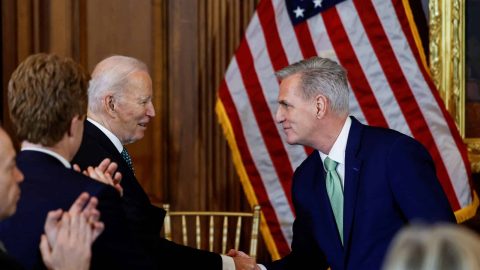
The representatives of the Democrats and the Republicans have reached an agreement in the dispute over the debt ceiling in the USA. The cap of $31,400 billion is to be suspended until 2025. Subject to approval in the House of Representatives and Congress, the agreement is positive for the financial markets. However, another effect could weigh on the markets further down the line.
Meager Growth
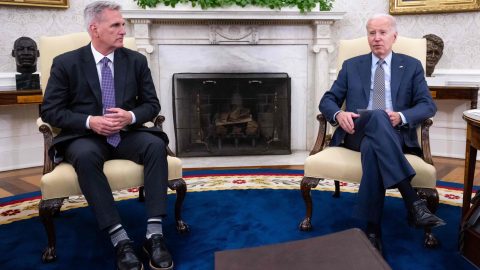
Global growth is likely to cool significantly in the second quarter. At the same time, recession risks remain uncomfortably high, as Chief Economist Gerhard Winzer writes in his market commentary. The further course of negotiations on the US debt ceiling is also likely to cause tension on the market.

Central banks weigh risks
Most recently, central banks have signaled a somewhat less sharpish stance, as an effect of the rapid key rate hikes on the monetary environment has already become visible. However, recent economic data are dampening hopes for a rapid decline in inflation, as Chief Economist Gerhard Winzer explains in his market commentary.