
Articles about “Inflation”

Equities and the inflation scare
The strong economic recovery and positive corporate results are fueling concerns about the emergence of inflation. But are these fears justified? Erste Asset Management equity expert Tamas Menyhart analyzes the situation on the stock exchanges and shows ways of guarding against inflation.

Rapid recovery in the developed world
The global economy is caught between a strong recovery and inflation fears. Despite low risk premiums, Erste AM Chief Economist Gerhard Winzer continues to see opportunities for equities as long as bond yields rise less than corporate earnings growth rates. Read more in his blog analysis.
Yield curve management
In recent days, equities and other risky asset classes have come under pressure despite the fact that in the year to date the optimism about an economic recovery has been on the rise. Is that a case of “buy the rumour, sell the fact”? Had the good news already been priced into the market? Or is there another mechanism that could be driving the future development?

EU Commission lowers growth forecasts for 2021, but is more optimistic for 2022
In view of the still rampant Corona pandemic, the EU Commission has recently lowered its growth forecasts for 2021. With the delays in some EU countries’ vaccination programmes, the lockdowns could also drag on, delaying the expected economic recovery, the Commission argues.

Will interest rates remain low in the long term?
The interest rates seem to have been going one way for years – down. With the exception of a few corrections, the taboo has been broken for many years that bond yields should have to be positive all the time.

High Inflation – likely to emerge?
At the beginning of September, the FED announced a significant change in their policy: They officially announced the implementation of “average inflation targeting”. This allows to have a higher inflation rate for a period of time instead of being closely held to the target inflation rate of 2%.
Why did the FED announce this shift in its policy? Is inflation returning in the agenda? In this article, we intend to show the policy requirements for high(er) inflation.

Outlook for the second half of 2019
Many asset classes recorded significant gains. At the same time, the falling tendency of numerous economic indicators has suggested a slowdown in GDP growth. How do these two go together?

Hungary: fiscal and monetary policy news
The European media has been paying attention to unorthodox economic policies in Hungary for years, supporting or opposing them depending where they stand on the political spectrum. At the same time Hungarian decision makers always stress they represent normality. Nowadays the question is: should we finally expect both monetary and fiscal policy normalization in the following years?

Ten theses for 2019
Read our recent blog post on the ten theses for financial market development in 2019. Is fear of a recession exaggerated?
Market remains cautious
The positive reaction to the agreement between the USA and China on not further escalating the trade conflict for the time being was only short-lived. Risky assets remain under pressure. A number of factors continue to burden the markets.

Slovakia: moving towards long-term sustainability?
The engine of the economy in Slovakia is running on a good momentum. In recent years it has been going through a cyclical upswing. Take a look at the drivers, but also consider potential threats going forward.

Financial markets 2018: reasons to be cautiously optimistic
The financial markets have been on the rocks in 2018. Read here why you should still keep a cautiously optimistic stance.

Strong USA, weak emerging markets, risk of inflation – is the economic boom drawing to an end?
This blog entry will discuss three scenarios for the coming quarters and the coming year.
YIELD RADAR: September 2018
Annualised real global GDP growth amounts to slightly above 3%. The composition of growth is not homogenuous. While the US economy grows strongly, the weakening loan growths puts weight on the economic activity in China. Find out more in the current yield radar.

Russian bonds should see good performance
In this interview Anton Hauser, senior fund manager at Erste Asset Management and expert for Central and East European (CEE) government bonds , talks about the difficult first half of 2018 and illustrates possible future scenarios.

Market view: Increased uncertainty
The performance of most asset classes in the year to date has been mixed, to put it euphemistically. Is there a common underlying factor? Can we expect to see a better second half of the year?
Rising interest rates in the USA
The sentiment of the financial market participants has deteriorated in the past months, with the losses across numerous asset classes in the year to date seemingly the driving factor. Now we have to ask ourselves: are we at the outset of a new trend, or is this just a case of increased volatility? The general decline in prices has gone in conspicuous tandem with the increase in three important financial market ratios:

Bleaker sentiment on the financial markets
The environment on the financial markets has become a bit bleaker. Growth rates of industrial output and the survey-based indicators for economic growth are falling, while the trade conflict between the USA and China and the tense geopolitical situation in the Middle East has caused the risk for global growth to increase further. Will the environment remain generally supportive to risky asset classes?
US Fed tightens its monetary policy
The most important central bank of the world, the US Fed, increased the Fed funds rate on 21 March and also published projections for economic key indicators. Even though this does not sound like much, the implications for the markets are significant.

Protectionism: Risk of a trade war with the US?
The announcement by the US President, Donald Trump, to levy import tariffs on steel (25%) and aluminium (10%) has made waves. Can the favourable economic environment be toppled an will we see a trade war between the US and the EU?
Ten new determining factors for the capital market
The economic environment for the capital markets is subject to change as we speak. About one and a half years ago, the global economy shifted from recovery to boom, which was very advantageous for the markets. The features were strong, broadly based economic growth, low inflation, very supportive monetary policies, good earnings growth, and limited price fluctuations on the markets. We have now started leaving this best of all worlds (“Goldilocks scenario”) in more and more categories.

Investment stories in Latin America
The BBVA Latin American Local Markets Conference in London gave Christian Gaier, senior fund manager of government bonds of emerging markets, the chance to talk to local Latin American representatives. In our blog he shares some of the insights he gained and the narratives that may affect 2018.

Market Monitor: After the market correction, confidence outweighs
The year 2018 had started on such a promising note – is what we all were thinking. But at the beginning of February, the market taught us a lesson. As a result, the discussions at our first Investment Committee of the year at the beginning of February were interesting ones.
How does inflation work? – Part 2: Inflation drivers
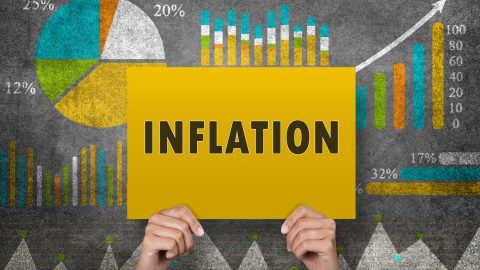
There are many factors that may affect inflation. Also, the weights of certain factors may vary across countries. Take the development of the exchange rate, for example.

Inflation worries burdening stock exchanges – part 2: the macro perspective
Equity indices have undergone a global correction in the past days. The Dow Jones index has shed more than 10% from its January high. What is the macro-economic reason for the correction?

Strong growth and rising rates
At the beginning of 2018, economic indicators are confirming the recovery scenario. Above all, the yields of government bonds are on the rise. Why is that the case, and what does it mean for the financial market as a whole?
Inflation: a general overview – Part 1
At the moment the environment on the markets is very supportive. The economy is booming, the big central banks are still buying government bonds on aggregate and are thus keeping yields low, and the tax reform in the USA has improved the sentiment further over the past weeks. In addition, most asset managers agree on the status quo. Given this background, people ask “when will the party end?”. An increase in inflation is (one of) the usual suspect(s).

Ten economic hypotheses for 2018
The current environment is very positive for the capital markets: strong growth, low inflation, supportive monetary policies, good earnings growth, and low volatilities, i.e. fluctuations. Also, the numerous risks have not had a significantly negative impact on prices. However, the phase of rising prices started as early as March 2009.

2017: a positive year on the global capital markets
Capital markets recorded a positive year of 2017. The performance of the various asset classes was of the textbook variety: the higher the risk, the higher the return.
Market Monitor: risky markets have come far
Earlier this week, we convened the last Investment Committee of 2017. The general risk appetite of the team has not changed vis-à-vis the previous month (from 78.85 percent to 79 percent on our 0 – 100 percent scale). The team continues to see the future optimistically, with a resulting “risk on” stance.

Capital markets outlook for 2018: Will the party hold on?
2017 is drawing to an end, and the bottom line is positive. The outcome is significantly better than we had expected. Since the financial crisis in 2008, the global economy has never expanded more quickly and especially concertedly than in 2017. Also, inflation has surprised on the downside, falling short yet again of the expectations held by central banks and analysts.
Market Monitor: Optimism on the rise
This week we held our monthly Investment Committee meeting. Although only little has changed with regard to the overall economic picture, we were having a few interesting discussions that we would now like to share with you.

Economic scenarios 2018
Q3 is drawing to its end. Traditionally, this heralds the development of a strategy for the next year, an important part of which is the creation of scenarios. On the basis of the status quo, we have drawn up three further different scenarios in this blog entry.

Growth picking up in the emerging economies
Economic growth has increased significantly on a global scale and is broadly supported. According to our preliminary estimate, global GDP recorded a growth rate of 3.7% from Q1 to Q2 (annualised). While the developed economies have presumably grown by 2.7%, the emerging economies posted a growth rate of 5.2%. In this article, we would like to take a closer look at the emerging markets on the basis of classic economic indicators.

Solid Growth
Some ten years after the outbreak of the Great Recession, global economic growth is positive and broadly based, inflation is low in the developed economies and falling in important emerging economies, and monetary policies are very supportive, cautious, and predictable. At the same time, company earnings growth has increased significantly, and the volatilities of many asset prices are low. This environment is generally positive for risky asset classes.

Increase in inflation has come to an end for now
Two developments are prominently noticeable on the markets at the moment: on the one hand, the indicators of real economic growth suggest a stable real economic growth rate of about 3%. On the other hand, we have seen global consumer price inflation decline since the beginning of the year. The reflation phase, i.e. the general increase in inflation in the second half of 2016, seems to be over (for now).

The global economy based on the Goldilocks principle
The global economy is growing moderately, inflation is low, and the monetary policy is loose. This environment supports many asset classes from bonds to equities. The political uncertainty has been absorbed rather well so far too. Will this situation last?
ECB takes another tiny step
Economic growth in the Eurozone has embarked on a clear upward trend. At the same time, the fear of falling wages and prices has disappeared for now. The worries over a possible break-up of the European Union have also eased. Against this backdrop, the ECB President Draghi issued a slightly more optimistic growth forecast yet again on 27 April at the press conference of the European Central Bank. This is another tiny step indicating a possible reduction of the monetary support in the medium term.

Reflation trade comes to an end
The markets were consolidating in March. The global equity index, the spreads for credit risk, and the yields of risk-free government bonds have been going sideways. Before that, the risky asset classes had recorded remarkable price increases, while risk-free bonds had incurred losses. Has the so-called reflation trade, i.e. the positioning towards rising nominal economic […]

A masterpiece
The US central bank Fed increased the Fed funds rate last Wednesday. The risky asset markets reacted to the move with an increase. At the same time, the US dollar depreciated. How can that be explained?

Turbulent capital markets: what to expect in 2016?
The price declines on the equity markets at the beginning of the year suggest a decline in investor confidence. Is this justified? Please find a few hypotheses for 2016 in the following:
All eyes on Washington: Will the Fed funds rate be raised?
Interest rate decision by the Fed Tomorrow, Thursday 17 September 2015, the federal Open Market Committee (FOMC) of the US central bank Fed will be taking an important decision. Is the Fed funds rate to be raised or not? The financial markets have accorded this decision a particularly important role. After all, the rate hike […]

Turkey and the feeling of summer time sadness
We are almost approaching the end of the summer but it looks like we are back to April 2015 in Turkey. The election outcome and aftermath did not work as politicians had desired and the efforts to form a government have failed so far.

Market and fundamentals
Weak growth Real global economic growth was surprisingly weak in Q1. The preliminary estimate for the annualised growth rate of Q4 2014 to Q1 2015 is only 1.5%. This is mainly due to disappointingly weak growth of the GDP in the USA (+0.2%), in China (+5.3%), in the UK (+1.2%), and in Japan (+1.5%; estimate). […]

Macro data: Dynamics down
The dynamics of the economy and the markets have declined. Global economic growth is down on a quarter-on-quarter basis, the two most important trends of the past months (appreciation of the US dollar and falling oil price) have come to a halt, inflation is not falling anymore, and the US Fed has put a damper […]

Fed funds rate – a threat to the equity markets?
The US central bank, the Fed, is very likely – almost 90%, according to Fed funds futures – to raise the Fed funds rate this year. The expected rate hike has been one of the dominating topics on the financial markets for a year. The bursting of a mega bubble, rising pressure on fragile emerging […]
The confrontation of the doves
The most important central bank in the world, i.e. the US Fed, made an announcement yesterday that attracted a large deal of attention from investors. The bank withdrew its assurance to remain “patient” before the Fed funds rate would be increased. This paved the way for a possible abandonment of the zero interest rate policy, […]

Two canaries in the coalmine
The US dollar has appreciated significantly vis-à-vis the euro in the past months. For this trend to continue, at least two developments would have to be in place. Firstly, the US Fed would have to abandon its zero interest rate policy; and secondly, the ECB would have to remain on its path of negative interest […]

Boon and bane
The driving topics on the financial markets are the stabilisation of the oil price, mixed economic indicators globally vs. positive economic indicators for the Eurozone, the temporary decline in escalation risk, and the expansive central bank policies.

The effects of the ECB policy
Since the cutting of key-lending rates to almost zero in the Eurozone did not suffice to keep the inflation expectations at their long-term target of slightly below 2%, the ECB Council decided in January to expand the central bank money supply until the accomplishment of the target was foreseeable. The possible effect on the financial […]