
Articles about “Eurozone”

Risk of recession in Europe? Labor market data under the microscope
In recent weeks, there has been much discussion about the so-called Sahm Rule – a usually quite reliable recession indicator in the US that was triggered in August for the first time since the coronavirus crisis. There is no corresponding indicator for Europe so far, which raises the question: What is the risk of recession with regard to the European labor market?

Inflation, interest rates, markets: 10 topics for 2024
After the price rally at the end of last year, the markets started 2024 with price losses. The ongoing positive correlation between bonds and equities is striking. Both asset classes have fallen equally recently, which makes diversification in a portfolio more difficult. But the year has only just begun. We therefore take a look at 10 key topics for 2024 that could be helpful when putting together a portfolio.

Encouraging fall in inflation
Since the beginning of November the prices of both risky security classes such as equities and credit-safe government bonds have been on the rise. The market appears to be increasingly pricing in a so-called “soft” landing for the economy. The probability of this actually increased over the course of the year. However, the economic data published in recent weeks and months does not contradict the “hard” landing scenario.

Inflation continues to fall: Do interest rate hikes now come to an end?
Inflation in the Eurozone is expected to fall further. According to initial estimates, the inflation rate fell more sharply than expected in August. With a view to the next ECB interest rate decision at the end of October, the question now arises: Do interest rate hikes now come to an end?
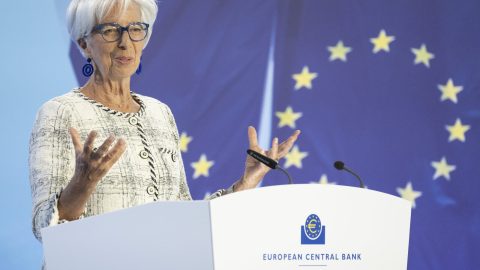
Pause on interest rate hikes?
Once again it’s all about interest rates this week. Will the ECB take a break this time and leave key interest rates unchanged? There is a lot to be said for it.

What are the lasting results of the central bank meeting in Jackson Hole?
At the annual meeting of central bankers in Jackson Hole Federal Reserve Chair, Jerome Powell, summed up the uncertain environment as “navigating by the stars in a cloudy sky”. This relates, among other things, to the uncertainty about the level of the neutral interest rate, the lagged effect of key-lending rate hikes on economic growth and inflation, and the drivers of inflation.

Summer, sun & early election: Spain gets ready for a tight race
The Spanish economy is showing resilience, unlike other countries in the euro area. Now, however, the southern European country is preparing for early elections next weekend, with a tight race looming.
Inflation in Europe likely to have peaked
Inflation data in Europe recently showed a surprisingly significant slowdown. The decline in energy prices in particular had a dampening effect. Read our latest blog post to find out about the current inflation in the individual EU countries.

US labour market: strong employment growth
Surprisingly good figures came from the US labor market in the previous week. Despite the strong growth in employment, however, economic growth has recently been rather meager. Recession risks also remain at an uncomfortably high level.
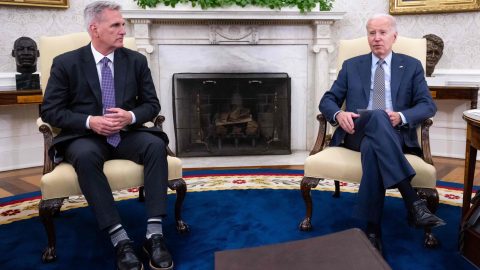
Meager Growth
Global growth is likely to cool significantly in the second quarter. At the same time, recession risks remain uncomfortably high, as Chief Economist Gerhard Winzer writes in his market commentary. The further course of negotiations on the US debt ceiling is also likely to cause tension on the market.

Central banks weigh risks
Most recently, central banks have signaled a somewhat less sharpish stance, as an effect of the rapid key rate hikes on the monetary environment has already become visible. However, recent economic data are dampening hopes for a rapid decline in inflation, as Chief Economist Gerhard Winzer explains in his market commentary.

Where is the recession?
The global economy grew strongly in the first quarter of 2023. At the same time, inflation remains too high, which is why central banks will continue to pursue a restrictive monetary policy. Although growth indicators are good to strong, there are therefore increased risks of recession.

Banking problems support share prices
Since the banking problems in the US emerged in March, share prices have risen and expectations for future key interest rates have fallen significantly. However, inflation dynamics remain the most important factor for the markets, but unfortunately also one that is difficult to assess.

Croatia entering Eurozone – Farewell to Kuna
Croatia’s entry into the euro area is a done deal. Ivana Kunstek, Senior Fund Manager at Erste Asset Management Croatia, talks about her home country’s path into the eurozone.

Slovakia: moving towards long-term sustainability?
The engine of the economy in Slovakia is running on a good momentum. In recent years it has been going through a cyclical upswing. Take a look at the drivers, but also consider potential threats going forward.

European banking overshadowed by Italian banks
The year started strongly for European markets with investors favoring Italian banks and stocks. But then came the budget proposal of the new Italian government, changing the mood abruptly. Read about it in our new blog!

Romania: losing its shine
On January 1st 2019, Romania will assume the Presidency of the Council of the European Union: an opportunity to regain its shine as a true growth champion and supporter of European values. But how is the country’s economy doing?

Market view: Increased uncertainty
The performance of most asset classes in the year to date has been mixed, to put it euphemistically. Is there a common underlying factor? Can we expect to see a better second half of the year?

Italy: slipping into a crisis in confidence
The heightened uncertainty over whether Italy will repay its debts and whether it will remain a member of the eurozone has led to a sell-off in securities. Our chief economist Gerhard Winzer gives an overview.
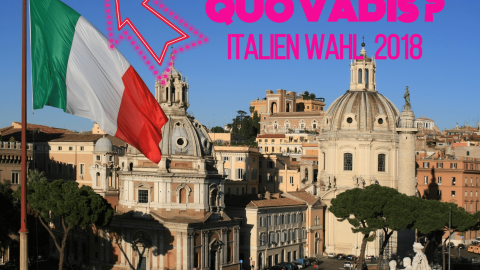
Quo Vadis Italia? – The 2018 general election in Italy and its importance to the economy
The economic environment for Italy remains challenging. The fundamental problem is the low economic growth. Although the composition of the future government is still unclear, the party programs imply a persistent reform deadlock.

The global economy based on the Goldilocks principle
The global economy is growing moderately, inflation is low, and the monetary policy is loose. This environment supports many asset classes from bonds to equities. The political uncertainty has been absorbed rather well so far too. Will this situation last?

Italy – the third domino
On Sunday 4 December Italy will be holding a referendum on an amendment to the constitution. This is relevant particularly because in case of a rejection, the political uncertainty would increase.

Mario Draghi – Deflation Fighter
The arguments supporting a further rise in share prices have become stronger. The important central banks have been sending expansive signals in recent weeks, i.e. signals that support the economy and the markets. The latest measure was the statement made by the president of the European Central Bank (ECB), Mario Draghi, at the ECB press […]

“Black Monday” at the stock exchanges: Why?
Market correction Equities, bonds affected by default risk, commodities, and emerging markets currencies are currently subject to corrections, which, noticeably, have now gone beyond the purview of emerging markets: while the emerging markets equity index declined by almost 6% (Performance-Data Source: Bloomberg, MSCI) last week, the index for developed markets lost 5.3% (Performance-Data Source: Bloomberg, […]

China weighs heavy on commodity prices and production
Global GDP growth has probably only increased marginally in Q2 after the very weak Q1. Economic activity has thus remained disappointingly weak on a global scale.

Parallel currency in Greece?
Last Sunday, the Greek people decided with a clear majority to follow the proposal of their government. With 61.3%, the No camp rejected the conditions of the expired adjustment program. Thereby, Greece is one step closer to an exit from the Eurozone and the European Union.

Macro data: Dynamics down
The dynamics of the economy and the markets have declined. Global economic growth is down on a quarter-on-quarter basis, the two most important trends of the past months (appreciation of the US dollar and falling oil price) have come to a halt, inflation is not falling anymore, and the US Fed has put a damper […]

Two canaries in the coalmine
The US dollar has appreciated significantly vis-à-vis the euro in the past months. For this trend to continue, at least two developments would have to be in place. Firstly, the US Fed would have to abandon its zero interest rate policy; and secondly, the ECB would have to remain on its path of negative interest […]

Boon and bane
The driving topics on the financial markets are the stabilisation of the oil price, mixed economic indicators globally vs. positive economic indicators for the Eurozone, the temporary decline in escalation risk, and the expansive central bank policies.
The effects of the ECB policy
Since the cutting of key-lending rates to almost zero in the Eurozone did not suffice to keep the inflation expectations at their long-term target of slightly below 2%, the ECB Council decided in January to expand the central bank money supply until the accomplishment of the target was foreseeable. The possible effect on the financial […]

Light and shadow
The environment has become a bit brighter in the past weeks. In addition to the improvement of the economic environment in the Eurozone and Japan, more and more central banks loosened their monetary policies. For example, on 12 February the central bank of Sweden (Riksbank) surprisingly cut its key-lending rate to -0.1% and announced to […]