
Articles about “USA”
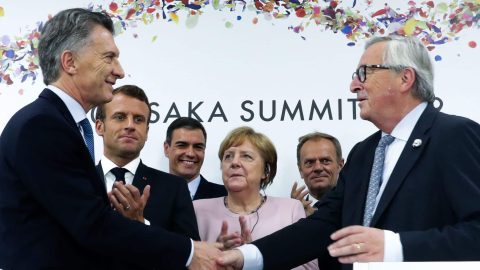
Mercosur – EU: Largest free trade zone in the world
After 20 years of negotiation the EU and the South American trade bloc Mercosur announced the formation of the world’s largest free trade zone. The agreement is controversial.

“Charts don’t tell the future. They tell stories”
The US and Europe are the two most important equity markets worldwide. In our article, we present 6 charts that show the difference between the European and US stock markets.

USA urges Japan to sign trade agreement quickly
Japan is currently on several levels in the spell of US President Donald Trump’s trade policy. Will there be a free trade agreement soon and what would such an agreement mean for the Japanese economy?

Transformation process in China
China accounts for just under 16% of world gross domestic product, making it the second largest economy in the world. Can this success story be continued – what speaks for and what against it?
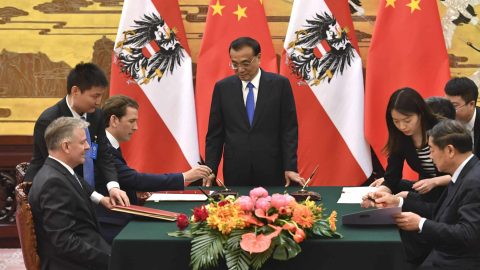
Rivalry USA – China dominating the markets
The trade war between China and the USA reaches a new stage. With the announcement by US President Trump threatening to raise the penalty for Chinese imports to 25 percent, the fronts seem hardened. Will there be an early resolution of the trade dispute and what does a further escalation mean for the global economy?

Emerging markets corporate bond outlook 2019 + Video
What were the biggest challenges last year, and what are the opportunities in 2019? Emerging markets fund manager Péter Varga answers the most important questions.

USA still going strong
The US economy has developed very solidly since the financial crisis. The current expansion could soon become the longest in US history.
Currently the US remains strong but the key question is: Will it continue? Read on here!

Stabilization or downturn?
The majority of economic indicators point to a slowdown in global real economic growth.
How will this dichotomy between the market and the economic environment be resolved and will there be a stabilization?
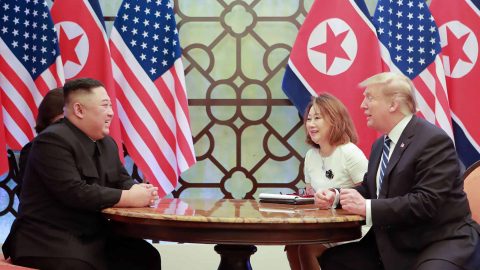
Trade dispute escalation averted for now
US President Trump postponed the deadline for new tariffs on imports from China. The key question is: Will there be an early resolution of the trade dispute between the US and China?
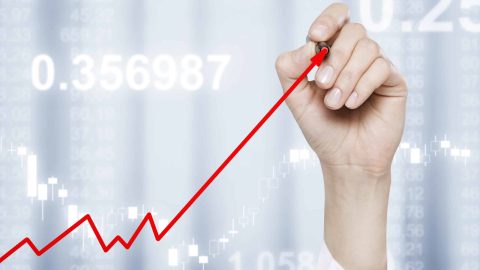
Decent, not thrilling – the reporting season in the US and Europe
What are the trends that have become apparent in the current reporting season in the US and Europe? Find out more in our new blog.

Ten theses for 2019
Read our recent blog post on the ten theses for financial market development in 2019. Is fear of a recession exaggerated?
Market remains cautious
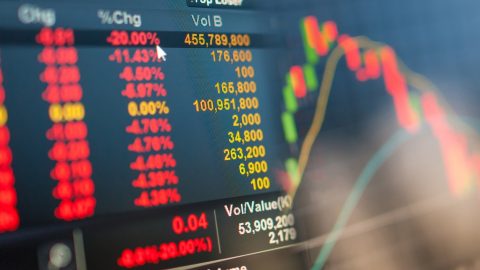
The positive reaction to the agreement between the USA and China on not further escalating the trade conflict for the time being was only short-lived. Risky assets remain under pressure. A number of factors continue to burden the markets.

US Congressional election results
The outcome of the US Congressional election on Tuesday has caused some relief in the international financial markets. Read more about it in our blog.

Strong USA, weak emerging markets, risk of inflation – is the economic boom drawing to an end?
This blog entry will discuss three scenarios for the coming quarters and the coming year.

European equities – still time to get on board?
The performance of European equities in the year to date has been disappointing. While in the USA stock exchanges are going from strength to strength, European share prices have been stagnating. Is it still worth investing in European equities?

Financial Markets Monitor August: We remain optimistic
The month since the previous meeting in July had been a positive one for investors willing to take risks. Thus, the optimistic risk stance of our team paid off. It is therefore not surprising that the team remains optimistic.
Market view: Increased uncertainty
The performance of most asset classes in the year to date has been mixed, to put it euphemistically. Is there a common underlying factor? Can we expect to see a better second half of the year?

Financial Markets Monitor June: a lot going on
An Investment Committee again! A month can pass quickly, especially if there is a lot going on in the markets. In light of recent market events (Italy, Turkey, Argentina), I was surprised that our risk stance has not changed since our last Investment Committee meeting. Obviously, it takes a lot to get us out of […]
Financial Markets Monitor May: positive opportunities outnumber negative ones
Positive opportunities still outnumber the negative ones on the capital markets – that was the conclusion of our Investment Committee. Our willingness to take risks is still optimistic and also moderately higher than in April.
IMF conference in Washington: cautiously upbeat sentiment about emerging markets
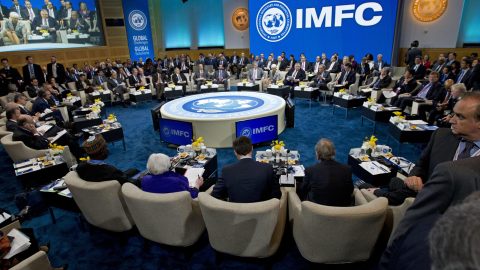
Senior Funds Manager Felix Dornaus summarises his learning points from the presentations by the International Monetary Fund in Washington on 20 to 23 April 2018. Who were the winners and who the losers?

Bleaker sentiment on the financial markets
The environment on the financial markets has become a bit bleaker. Growth rates of industrial output and the survey-based indicators for economic growth are falling, while the trade conflict between the USA and China and the tense geopolitical situation in the Middle East has caused the risk for global growth to increase further. Will the environment remain generally supportive to risky asset classes?
Protectionism: Risk of a trade war with the US?
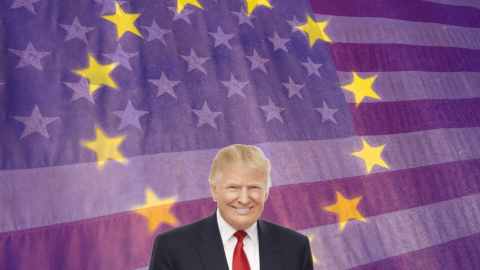
The announcement by the US President, Donald Trump, to levy import tariffs on steel (25%) and aluminium (10%) has made waves. Can the favourable economic environment be toppled an will we see a trade war between the US and the EU?

Market Monitor: risky markets have come far
Earlier this week, we convened the last Investment Committee of 2017. The general risk appetite of the team has not changed vis-à-vis the previous month (from 78.85 percent to 79 percent on our 0 – 100 percent scale). The team continues to see the future optimistically, with a resulting “risk on” stance.

The global economy based on the Goldilocks principle
The global economy is growing moderately, inflation is low, and the monetary policy is loose. This environment supports many asset classes from bonds to equities. The political uncertainty has been absorbed rather well so far too. Will this situation last?
My impressions from IMF meeting in Washington: Emerging markets “alive and kicking”
The spring meeting of the International Monetary Fund was held in Washington from 20 to 23 April. This event was the reason for an investor conference that I attended in order to get an idea of the status quo of the global economy as well as of risks and opportunities.

Investors are focussing on the USA
The United States are currently in the spotlight, given the primary elections for the US presidential election in November. But what does the US economy look like at the moment?

Macro data: Dynamics down
The dynamics of the economy and the markets have declined. Global economic growth is down on a quarter-on-quarter basis, the two most important trends of the past months (appreciation of the US dollar and falling oil price) have come to a halt, inflation is not falling anymore, and the US Fed has put a damper […]

Fed funds rate – a threat to the equity markets?
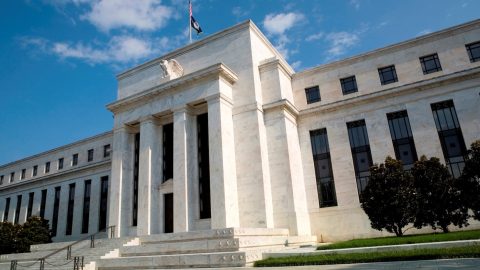
The US central bank, the Fed, is very likely – almost 90%, according to Fed funds futures – to raise the Fed funds rate this year. The expected rate hike has been one of the dominating topics on the financial markets for a year. The bursting of a mega bubble, rising pressure on fragile emerging […]
The confrontation of the doves
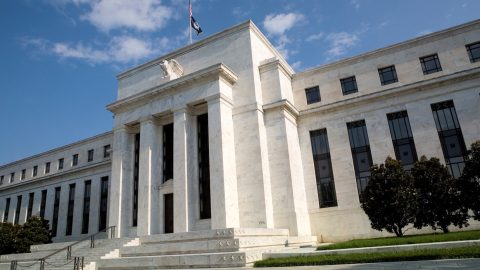
The most important central bank in the world, i.e. the US Fed, made an announcement yesterday that attracted a large deal of attention from investors. The bank withdrew its assurance to remain “patient” before the Fed funds rate would be increased. This paved the way for a possible abandonment of the zero interest rate policy, […]

Two canaries in the coalmine
The US dollar has appreciated significantly vis-à-vis the euro in the past months. For this trend to continue, at least two developments would have to be in place. Firstly, the US Fed would have to abandon its zero interest rate policy; and secondly, the ECB would have to remain on its path of negative interest […]