

Several major pharmaceutical companies have recently surprised the markets with strong quarterly results and have further raised their profit forecasts. This positive performance was largely driven by the ongoing boom in weight-loss products and significant sales of cancer drugs. New products and active ingredients in both areas promise further potential.
Please note: The companies mentioned in this article have been selected as examples and do not constitute investment recommendations. Past performance and forecasts are not reliable indicators of future performance.
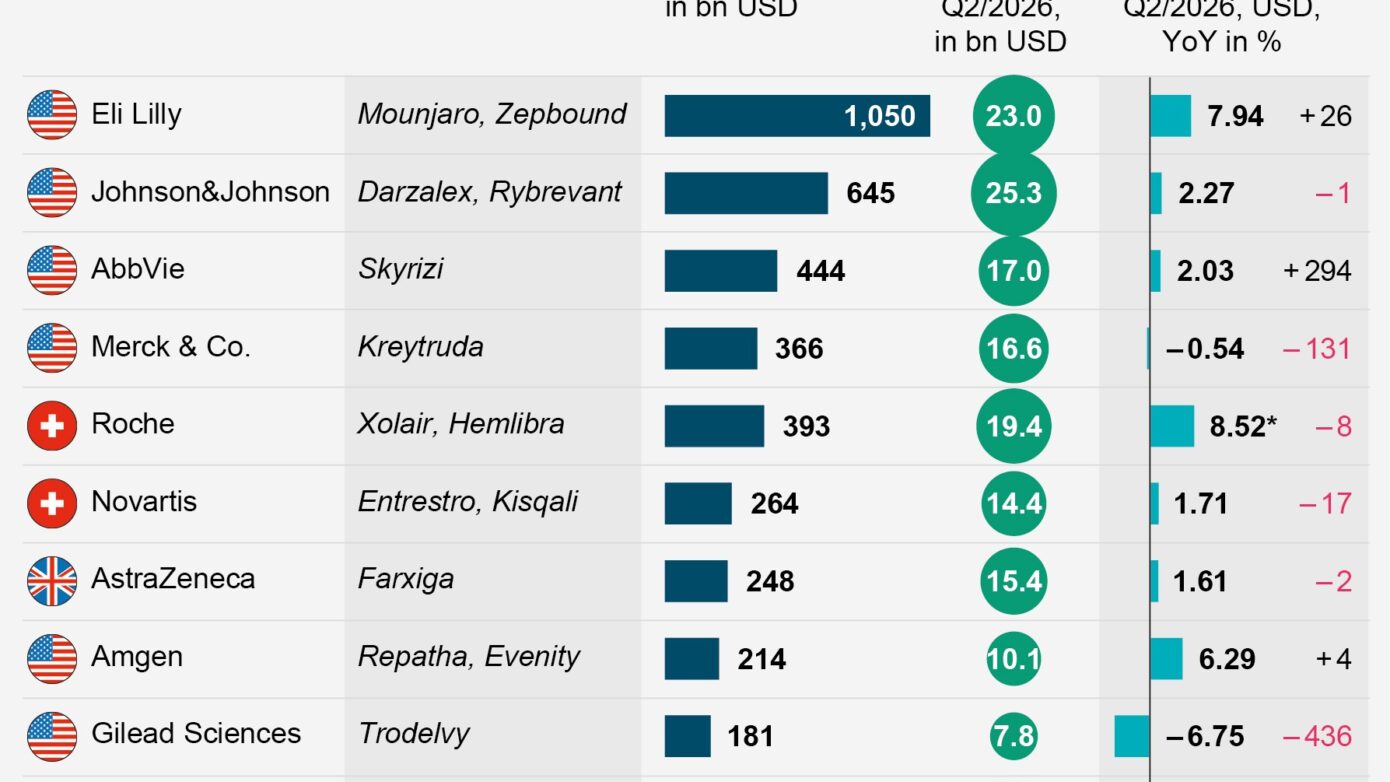
Eli Lilly: Diabetes drug Mounjaro and weight reducer Zepbound are driving growth
Eli Lilly, the world’s largest pharmaceutical company by market capitalisation, has raised its revenue forecast for 2026 to a range of 85 to 87 billion US dollars (74 to 76 billion euros) following a surprisingly strong second quarter. It was only at the end of April that the US group had raised its forecast to 82 to 85 billion dollars. The diabetes drug Mounjaro and strong sales of the weight-loss drug Zepbound drove Eli Lilly’s growth. In the second quarter, group revenue rose by almost half compared with the same quarter last year to just under 23 billion dollars. Bottom line, profit rose by a quarter to 7.1 billion dollars.
With its medicines Mounjaro for diabetes and Zepbound for obesity, Eli Lilly currently has two of the most successful products in this sector and is constantly developing new ones. The new weight-loss pill Foundayo generated sales of just under 100 million dollars in the second quarter. Foundayo, which contains the active ingredient Orforglipron, was first approved by the US Food and Drug Administration (FDA) in early April. The company could soon apply for approval for Retatrutide, a weight-loss drug currently in development.
Eli Lilly is also likely to continue to benefit from its strong position in the key US market, as an increasing number of people in the US is gaining access to weight-loss drugs. Since July, more elderly people have been gaining access via the state-run Medicare programme to GLP-1 drugs, which are prescribed for diabetes and weight loss.
Johnson & Johnson: Blockbuster drug Darzalex in the spotlight
US pharmaceutical giant Johnson & Johnson also performed well in the second quarter, despite declining sales of its psoriasis drug Stelara. In the three months to the end of June, the group generated revenue of just over 25 billion US dollars, which was 6.6 per cent more than a year earlier. The company thus exceeded analysts’ average expectations. The main contributors to this were the blockbuster drug Darzalex, used to treat multiple myeloma, a form of bone marrow cancer, as well as the two lung cancer drugs Rybrevant and Lazcluze. Adjusted profit rose by almost five per cent to 2.90 dollars per share. CEO Joaquin Duato described it as a strong quarter and raised the full-year revenue forecast to 101.4 billion dollars.
Merck & Co: Hope for blood pressure reducers Keytruda and Winrevair
US pharmaceutical group Merck & Co from strong demand for newer medicines in the second quarter and recorded a surprisingly strong increase in revenue. In the second quarter, revenue rose by five per cent year-on-year to 16.6 billion dollars. The group made progress in expanding its product pipeline, including significant growth in promising candidates such as the blood pressure medication Winrevair. Revenue from the blockbuster cancer drug Keytruda recently rose by 5 per cent to nearly 8.4 billion dollars. Management has raised its revenue forecast for the full year 2026 to a range of 66.3 billion to 67.3 billion dollars, up from the previous range of 65.8 billion to 67.0 billion dollars. However, the profit forecast has been lowered due to the acquisition of the leukaemia specialist Terns Pharmaceuticals.
AstraZeneca: Medicines for cancer and rare diseases
Strong demand for medicines to treat cancer and rare diseases also brought the British company AstraZeneca a surprise rise in profits in the second quarter. Adjusted earnings per share rose by 18 per cent at constant exchange rates to 2.63 dollars. Analysts had expected an average of 2.48 dollars. Currency-adjusted turnover rose by 5 per cent to 15.38 billion dollars, in line with market expectations. The group reaffirmed its full-year forecast, with turnover expected to grow in the mid- to high-single-digit percentage range.
Swiss pharmaceutical companies Roche and Novartis are having problems
The latest quarterly results from the major Swiss pharmaceutical groups were not quite as successful. Roche suffered from strong headwinds from exchange rates in the first half of the year. Revenue in the first half of the year, calculated in Swiss francs, fell by 2 per cent to 30.4 billion Swiss francs. On a currency-adjusted basis, however, there was an increase of 6 per cent. The pharmaceutical group confirmed its previous targets for the full year 2026.
Swiss firm Novartis is currently successfully weathering the fallout from the slump in sales of its former best-seller, Entresto. Whilst cheap generic versions halved revenue from the heart medication in the second quarter, rapidly growing cancer and multiple sclerosis drugs put the group back on the path to growth. Revenue rose by just under 3 per cent to 14.4 billion dollars between April and June. Adjusted for currency effects, the increase was 1 per cent. Adjusted operating profit remained flat at 5.94 billion dollars but still exceeded analysts’ expectations. On balance, net profit slumped by 19 per cent to 3.3 billion dollars due to higher taxes and interest expenses.
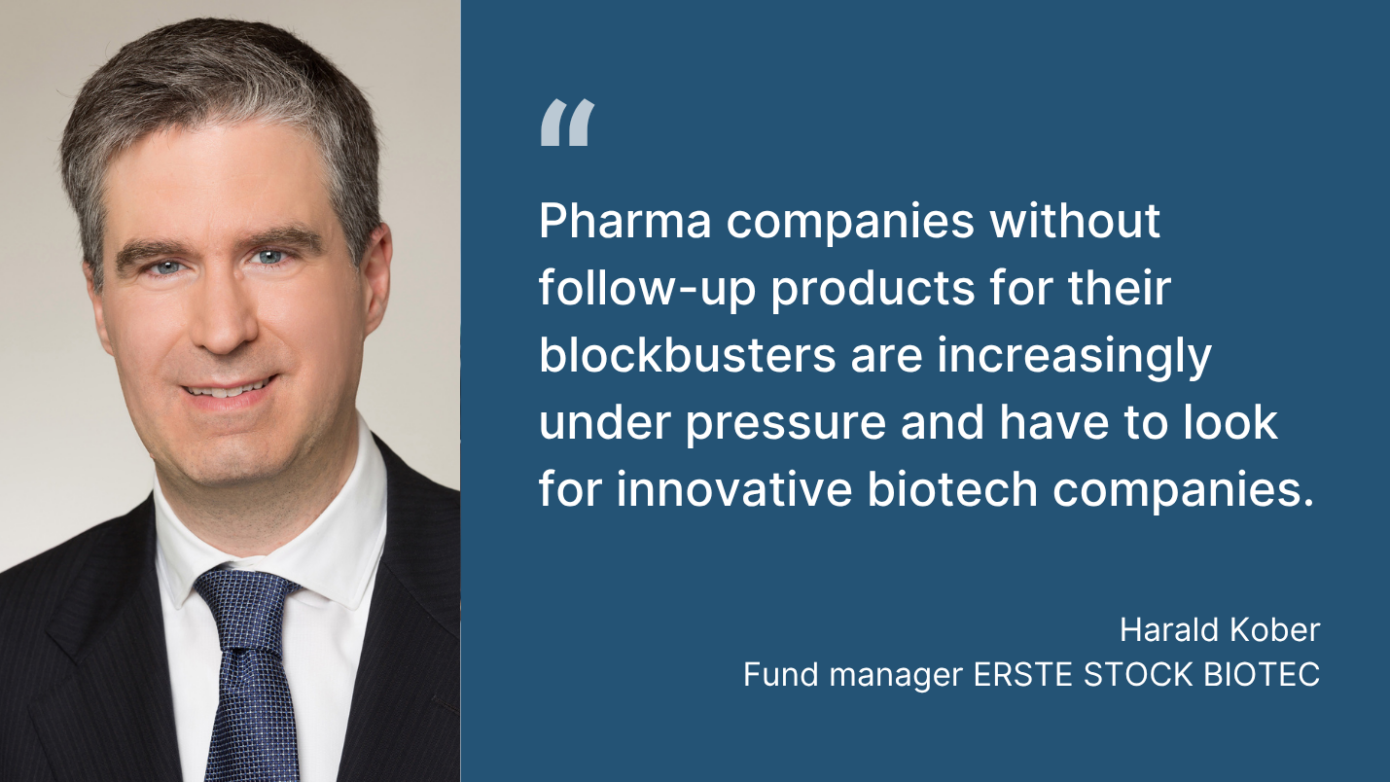
Harald Kober, senior fund manager of the ERSTE STOCK BIOTEC equity fund, now sees growing pressure due to expiring patents. Pharmaceutical companies are now looking at smaller and innovative biotech companies that have good chances of product approvals. The entire biotechnology sector is likely to benefit from this.
Please note: Investing in securities involves risks as well as opportunities.
Novo Nordisk aims for a comeback with a tablet-based treatment
Danish pharmaceutical group Novo Nordisk exceeded market expectations for second-quarter profit and has raised its profit and revenue forecasts for the full year. The manufacturer of the weight-loss drug Wegovy increased its adjusted operating profit for the quarter by around 11 per cent year-on-year to 33.4 billion Danish kroner, or around 4.5 billion euros.
Novo Nordisk is a pioneer in the field of modern weight-loss treatments and, with its products Ozempic and Wegovy, has sparked the boom in GLP-1-based treatments. GLP-1 is a hormone produced naturally by the body that promotes insulin secretion and increases feelings of fullness. Thanks to the massive turnover in this sector, the Danish company was at times the most valuable group in Europe in terms of market capitalisation. Novo Nordisk has now fallen behind its US rival Eli Lilly in the battle for dominance in the lucrative weight-loss market.
Former industry leader Novo Nordisk now aims to win back market share from Eli Lilly with its new weight-loss pill. Novo’s CEO, Mike Doustdar, expects the market for weight-loss tablets to account for up to 50 per cent of the GLP-1 market by 2030. Until now, the market has been dominated primarily by weight-loss injections. In Germany, the Wegovy weight-loss tablet has been available since 1 September. The prescription-only tablets are authorised for people who are obese or overweight and have at least one weight-related comorbidity.
However, in the battle for the rapidly growing market for weight-loss products, the CEO of Novo Nordisk rejects the idea of a straightforward two-horse race with US rival Eli Lilly. The market will not develop into a “Coca-Cola versus Pepsi”-style duel, said Mike Doustdar in an interview with the Reuters news agency. Rather, he expects greater segmentation: “There will be Coke and Pepsi and Fanta and Dr Pepper and Red Bull.”
Moderna shares temporarily tripled following successful cancer trial
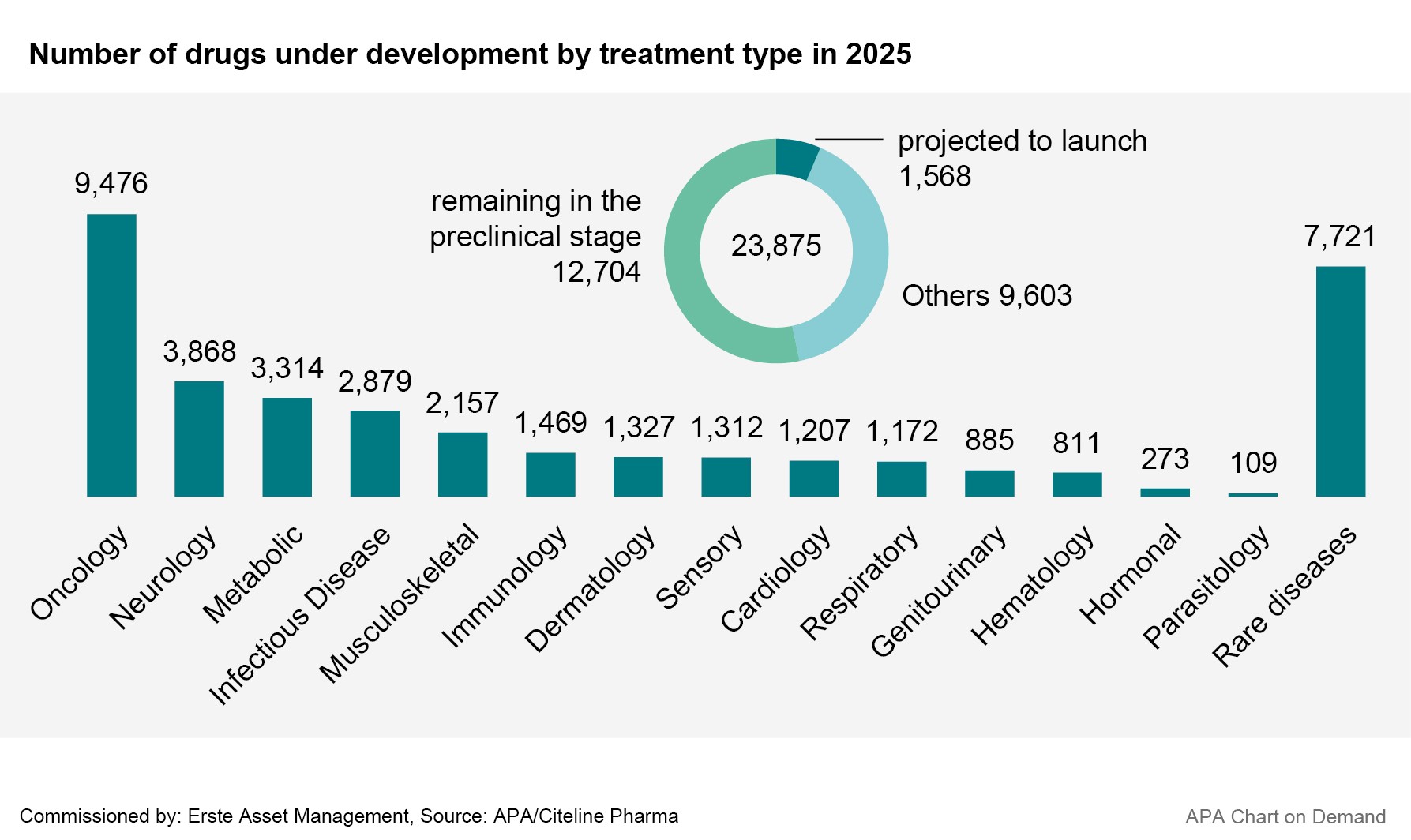
New active ingredients and products are also likely to give a further boost to the cancer drugs segment, which is the highest-revenue-generating segment of the pharmaceutical industry. A successful trial by Moderna and Merck & Co into a melanoma vaccine recently caused quite a stir. On the day the study results were published, Moderna’s share price soared by 177 per cent on the US technology exchange, the Nasdaq. As a result, Moderna’s market capitalisation rose by 44 billion to around 70 billion dollars on that day alone. Merck’s share price rose by a good 12 per cent that same day.
According to the study data, Merck and Moderna may have achieved a breakthrough in mRNA vaccines against cancer. The final phase of clinical trials for a therapeutic vaccine for patients with advanced-stage melanoma has shown positive results. “This is the first announcement of positive Phase 3 results for an mRNA-based cancer therapy,” the joint statement said. Researchers have been working on the development of mRNA therapies for cancer for some time. The new vaccine, called Intismeran Autogene, is based on the same technology that underpins the Covid-19 vaccines.
💉 What is mRNA technology?
mRNA technology makes it possible to turn genetic information into proteins in a targeted way, without changing the genome. It has sped up vaccine development and opens up new possibilities in personalized medicine, oncology, and treating genetic diseases. Despite technical challenges, it is considered a groundbreaking platform for future therapeutic innovations. Source: Bild der Wissenschaft
Other pharmaceutical companies are also working intensively on new cancer drugs. Roche recently received approval in the US for the expanded use of two cancer tests. The FDA has now authorised the ongoing tests to be used for the diagnosis of advanced cancers of the digestive tract as well. Roche also paid its US partner, Nurix Therapeutics, an upfront payment of 700 million dollars for the joint development and commercialisation of the blood cancer drug Bexobrutideg. The same drug is set to enter the third phase of clinical trials for the treatment of lymphocytic leukaemia.
The British company AstraZeneca, on the other hand, recently had a setback in a crucial clinical trial with the drug Volrustomig for treating lung cancer. A monitoring committee concluded that the combination therapy with chemotherapy was unlikely to meet its goals.
Takeover fantasy makes investors curious
Big pharmaceutical companies also want to strengthen their drug pipelines through acquisitions. According to a report in the Financial Times, AstraZeneca is considering buying the US competitor Bristol Myers Squibb. This would be the biggest deal in the industry’s history and would create one of the world’s largest pharmaceutical companies with a market value of nearly $400 billion.
The US pharmaceutical company AbbVie wants to buy the biotech firm Apogee Therapeutics for $10.9 billion. The purchase is expected to be completed in the third quarter. Apogee’s major shareholders and the boards of both companies and have already approved the takeover.
Roche recently reached an agreement to acquire the US company PathAI. With this purchase, the Swiss company aims to strengthen its position in AI-based diagnostic solutions. The purchase price is $750 million, plus potential milestone payments of up to 300 million. In April, Roche had already acquired the American company Saga Diagnostics. Meanwhile, Novartis is taking over the British company Myricx Bio for up to $1.5 billion, thereby boosting its pipeline for cancer drugs.
New billion-dollar markets for gut and heart muscle diseases?
According to ERSTE STOCK BIOTEC fund manager Kober, the French biotech company Abivax could also be a candidate for big pharma: “The company has developed the oral drug Obefazimod for an inflammatory disease of the digestive tract, ulcerative colitis. The global market for this disease is estimated to be around $20 billion by 2030 and has so far not produced an effective oral medication.” This drug is also being tested for Crohn’s disease. The Phase 2 data is expected in the first half of 2027.
The California biotech company Cytokenetics has developed a promising drug with Aficamten for hypertrophic cardiomyopathy, a genetically caused heart muscle disease. This drug could hit the market in 2027 and has blockbuster potential. The global addressable market could be over $10 billion, according to Kober.
🧬 How can you invest in biotechnology?
The biotechnology sector offers investors a wide range of investment opportunities in companies involved in the development of new medicines, diagnostics, genomic analysis and other biotechnological products. It should be noted that shares in biotechnology companies carry a higher risk than those in other sectors due to high research and development costs, stringent regulatory requirements and uncertainty regarding the approval of new products. Investment funds such as the ERSTE STOCK BIOTEC spread the risk across a wide range of promising shares.
👉 Read more about the fund on our website
The fund employs an active investment policy. The assets are selected on a discretionary basis. The fund is oriented towards a benchmark (for licensing reasons, the specific naming of the index used is made in the prospectus (12.) or KID “Ziele”). The composition and performance of the fund can deviate substantially or entirely in a positive or negative direction from that of the benchmark over the short term or long term. The discretionary power of the Management Company is not limited.
For further information on the sustainable focus of ERSTE STOCK BIOTEC as well as on the disclosures in accordance with the Disclosure Regulation (Regulation (EU) 2019/2088) and the Taxonomy Regulation (Regulation (EU) 2020/852), please refer to the current Prospectus, section 12 and the Annex “Sustainability Principles”. In deciding to invest in ERSTE STOCK BIOTEC, consideration should be given to any characteristics or objectives of the ERSTE STOCK BIOTEC as described in the Fund Documents.
Legal disclaimer
This document is an advertisement. Unless indicated otherwise, source: Erste Asset Management GmbH. The language of communication of the sales offices is German and the languages of communication of the Management Company also include English.
The prospectus for UCITS funds (including any amendments) is prepared and published in accordance with the provisions of the InvFG 2011 as amended. Information for Investors pursuant to § 21 AIFMG is prepared for the alternative investment funds (AIF) administered by Erste Asset Management GmbH pursuant to the provisions of the AIFMG in conjunction with the InvFG 2011.
The currently valid versions of the prospectus, the Information for Investors pursuant to § 21 AIFMG, and the key information document can be found on the website www.erste-am.com under “Mandatory publications” and can be obtained free of charge by interested investors at the offices of the Management Company and at the offices of the depositary bank. The exact date of the most recent publication of the prospectus, the languages in which the fund prospectus or the Information for Investors pursuant to Art 21 AIFMG and the key information document are available, and any other locations where the documents can be obtained are indicated on the website www.erste-am.com. A summary of the investor rights is available in German and English on the website www.erste-am.com/investor-rights and can also be obtained from the Management Company.
The Management Company can decide to suspend the provisions it has taken for the sale of unit certificates in other countries in accordance with the regulatory requirements.
Note: You are about to purchase a product that may be difficult to understand. We recommend that you read the indicated fund documents before making an investment decision. In addition to the locations listed above, you can obtain these documents free of charge at the offices of the referring Sparkassen bank and the offices of Erste Bank der oesterreichischen Sparkassen AG. You can also access these documents electronically at www.erste-am.com.
Our analyses and conclusions are general in nature and do not take into account the individual characteristics of our investors in terms of earnings, taxation, experience and knowledge, investment objective, financial position, capacity for loss, and risk tolerance. Past performance is not a reliable indicator of the future performance of a fund.
Please note: Investments in securities entail risks in addition to the opportunities presented here. The value of units and their earnings can rise and fall. Changes in exchange rates can also have a positive or negative effect on the value of an investment. For this reason, you may receive less than your originally invested amount when you redeem your units. Persons who are interested in purchasing units in investment funds are advised to read the current fund prospectus(es) and the Information for Investors pursuant to § 21 AIFMG, especially the risk notices they contain, before making an investment decision. If the fund currency is different than the investor’s home currency, changes in the relevant exchange rate can positively or negatively influence the value of the investment and the amount of the costs associated with the fund in the home currency.
We are not permitted to directly or indirectly offer, sell, transfer, or deliver this financial product to natural or legal persons whose place of residence or domicile is located in a country where this is legally prohibited. In this case, we may not provide any product information, either.
Please consult the corresponding information in the fund prospectus and the Information for Investors pursuant to § 21 AIFMG for restrictions on the sale of the fund to American or Russian citizens.
It is expressly noted that this communication does not provide any investment recommendations, but only expresses our current market assessment. Thus, this communication is not a substitute for investment advice.
This document does not represent a sales activity of the Management Company and therefore may not be construed as an offer for the purchase or sale of financial or investment instruments.
Erste Asset Management GmbH is affiliated with the Erste Bank and austrian Sparkassen banks.
Please also read the “Information about us and our securities services” published by your bank.
More on the topic

The ethical business case: What is the case for ESG?
Climate protection has long since arrived in the financial industry. Even though there has recently been political headwind for ESG in some countries, the topic remains important for investors. This is because taking sustainability factors into account makes sense for companies in a number of ways. You can find out more about this in the article.
DeepSeek: the Sputnik moment for AI?
A new AI model is making headlines and causing US tech giants to falter. Developed by a Chinese start-up, DeepSeek is now forcing us to fundamentally question some of the assumptions made during the AI boom. Find out what this could mean for the tech and chip industry in the article 👉