

The debate surrounding artificial intelligence continues to be heavily influenced by digital applications, from chatbots to data analysis. The real structural change, however, is taking place in the physical world. In this context, we refer to “Physical AI”, that is, the fusion of artificial intelligence with real-world systems such as robots, machines, or vehicles. This development brings AI from the virtual into the real world, thereby marking a decisive next step in technology.
Applications that go far beyond traditional automation
This integration opens up a wide range of applications that go far beyond traditional automation. Whereas industrial robots were previously used primarily for clearly defined, repetitive tasks, the combination of improved sensor technology and adaptive algorithms now enables entirely new capabilities. Machines are increasingly able to perceive, interpret and respond to their environment independently – for example, through autonomous navigation or AI-supported quality control.
Automation and AI as an industrial reality
The momentum behind this development is considerable. Several million industrial robots are now in use worldwide, with over half a million new systems being installed each year. Automation and AI are therefore no longer a topic for the future, but a widespread industrial reality.

Please note: the companies mentioned in this article have been selected as examples and do not constitute investment recommendations.
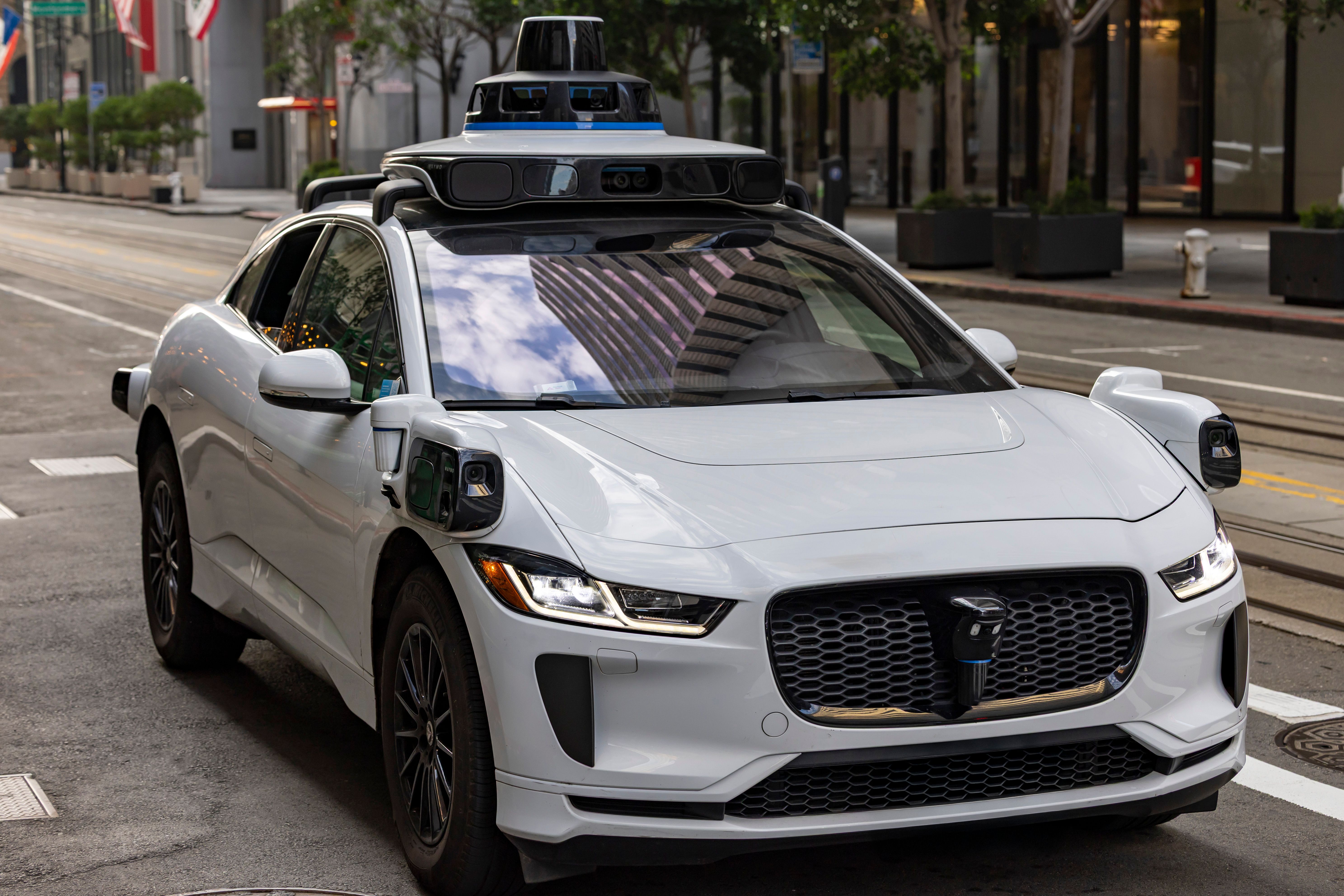
This transformation is particularly evident in the industrial sector. In automotive production, new generations of production systems are emerging in which robotics no longer functions as an isolated tool, but as an integral part of intelligent processes. At the same time, the convergence of AI and physical systems is also evident outside traditional manufacturing environments, for example in autonomous vehicles. Waymo, a subsidiary of Alphabet, is already operating a fully autonomous robo-taxi service in several US cities such as San Francisco, Los Angeles, Phoenix, Dallas, and Houston. The vehicles use AI to navigate complex traffic situations and transport passengers safely to their destinations. The service currently records around 500,000 paid journeys per week, with the number of passengers having doubled within a year. Expansion into over 20 further cities worldwide, including London and Tokyo, is planned by the end of 2026.
A particularly key area of application is autonomous production facilities in the context of Industry 4.0. Here, the concept of “predictive maintenance” plays an essential role. AI systems monitor machines in real time, detect signs of wear at an early stage, and schedule maintenance work before breakdowns occur. This predictive maintenance reduces costs and minimises production downtime. Companies such as Siemens use IoT (Internet of Things) solutions for this purpose to continuously analyse sensor data such as vibration, temperature, or pressure. Machine learning algorithms identify patterns that indicate potential defects – such as bearing failures or motor overheating. Ideally, such measures can reduce downtime by up to 50 %.
In logistics, the integration of AI into physical systems is particularly evident. Tens of thousands of autonomous robots are already at work in Amazon’s logistics centres, including so-called “Kiva” robots, which transport shelves, pick goods, and prepare them for dispatch. AI controls the route planning and coordination of the systems to ensure maximum efficiency. The robots navigate through the warehouses using 2D barcodes on the floor and can move shelves weighing up to 340 kilograms at a speed of around 5.5 km/h. Amazon acquired Kiva Systems in 2012 for approximately USD 775mn. In addition, specialised robotic solutions such as “Stretch” from Boston Dynamics – now part of Hyundai – are being used to autonomously move and stack pallets in warehouses. The underlying AI enables the robots to recognise objects, plan movements, and adapt dynamically to their surroundings.
In agriculture, too, the combination of AI and physical machinery is bringing about far-reaching changes. Autonomous tractors from John Deere use computer vision to work the fields independently – from ploughing and sowing right through to harvesting. The systems detect obstacles, optimise routes, and adapt work processes to soil and weather conditions. At the same time, the concept of “precision agriculture” is gaining in importance, whereby resources such as water, fertiliser, pesticides, and seeds are used in a targeted and efficient manner. Technologies such as “See & Spray” make it possible to distinguish weeds from crops with precision using AI and cameras, and to apply herbicides only where they are actually needed. This can reduce the use of chemicals by up to 90 %.
In the medical sector, too, the integration of AI into physical systems is advancing continuously. While (semi-)autonomous surgical robots such as the “da Vinci” system from Intuitive Surgical are still controlled by surgeons, AI algorithms support the precision of the procedures. For instance, the technology analyses real-time image data, filters out tremors from movements, and warns of sensitive structures such as nerves or blood vessels. In addition, service and assistance robots are being deployed, such as Toyota’s “Human Support Robot” (HSR), which supports carers in looking after patients by, for example, fetching medication or helping to reposition them in bed. Therapeutic applications are also gaining in importance: the therapy robot “Paro”, developed in Japan and modelled on a small harbour seal, is used in particular in elderly care, for dementia patients, in psychiatry, and in the field of autism to stimulate emotions, reduce stress, and promote social interaction.
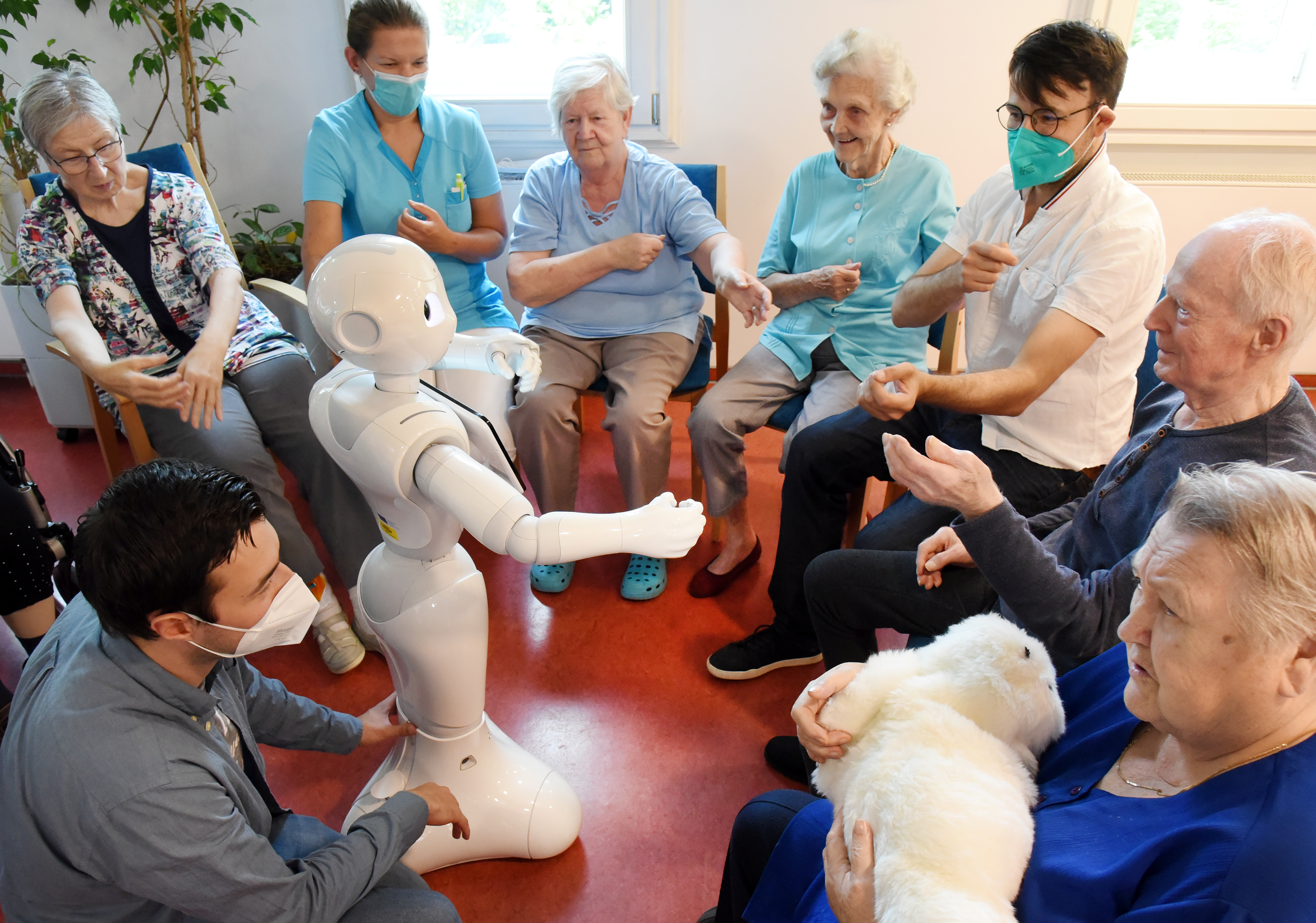
(c) APA-Images / dpa / Waltraud Grubitzsch
Enormous market potential by 2030
A look at market trends underscores this assessment. As the following Statista infographic shows, the market for AI robotics is currently still at a relatively early stage but is demonstrating an exceptionally strong growth momentum: starting from a market volume in the mid double-digit billions, the market is expected to expand many times over by 2030. This growth is being driven by both industrial applications and service robotics, with software and AI-based solutions in particular showing disproportionately high growth. Please note: forecasts are not a reliable indicator of future developments.
Note: Prognoses are not a reliable indicator of future performance.
From a macroeconomic perspective, studies underscore the potential of this development. Even a moderate increase in the use of AI can significantly boost corporate productivity – by more than 14 % in some analyses (source: Das KI-Magazin, Opens In New Window). At the same time, the introduction of such technologies is evidently not without friction. Indeed, transformation initially involves friction before efficiency gains are realised. Short-term productivity losses are common before the long-term benefits take effect. There is also potential for socio-political conflict, given the many concerns regarding the impact on the labour market.
Physical AI: a long-term growth driver for the capital markets
Despite these challenges, growth momentum remains strong. The drivers are not only efficiency gains, but above all structural factors such as a shortage of skilled workers, rising quality requirements, and the increasing interconnection of production systems in the context of Industry 4.0. From an investor’s perspective, this makes it clear that the greatest opportunities arise across the entire value chain – from hardware and software right through to industrial end-use applications. In future, the actual value creation will take place at the interface between digital intelligence and physical implementation. This is precisely where Erste AM Senior Fund Manager Bernhard Selinger sees the structural winners of the coming years. For him, “Physical AI” is therefore no longer a future scenario, but an ongoing transformation process – and one of the key long-term growth drivers for the capital markets.
Invest in long term megatrends
Bernhard Selinger is in charge of global equity ERSTE FUTURE INVEST. The fund actively invests in companies that benefit from long-term megatrends such as technology and innovation, health, the environment, or structural changes in the global economy. It is a globally oriented equity fund with a focus on selected individual shares and active management, independent of traditional benchmarks. At the same time, the investment process also takes sustainability factors (ESG) into account in order to assess long-term opportunities and risks holistically. Note: Please note that an investment in securities entails risks in addition to the opportunities described.
Risk notes ERSTE FUTURE INVEST
Please note that investing in securities also involves risks besides the opportunities described.
The fund employs an active investment policy and is not oriented towards a benchmark. The assets are selected on a discretionary basis and the scope of discretion of the management company is not limited.
Weitere Ausführungen zur nachhaltigen Ausrichtung des ERSTE FUTURE INVEST sowie zu den Angaben gemäß Offenlegungs-Verordnung (Verordnung (EU) 2019/2088) und Taxonomie-Verordnung (Verordnung (EU) 2020/852) sind dem aktuellen Prospekt, Punkt 12 und Anhang „Nachhaltigkeitsgrundsätze“ zu entnehmen. Bei der Entscheidung, in den ERSTE FUTURE INVEST zu investieren, sollten alle Eigenschaften oder Ziele des ERSTE FUTURE INVEST berücksichtigt werden, wie sie in den Fondsdokumenten beschrieben sind.
Legal disclaimer
This document is an advertisement. Unless indicated otherwise, source: Erste Asset Management GmbH. The language of communication of the sales offices is German and the languages of communication of the Management Company also include English.
The prospectus for UCITS funds (including any amendments) is prepared and published in accordance with the provisions of the InvFG 2011 as amended. Information for Investors pursuant to § 21 AIFMG is prepared for the alternative investment funds (AIF) administered by Erste Asset Management GmbH pursuant to the provisions of the AIFMG in conjunction with the InvFG 2011.
The currently valid versions of the prospectus, the Information for Investors pursuant to § 21 AIFMG, and the key information document can be found on the website www.erste-am.com under “Mandatory publications” and can be obtained free of charge by interested investors at the offices of the Management Company and at the offices of the depositary bank. The exact date of the most recent publication of the prospectus, the languages in which the fund prospectus or the Information for Investors pursuant to Art 21 AIFMG and the key information document are available, and any other locations where the documents can be obtained are indicated on the website www.erste-am.com. A summary of the investor rights is available in German and English on the website www.erste-am.com/investor-rights and can also be obtained from the Management Company.
The Management Company can decide to suspend the provisions it has taken for the sale of unit certificates in other countries in accordance with the regulatory requirements.
Note: You are about to purchase a product that may be difficult to understand. We recommend that you read the indicated fund documents before making an investment decision. In addition to the locations listed above, you can obtain these documents free of charge at the offices of the referring Sparkassen bank and the offices of Erste Bank der oesterreichischen Sparkassen AG. You can also access these documents electronically at www.erste-am.com.
Our analyses and conclusions are general in nature and do not take into account the individual characteristics of our investors in terms of earnings, taxation, experience and knowledge, investment objective, financial position, capacity for loss, and risk tolerance. Past performance is not a reliable indicator of the future performance of a fund.
Please note: Investments in securities entail risks in addition to the opportunities presented here. The value of units and their earnings can rise and fall. Changes in exchange rates can also have a positive or negative effect on the value of an investment. For this reason, you may receive less than your originally invested amount when you redeem your units. Persons who are interested in purchasing units in investment funds are advised to read the current fund prospectus(es) and the Information for Investors pursuant to § 21 AIFMG, especially the risk notices they contain, before making an investment decision. If the fund currency is different than the investor’s home currency, changes in the relevant exchange rate can positively or negatively influence the value of the investment and the amount of the costs associated with the fund in the home currency.
We are not permitted to directly or indirectly offer, sell, transfer, or deliver this financial product to natural or legal persons whose place of residence or domicile is located in a country where this is legally prohibited. In this case, we may not provide any product information, either.
Please consult the corresponding information in the fund prospectus and the Information for Investors pursuant to § 21 AIFMG for restrictions on the sale of the fund to American or Russian citizens.
It is expressly noted that this communication does not provide any investment recommendations, but only expresses our current market assessment. Thus, this communication is not a substitute for investment advice.
This document does not represent a sales activity of the Management Company and therefore may not be construed as an offer for the purchase or sale of financial or investment instruments.
Erste Asset Management GmbH is affiliated with the Erste Bank and austrian Sparkassen banks.
Please also read the “Information about us and our securities services” published by your bank.