
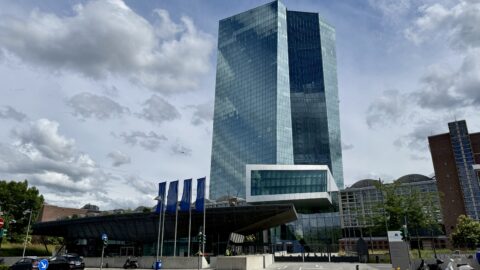
The European Central Bank raised its key interest rate from 2.0% to 2.25% yesterday, Thursday. In doing so, the central bank sent a confidence-building signal of its commitment to bringing inflation back to its 2% target in the medium term.
Because numerous council members had signaled the interest rate hike in their speeches (i.e., forward guidance), the move comes as no surprise, and the market reaction has been correspondingly muted.
Dovish or hawkish?
The interest rate hike sends a restrictive signal. Central banks are always faced with a trade-off. Should the key interest rate be kept relatively low to support the economy and the labor market and/or to keep interest payments on government debt low? This policy is referred to as “dovish” and tends to push inflation higher.
Or should the key interest rate be kept relatively high in order to keep inflation low enough that rising prices do not become the focus of attention? This policy is referred to as “hawkish” and tends to lead to falling inflation.
In fact, consumer price inflation has risen in recent months. In February, the year-over-year price increase was 1.9%. By May, it had risen to 3.2%. However, this acceleration in price growth was not broad-based. The driving factor is easy to identify. The change in energy prices jumped from minus 3.1% to plus 10.9%. Excluding energy prices, inflation remained largely unchanged at 2.4%.
At the same time, economic activity has been sluggish since the start of the year. In the first quarter, gross domestic product grew by just 0.3% year-over-year. Employment growth was similarly sluggish (0.5% year-over-year).
Why is the ECB raising rates now?
This raises the question of why the central bank is raising the key interest rate at all. The rise in inflation was not caused by a booming economy, but was triggered by the de facto closure of the Strait of Hormuz. The central bank has no control over energy price trends. Wouldn’t it then be wiser to “see through” this? If energy prices fall, won’t inflation then return to where it was before?
The context is key. Inflation has now been above the 2% target since 2021. Although inflation was already well on its way to stabilizing at the central bank’s target of around 2%, the energy price shock triggered by the Iran crisis has led to another rise in inflation. Against this backdrop, the risk has increased that long-term inflation expectations among all of us will rise permanently.
If everyone expects inflation to rise and acts accordingly (companies raise prices, workers demand wage increases), then inflation will actually rise. If such a scenario were to occur, only massive interest rate hikes—which would likely trigger a recession—could bring inflation back down. To counteract such a development, the ECB prefers to raise key interest rates slightly at an early stage—in the hope of avoiding the need for sharp hikes at a later date.
The effects of rising energy prices are clearly stagflationary. They drive up inflation and slow economic growth. The ECB shares this view. Inflation forecasts have been revised upward (2026: 3.0%, 2027: 2.3%, 2028: 2.0%). According to the ECB, this is due not only to higher energy prices but also to expected pass-through effects on food, goods, and service prices. Accordingly, growth forecasts have been revised downward due to the decline in purchasing power (2026: 0.8%, 2027: 1.2%, 2028: 1.5%). This is because purchasing power is being reduced.
Note: Forecasts are not a reliable indicator of future performance.
What are the central bank’s next steps?
At the press conference, ECB President Lagarde noted that the outlook remains uncertain, with upside risks to inflation and downside risks to economic growth.
The rate hike is unlikely to mark the start of a rate-hiking cycle because economic growth is not strong (unlike in the U.S.). If the impact of energy prices subsides as the Strait of Hormuz reopens, the spillover effects from energy prices to other prices remain low, and inflation expectations do not rise, the key interest rate is unlikely to be raised this year by more than is currently reflected in market prices (one additional rate hike).
Hopefully, these small interest rate adjustments will be enough to keep inflation expectations stable. This would mean that the negative impact on economic growth and the stock markets would be relatively minor.
Legal disclaimer
This document is an advertisement. Unless indicated otherwise, source: Erste Asset Management GmbH. The language of communication of the sales offices is German and the languages of communication of the Management Company also include English.
The prospectus for UCITS funds (including any amendments) is prepared and published in accordance with the provisions of the InvFG 2011 as amended. Information for Investors pursuant to § 21 AIFMG is prepared for the alternative investment funds (AIF) administered by Erste Asset Management GmbH pursuant to the provisions of the AIFMG in conjunction with the InvFG 2011.
The currently valid versions of the prospectus, the Information for Investors pursuant to § 21 AIFMG, and the key information document can be found on the website www.erste-am.com under “Mandatory publications” and can be obtained free of charge by interested investors at the offices of the Management Company and at the offices of the depositary bank. The exact date of the most recent publication of the prospectus, the languages in which the fund prospectus or the Information for Investors pursuant to Art 21 AIFMG and the key information document are available, and any other locations where the documents can be obtained are indicated on the website www.erste-am.com. A summary of the investor rights is available in German and English on the website www.erste-am.com/investor-rights and can also be obtained from the Management Company.
The Management Company can decide to suspend the provisions it has taken for the sale of unit certificates in other countries in accordance with the regulatory requirements.
Note: You are about to purchase a product that may be difficult to understand. We recommend that you read the indicated fund documents before making an investment decision. In addition to the locations listed above, you can obtain these documents free of charge at the offices of the referring Sparkassen bank and the offices of Erste Bank der oesterreichischen Sparkassen AG. You can also access these documents electronically at www.erste-am.com.
Our analyses and conclusions are general in nature and do not take into account the individual characteristics of our investors in terms of earnings, taxation, experience and knowledge, investment objective, financial position, capacity for loss, and risk tolerance. Past performance is not a reliable indicator of the future performance of a fund.
Please note: Investments in securities entail risks in addition to the opportunities presented here. The value of units and their earnings can rise and fall. Changes in exchange rates can also have a positive or negative effect on the value of an investment. For this reason, you may receive less than your originally invested amount when you redeem your units. Persons who are interested in purchasing units in investment funds are advised to read the current fund prospectus(es) and the Information for Investors pursuant to § 21 AIFMG, especially the risk notices they contain, before making an investment decision. If the fund currency is different than the investor’s home currency, changes in the relevant exchange rate can positively or negatively influence the value of the investment and the amount of the costs associated with the fund in the home currency.
We are not permitted to directly or indirectly offer, sell, transfer, or deliver this financial product to natural or legal persons whose place of residence or domicile is located in a country where this is legally prohibited. In this case, we may not provide any product information, either.
Please consult the corresponding information in the fund prospectus and the Information for Investors pursuant to § 21 AIFMG for restrictions on the sale of the fund to American or Russian citizens.
It is expressly noted that this communication does not provide any investment recommendations, but only expresses our current market assessment. Thus, this communication is not a substitute for investment advice.
This document does not represent a sales activity of the Management Company and therefore may not be construed as an offer for the purchase or sale of financial or investment instruments.
Erste Asset Management GmbH is affiliated with the Erste Bank and austrian Sparkassen banks.
Please also read the “Information about us and our securities services” published by your bank.