

From June 28 to July 1, Martin Cech, the fund manager of ERSTE RESPONSIBLE MICROFINANCE, traveled to Bucharest, Romania, on a microfinance trip. The country, with an area of just under 240,000 km², has a population of approximately 19 million and has been a member of the European Union since 2007.
Political Situation
Following a period of political uncertainty, Romania is once again in a phase of consolidation, but it continues to face significant challenges. Among the most important issues are fiscal consolidation, the implementation of reforms related to EU funds, and the strengthening of state institutions. The domestic political debate is heavily influenced by issues of public finances, inflation, and economic competitiveness. At the same time, Romania remains a reliable member of the EU and NATO, which is particularly important given the geopolitical situation in Eastern Europe.
A key political issue is reducing the high budget deficit. Since 2025, the government has adopted extensive fiscal consolidation measures, including tax increases and spending discipline. These measures are economically necessary but are the subject of heated social and political debate.
Economic Situation
The Romanian economy has made significant strides in recent years, increasing its per capita GDP from about 44% of the EU average in 2007 to about 78% in 2024. This makes the country one of the most successful “catch-up” economies within the EU.
Currently, however, the economy is going through a period of weakness. Following growth of just 0.7% in 2025, the European Commission expects growth to be virtually stagnant in 2026 (+0.1%), before rebounding to about 2.3% in 2027. The main reasons are fiscal consolidation, high inflation, and weaker domestic demand.
Inflation and Purchasing Power
Inflation remains one of the biggest problems. An average inflation rate of around 7% is expected for 2026. Among the causes are higher energy prices, tax increases, and the expiration of government price caps. As a result, the purchasing power of many households is under pressure.
Public Finances
Romania has one of the highest budget deficits in the EU. The government deficit stood at around 7.9% of GDP in 2025. It is expected to decline to about 6.2% in 2026, but will still remain well above EU targets. At the same time, public debt continues to rise and could reach over 63% of GDP by 2027.
The Microfinance Market in Romania
The Romanian microfinance market is one of the most developed in Central and Eastern Europe and plays an important role in financing small businesses and farmers, who often lack sufficient access to traditional bank loans. Unlike in many developing countries, microfinance in Romania focuses less on consumer loans and more on:
- Microenterprises
- Sole proprietor
- Startups
- Farms
- Self-Employed Individuals in Rural Areas
The providers are primarily non-bank financial institutions (NBFIs), credit unions (CARs), specialized microfinance organizations, and government- or EU-supported assistance programs.
The industry has grown significantly in recent years. Even before the pandemic, the volume of microfinance portfolios had doubled to over 280 million EUR and reached more than 90,000 clients. Romanian institutions are also among the most active users of European microfinance programs such as EaSI (Employment and Social Innovation) and InvestEU.
Recent benchmark studies by the Romanian MicroFinance Association show that the industry continued to expand between 2020 and 2024 and that the digitization of lending is increasing significantly.
From an investor’s perspective, Romania appears attractive for the following reasons:
- Insufficient financing for small and medium-sized enterprises outside major cities.
- Agricultural financing, as Romania has one of the largest agricultural sectors in the EU.
- EU-funded loan programs that reduce risk and enable high leverage.
- Increasing digitalization and fintech solutions, especially in rural areas.
Investments in Romania currently account for 3.8% of the ERSTE RESPONSIBLE MICROFINANCE portfolio. This places the country sixth in terms of weighting. As a result, Romania has by far the highest share of any CEE/SEE country. In the I-AM Vision Microfinance fund, investments in Romania account for 4.7%.
Visits to selected microfinance institutions and end customers
During the trip, the delegation visited three microfinance institutions—Agricover, Vitas, and Rocredit—as well as two end customers.
Microfinance Institutions
Agricover
With a weighting of 2.0%, Agricover is the second-highest weighted institution in the ERSTE RESPONSIBLE MICROFINANCE index. The motto of this MFI, which primarily serves agricultural clients, is “Understand your clients,” a shift from the previous motto, “Know your clients.” Agricover operates 12 branches in Romania and employs 65 sales representatives. The advice and support provided to clients is multifaceted and also includes financial and sustainability training. For example, drones are sold or available for lease to monitor the condition of fields, which have two harvest periods per year depending on the crop; these drones can cover up to 150 hectares per day in this way.
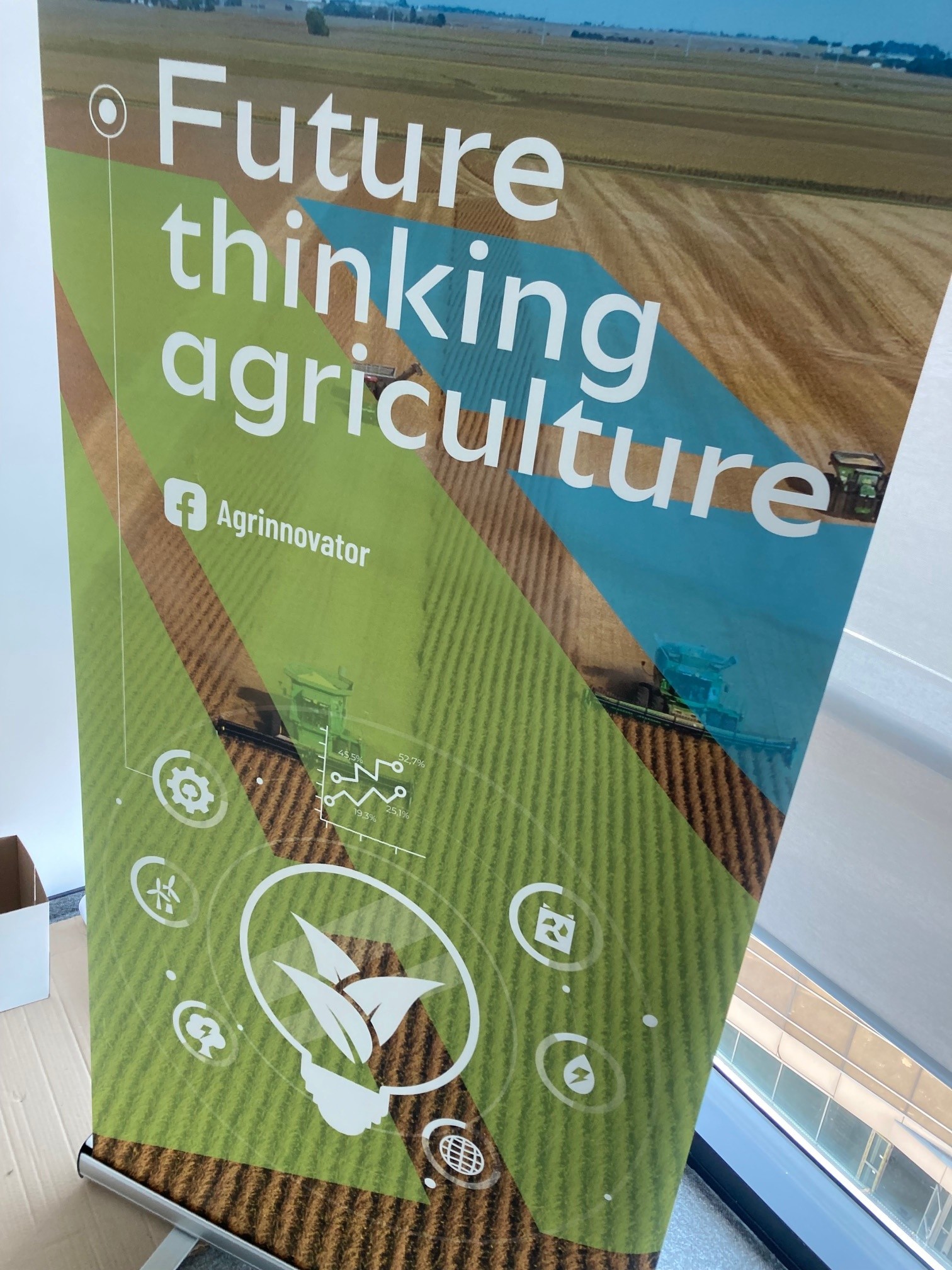
Customers are segmented by size; for farm sizes under 100 hectares, automated onboarding takes place within two hours. For larger farm sizes, the process—which includes an evaluation system based on financial analysis—takes up to 25 days until disbursement. Agricultural loans are offered for terms of 8 months or 5 years. Collateral includes the respective land holdings, livestock, and commitments for future harvests. Collateral can also be provided by local banks such as BCR or supranational institutions such as the IFC or the Black Sea Trade & Development Bank. A few years ago, Agricover planned an IPO on the stock exchange, but this was canceled due to market conditions. McKinsey is currently reviewing the MFI’s strategic processes and the possibility of expanding internationally.
Biographies
Vitas was founded in 1996 and is a smaller MFI based in Timisoara. Fifty employees serve customers at 10 branches. Loan agreements are concluded digitally via a platform. Loan amounts range from EUR 5,000 to EUR 150,000. The total loan portfolio amounts to approximately EUR 32 million and includes a high proportion of agricultural loans. Loan terms are tiered: 12–4 months for working capital, 60 months for investments, and 120 months for the purchase of land and storage space. The European Investment Fund (EIF) supports loans of up to EUR 50,000; eligibility requirements include a maximum of 9 employees and a maximum annual revenue of EUR 2 million. Vitas is owned by Global Communities, a U.S.-based nonprofit organization.
Rocredit
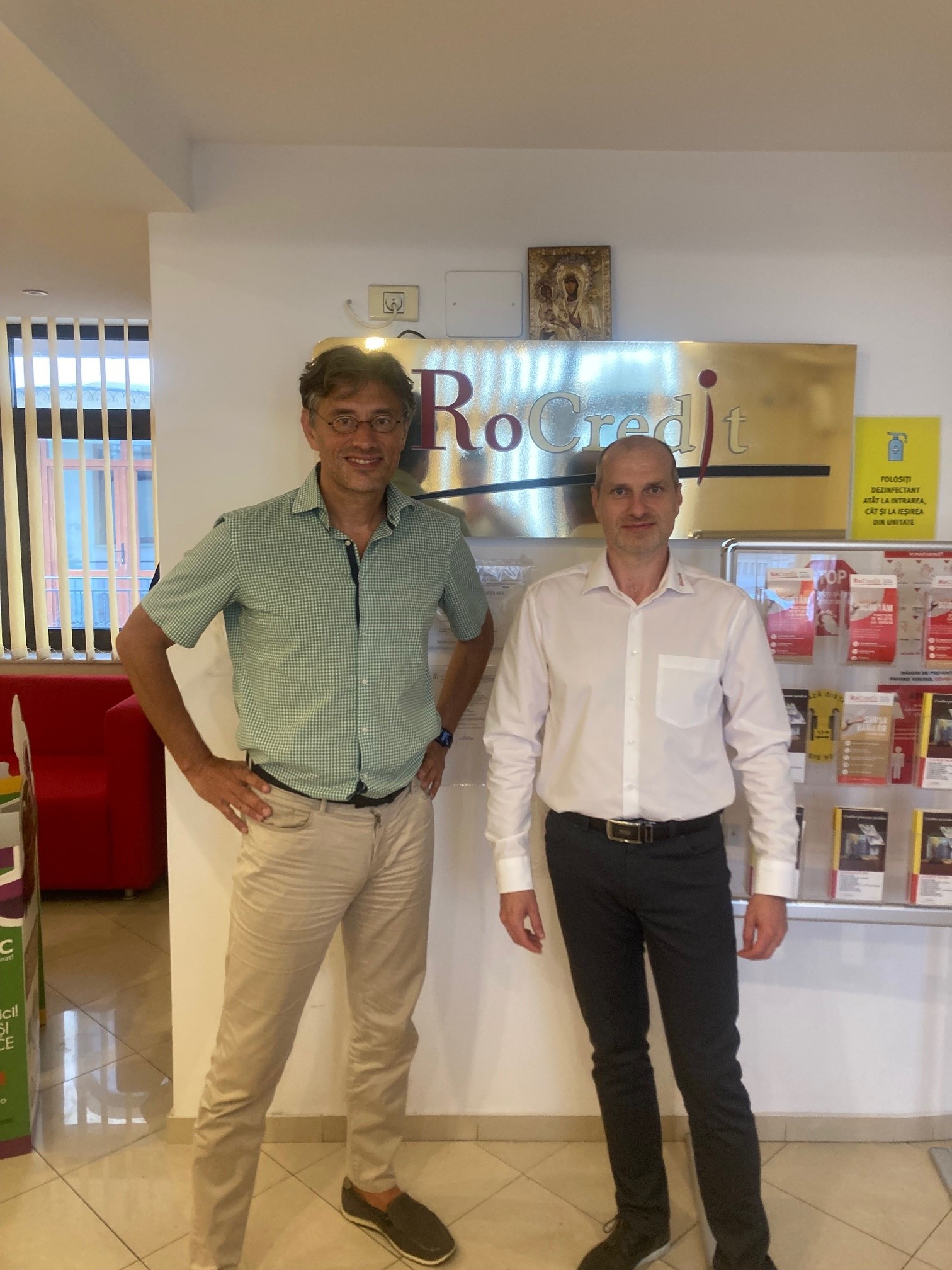
Rocredit was founded in 2007 and operates 19 branches with 127 employees, 45 of whom work in sales. Its headquarters are in Baia Mare in northern Romania. Shareholders include private and institutional investors in Romania. Rocredit offers a variety of credit products, ranging from short-term loans of up to 120 days to credit lines of up to 12 months. The loan portfolio totals approximately EUR 180 million. Sustainability is of great importance to the company; in addition to social certifications and signing the Code of Good Conduct, Rocredit has been rated B+ by Mikrofinanza.
End Customers
PetExpress Retail
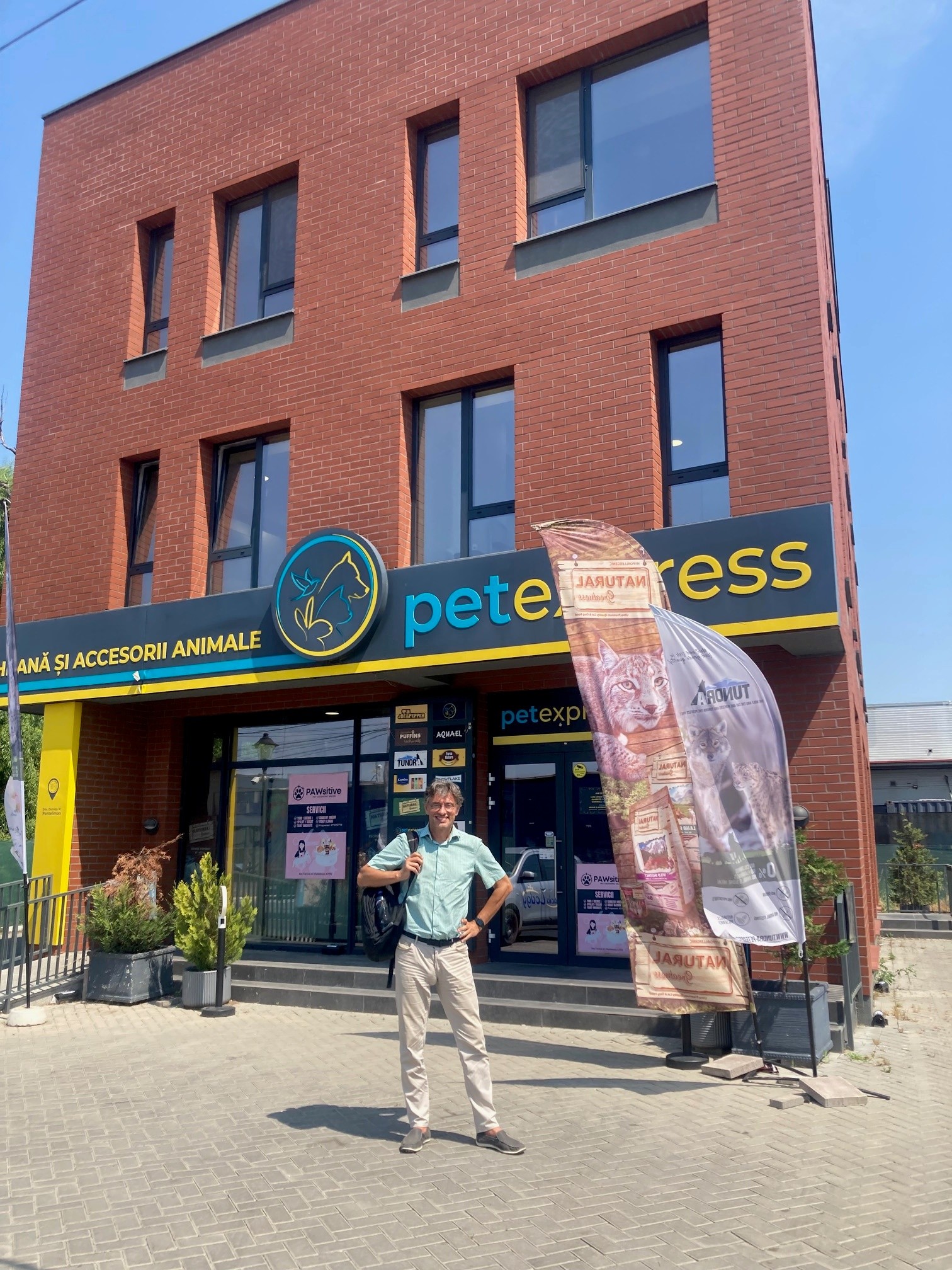
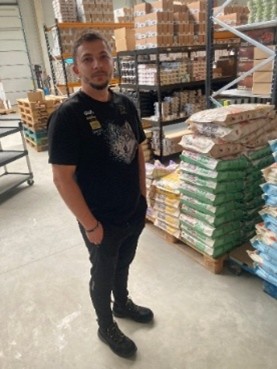
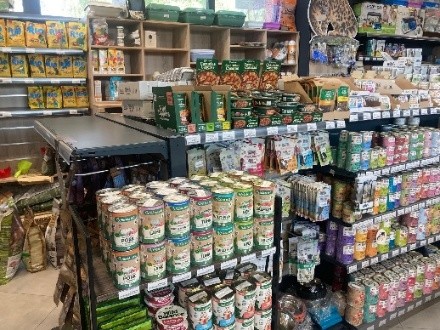
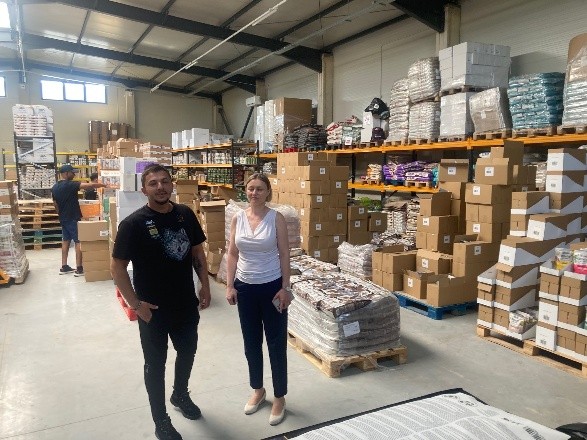
“PetExpress Retail” pet food retailer: Just last week, a new warehouse began operations in eastern Bucharest. PetExpress sources most of its high-quality pet food from Germany and the Czech Republic. The current loan of EUR 40,000 was used to construct this warehouse. The majority of sales are made through online retail. There is currently a brick-and-mortar store nearby, and additional retail kiosks are planned for the parking lots of large supermarkets. Marketing is largely conducted via TikTok, where PetExpress CEO Marius Fulgu posts videos for his customers.
Euro Meat Trade
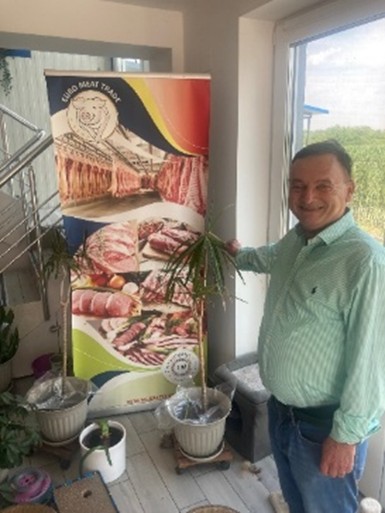
Meat producer “Euro Meat Trade”: The company, located in Podu Pitarului east of Bucharest, has been in operation since 2016 and sources its raw materials from Romania, Hungary, Belgium, and the Netherlands. It produces exclusively pork in the form of sausage (20%) and meat (80%). Fifty employees process 150 metric tons of meat per week, with an emphasis on high quality and “traditional production” methods that avoid the use of chemicals. The current loan of EUR 165,000 will be used to significantly expand and modernize the production facility. The installation of a photovoltaic system is in the planning stages.
Risk notes ERSTE RESPONSIBLE MICROFINANCE
The fund employs an active investment policy and is not oriented towards a benchmark. The assets are selected on a discretionary basis and the scope of discretion of the management company is not limited.
For further information on the sustainable focus of ERSTE RESPONSIBLE MICROFINANCE as well as on the disclosures in accordance with the Disclosure Regulation (Regulation (EU) 2019/2088) and the Taxonomy Regulation (Regulation (EU) 2020/852), please refer to the current §21 AIFMD Document, section 12 and the Annex “Sustainability Principles”. In deciding to invest in ERSTE RESPONSIBLE MICROFINANCE, consideration should be given to any characteristics or objectives of the ERSTE RESPONSIBLE MICROFINANCE as described in the Fund Documents.
Risk notes according to 2011 Austrian Investment Fund Act
ERSTE RESPONSIBLE MICROFINANCE may make significant investments in investment funds (UCITS, UCI) pursuant to section 71 of the 2011 Austrian Investment Fund Act.
The Austrian Financial Market Authority (FMA) hereby warns: In accordance with section 166, para. 1, point 3 of the Austrian Investment Fund Act (InvFG 2011), ERSTE RESPONSIBLE MICROFINANCE can invest up to 100 % in alternative investments that might bear higher investment risks compared to traditional investments. These investments in particular may incur losses up to the total amount of the invested capital.
Legal disclaimer
This document is an advertisement. Unless indicated otherwise, source: Erste Asset Management GmbH. The language of communication of the sales offices is German and the languages of communication of the Management Company also include English.
The prospectus for UCITS funds (including any amendments) is prepared and published in accordance with the provisions of the InvFG 2011 as amended. Information for Investors pursuant to § 21 AIFMG is prepared for the alternative investment funds (AIF) administered by Erste Asset Management GmbH pursuant to the provisions of the AIFMG in conjunction with the InvFG 2011.
The currently valid versions of the prospectus, the Information for Investors pursuant to § 21 AIFMG, and the key information document can be found on the website www.erste-am.com under “Mandatory publications” and can be obtained free of charge by interested investors at the offices of the Management Company and at the offices of the depositary bank. The exact date of the most recent publication of the prospectus, the languages in which the fund prospectus or the Information for Investors pursuant to Art 21 AIFMG and the key information document are available, and any other locations where the documents can be obtained are indicated on the website www.erste-am.com. A summary of the investor rights is available in German and English on the website www.erste-am.com/investor-rights and can also be obtained from the Management Company.
The Management Company can decide to suspend the provisions it has taken for the sale of unit certificates in other countries in accordance with the regulatory requirements.
Note: You are about to purchase a product that may be difficult to understand. We recommend that you read the indicated fund documents before making an investment decision. In addition to the locations listed above, you can obtain these documents free of charge at the offices of the referring Sparkassen bank and the offices of Erste Bank der oesterreichischen Sparkassen AG. You can also access these documents electronically at www.erste-am.com.
Our analyses and conclusions are general in nature and do not take into account the individual characteristics of our investors in terms of earnings, taxation, experience and knowledge, investment objective, financial position, capacity for loss, and risk tolerance. Past performance is not a reliable indicator of the future performance of a fund.
Please note: Investments in securities entail risks in addition to the opportunities presented here. The value of units and their earnings can rise and fall. Changes in exchange rates can also have a positive or negative effect on the value of an investment. For this reason, you may receive less than your originally invested amount when you redeem your units. Persons who are interested in purchasing units in investment funds are advised to read the current fund prospectus(es) and the Information for Investors pursuant to § 21 AIFMG, especially the risk notices they contain, before making an investment decision. If the fund currency is different than the investor’s home currency, changes in the relevant exchange rate can positively or negatively influence the value of the investment and the amount of the costs associated with the fund in the home currency.
We are not permitted to directly or indirectly offer, sell, transfer, or deliver this financial product to natural or legal persons whose place of residence or domicile is located in a country where this is legally prohibited. In this case, we may not provide any product information, either.
Please consult the corresponding information in the fund prospectus and the Information for Investors pursuant to § 21 AIFMG for restrictions on the sale of the fund to American or Russian citizens.
It is expressly noted that this communication does not provide any investment recommendations, but only expresses our current market assessment. Thus, this communication is not a substitute for investment advice.
This document does not represent a sales activity of the Management Company and therefore may not be construed as an offer for the purchase or sale of financial or investment instruments.
Erste Asset Management GmbH is affiliated with the Erste Bank and austrian Sparkassen banks.
Please also read the “Information about us and our securities services” published by your bank.
More on the topic

The search for stability continues, despite rising stock markets
Despite rising stock markets, investors are increasingly seeking stability and are finding it more and more often in new ‘safe havens’. Portfolio Manager Clemens Brugner explains why this is the case and which asset classes are meant by this.