
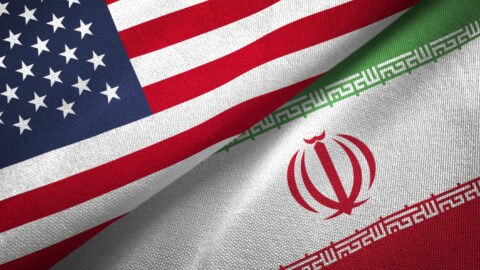
In last week’s article, we already discussed the growing tensions in the Middle East. Since Saturday, the conflict has developed into open military confrontation. Geopolitical events such as these understandably cause concern – primarily, of course, for the people in the region, but also with regards to developments in the near future: what could this mean for the real economy, interest rate trends and,ultimately, for our own investments?
In the following, we would like to explain transparently what has happened, how we are actively protecting your portfolio during this phase and why prudence on the markets is now your best guide.
What exactly happened?
On February 28, the USA and Israel launched a large-scale series of strikes against military targets in Iran. These attacks were directed against, among other things, leadership structures, the Revolutionary Guards (IRGC), air defences, and missile and drone facilities. The country’s spiritual leader, Ayatollah Ali Khamenei, was also killed, as Iran confirmed on Sunday night. What is clear, in any case, is that key complexes were severely damaged. Iran responded immediately with its own missile and drone attacks on Israel and US bases in the Gulf states, which led to temporary closures of airspace.
For the global economy, all eyes are now on one particular bottleneck: shipping through the Strait of Hormuz. We can already see oil tankers increasingly avoiding the route and insurance premiums for cargo ships rising significantly.
What does this mean from an economic perspective?
In the short term, these uncertainties could cause oil, gas, and transport prices to rise. This could slightly pull up inflation and temporarily weigh on equity market sentiment. Our base-case scenario (with a probability of about 60%) hinges on the premise that we will only see a slight economic slowdown and no lasting disruption in the Strait of Hormuz. Initial estimates suggest that oil prices could rise significantly by USD 5 to 7 per barrel when the markets reopen on Monday. At the same time though, OPEC’s announcement that it will increase production could have a dampening effect on prices. As long as global shipping remains largely intact, we expect this initial “oil premium” to normalise again. We also believe that central banks (such as the European Central Bank (ECB) and the US Federal Reserve (Fed)) are likely to stick to their guns for the time being and only consider interest rate cuts in the event of genuine stability stress.
How are we responding in the portfolios?
We currently regard our funds and portfolios as well positioned for the current market phase. In general, we are slightly defensive in our portfolios and funds, with an equity allocation that is in line with our strategic orientation. Our gold allocation should also act as a counterweight to the current geopolitical shock. Investments in money market instruments dampen volatility as well while at the same time allowing us to seize opportunities that may arise from the turmoil.
What do we keep an eye on for you?
In order to be able to adjust our risk management at any time, we keep a close eye on the most important economic early warning systems:
- Global trade routes: we closely monitor whether shipping traffic through the Strait of Hormuz is functioning properly and how global transport costs and insurance premiums are developing.
- Energy markets: instead of focusing on short-term price fluctuations, we pay attention to indicators that give us early warning of longer-term shortages in the oil and gas market.
- The economic situation of companies: we are constantly monitoring whether the current uncertainty is leading to more expensive loans for companies, which could slow down the global economy.
Our recommendation for you: Keep calm
Even though the news flow may seem threatening at present, political developments on the financial markets are often only short-term in nature. For you as an investor, it is now important to pursue the following approach:
- Think long term: keep your investment goals in mind. Tactical knee-jerk reactions and panic-selling usually do more harm than good to long-term wealth accumulation.
- Stay calm: diversify your investments and keep an eye on your return opportunities. Solid diversification across different asset classes is the best buffer against geopolitical fluctuations.
- Seek dialogue: it is completely normal to feel uncertain in such phases. Do not hesitate to consult your adviser to clarify questions about your individual position.
Please note: investing in securities involves risks as well as opportunities.
Legal disclaimer
This document is an advertisement. Unless indicated otherwise, source: Erste Asset Management GmbH. The language of communication of the sales offices is German and the languages of communication of the Management Company also include English.
The prospectus for UCITS funds (including any amendments) is prepared and published in accordance with the provisions of the InvFG 2011 as amended. Information for Investors pursuant to § 21 AIFMG is prepared for the alternative investment funds (AIF) administered by Erste Asset Management GmbH pursuant to the provisions of the AIFMG in conjunction with the InvFG 2011.
The currently valid versions of the prospectus, the Information for Investors pursuant to § 21 AIFMG, and the key information document can be found on the website www.erste-am.com under “Mandatory publications” and can be obtained free of charge by interested investors at the offices of the Management Company and at the offices of the depositary bank. The exact date of the most recent publication of the prospectus, the languages in which the fund prospectus or the Information for Investors pursuant to Art 21 AIFMG and the key information document are available, and any other locations where the documents can be obtained are indicated on the website www.erste-am.com. A summary of the investor rights is available in German and English on the website www.erste-am.com/investor-rights and can also be obtained from the Management Company.
The Management Company can decide to suspend the provisions it has taken for the sale of unit certificates in other countries in accordance with the regulatory requirements.
Note: You are about to purchase a product that may be difficult to understand. We recommend that you read the indicated fund documents before making an investment decision. In addition to the locations listed above, you can obtain these documents free of charge at the offices of the referring Sparkassen bank and the offices of Erste Bank der oesterreichischen Sparkassen AG. You can also access these documents electronically at www.erste-am.com.
Our analyses and conclusions are general in nature and do not take into account the individual characteristics of our investors in terms of earnings, taxation, experience and knowledge, investment objective, financial position, capacity for loss, and risk tolerance. Past performance is not a reliable indicator of the future performance of a fund.
Please note: Investments in securities entail risks in addition to the opportunities presented here. The value of units and their earnings can rise and fall. Changes in exchange rates can also have a positive or negative effect on the value of an investment. For this reason, you may receive less than your originally invested amount when you redeem your units. Persons who are interested in purchasing units in investment funds are advised to read the current fund prospectus(es) and the Information for Investors pursuant to § 21 AIFMG, especially the risk notices they contain, before making an investment decision. If the fund currency is different than the investor’s home currency, changes in the relevant exchange rate can positively or negatively influence the value of the investment and the amount of the costs associated with the fund in the home currency.
We are not permitted to directly or indirectly offer, sell, transfer, or deliver this financial product to natural or legal persons whose place of residence or domicile is located in a country where this is legally prohibited. In this case, we may not provide any product information, either.
Please consult the corresponding information in the fund prospectus and the Information for Investors pursuant to § 21 AIFMG for restrictions on the sale of the fund to American or Russian citizens.
It is expressly noted that this communication does not provide any investment recommendations, but only expresses our current market assessment. Thus, this communication is not a substitute for investment advice.
This document does not represent a sales activity of the Management Company and therefore may not be construed as an offer for the purchase or sale of financial or investment instruments.
Erste Asset Management GmbH is affiliated with the Erste Bank and austrian Sparkassen banks.
Please also read the “Information about us and our securities services” published by your bank.
More on the topic

Emerging markets bonds and sustainability: How do these two go together?
Lower interest rates in the USA mean that investments in emerging markets are becoming more attractive. The ERSTE RESPONSIBLE BOND EM LOCAL fund, which received the Austrian Ecolabel in August, could also benefit from this.
20th Anniversary of the 2004 EU Enlargement: The Success Story Continues
The EU is celebrating a political and economic success story with the 20th anniversary of the EU’s eastward enlargement on 1 May. The countries that joined at that time and those that followed have caught up massively in economic terms. The signs continue to point to solid growth in the region.