
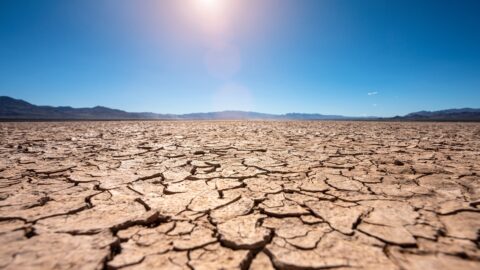
About ten years ago, we at Erste Asset Management first published the water footprint of our sustainable equity funds. Unlike the carbon footprint, which was already widely used at the time, the water footprint takes into account not only how much a company consumes, but above all, where this consumption takes place.
One metric ton of CO₂ affects the global climate regardless of where it is emitted. With water, it’s different: Whether water consumption is problematic depends heavily on location. The same amount of water withdrawn may be relatively unproblematic in a water-rich alpine region, but can quickly reach its limits in an arid region. That is why our water footprint has taken regional water stress into account from the very beginning.
At that time, the Alpine region was still considered to be relatively rich in water. The idea that prolonged periods of drought could become an immediate economic risk even in Central Europe just a few years later seemed rather abstract to many.
From Environmental Indicator to Financial Metric
Just under ten years later, the drought has reached Central Europe, and its financial impact is now measurable: For example, from January through June 2026, precipitation in Austria was 27 percent below the long-term average. In some parts of the country, conditions have not been this dry since records began in 1885. As of August 10, the Austrian Hail Insurance Company estimated drought-related damage to the domestic agricultural sector at approximately one billion euros. Virtually all federal states and numerous crops are affected, including pastureland, corn, potatoes, sugar beets, pumpkins, and soybeans.
The consequences extend far beyond farms: Lower crop yields and feed shortages can increase procurement costs for food producers, reduce self-sufficiency, and ultimately affect consumers and drive up inflation. A lack of rainfall thus becomes a financial risk.
The extent of this risk is currently evident on the Rhine as well. Low water levels are limiting the loading capacity of cargo ships and driving up the cost of transporting key raw materials. In July 2026, thyssenkrupp Steel temporarily suspended transport operations using its own inland waterway vessels, chartered ships with shallower drafts, and, as a precautionary measure due to the limited supply of raw materials, reduced production in Duisburg. The chemical company BASF already demonstrated just how costly low water levels can be during the drought of 2018: At that time, low water levels on the Rhine weighed on the company’s earnings in the second half of the year by approximately 250 million euros.
Note: The companies mentioned in this article are selected as examples and do not constitute an investment recommendation.
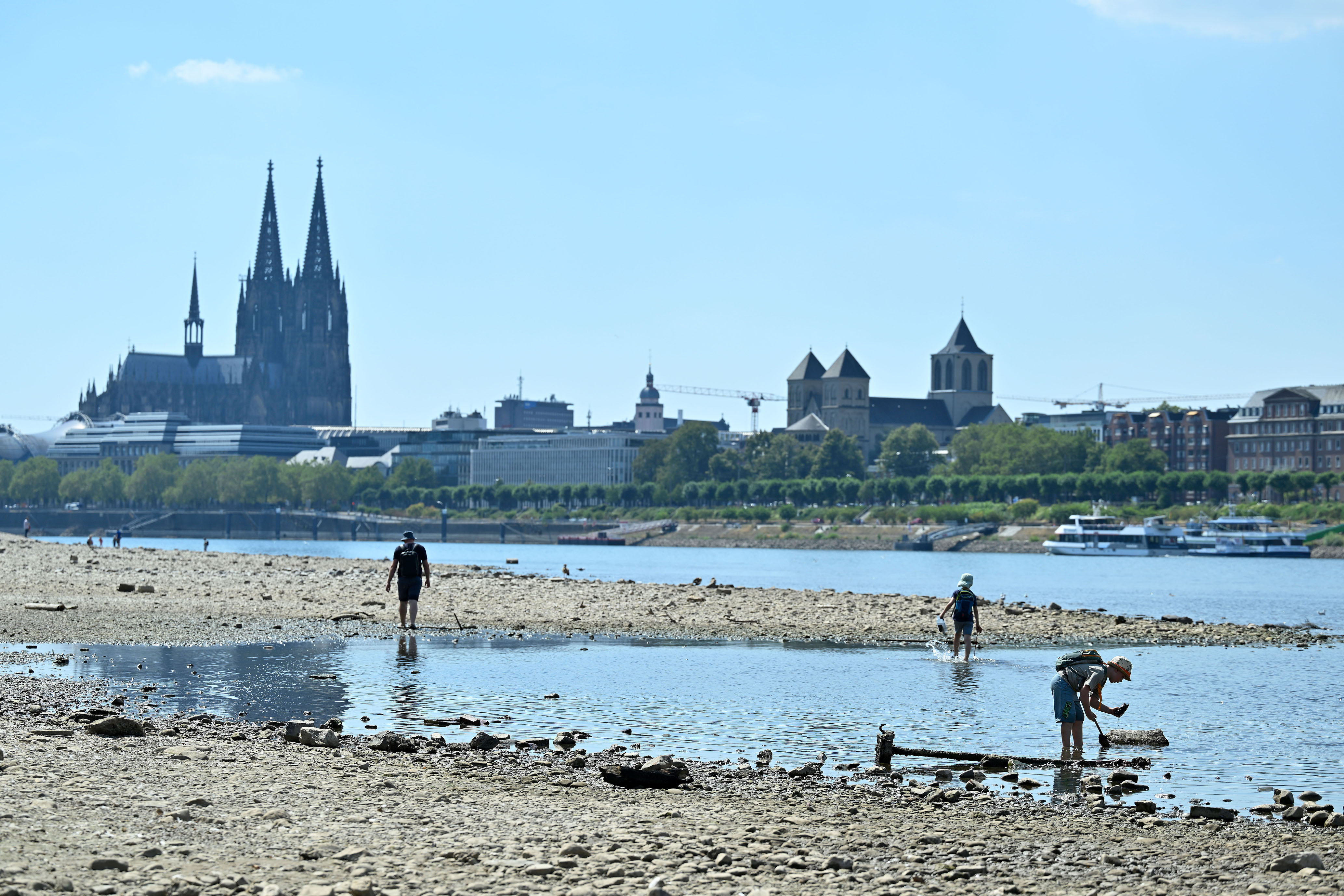
The drought affecting large parts of Europe is also evident in the very low water level of the Rhine (pictured near Cologne). Source: APA-Images / Eyevine / Ulrich Hufnagel Xinhua
When a Water Shortage Leads to a Power Shortage
A second chain of effects is becoming apparent along the Danube: a shortage of water can lead to a shortage of electricity. For example, the Romanian nuclear power plant in Cernavodă relies on water from the Danube for cooling and, under normal operating conditions, generates about one-fifth of Romania’s electricity. Due to the exceptionally low water levels, the plant’s second reactor also had to be shut down recently, after the first had already been taken offline at the end of July. Previously, the Romanian military had blasted away rocks to divert more water toward the power plant. In early August, the Danube’s flow rate was only about 1,400 cubic meters per second—less than one-third of the typical seasonal level.
At the same time, the automakers Dacia and Ford agreed to suspend production in Romania until August 19, thereby reducing electricity demand by about 200 megawatts. In Hungary, too, the output of the Paks nuclear power plant—which normally accounts for about one-third of the country’s electricity production—dropped at times to just over ten percent of its capacity. Here, too, the low water level of the Danube was the decisive factor. The result: higher electricity imports, rising costs, and calls for households and businesses to reduce their electricity consumption.
The chain of events is thus clear: Low water levels lead to reduced power plant output. This, in turn, increases the need for imports and raises electricity costs. This primarily affects the production of energy-intensive companies. The financial implications thus begin even before the damage appears on the income statement. Production cutbacks, additional electricity imports, higher transportation costs, and lower capacity utilization of existing facilities are concrete early economic indicators.
“Save Water for Yourself”
In my hometown, there have recently been repeated calls to conserve water so that there will be enough water available to fight potential wildfires. In other Austrian communities, the water supply has already been restricted at times during the night. Within a short time, the slogan “Save Water for the Environment” became “Save Water for Yourself.”
Water scarcity is therefore no longer just an abstract sustainability issue. It affects public safety, the food supply, energy production, businesses—and, ultimately, all of us. What was long perceived as an issue affecting distant regions suddenly reaches our own faucets.
Where does the drought come from?
The simple answer is: The human-induced climate crisis increases the likelihood of such events and exacerbates their impacts. A warmer atmosphere can hold more water vapor. At the same time, evaporation and water loss from soils, plants, and bodies of water increase. As a result, soils can dry out more quickly during periods of low precipitation. When precipitation does fall, it can be more intense. However, a downpour is no substitute for steady rain spread out over weeks, which continuously replenishes soils, groundwater, and rivers.
Climate change is thus intensifying the water cycle: periods of drought and heavy rainfall may become more frequent in the same region. What matters most, therefore, is when, where, and in what form water is available. Europe is also the continent warming the fastest. According to Copernicus, temperatures here have risen twice as fast per decade over the past 30 years as the global average.
Fatalism Is Not a Strategy
So how should we deal with all these facts and the consequences of the climate crisis? Fatalism, in any case, is not a particularly convincing strategy.
On a personal level, we will have to adapt more effectively to heat and drought: through shading, better-insulated buildings, nighttime ventilation, and more efficient water use.
When it comes to energy supply and businesses, simply hoping for rain is not enough. What is needed is a diversified generation mix, robust power grids, more storage capacity, and professional resilience management. Solar power systems provide valuable electricity on cloudless, hot days. However, they do not replace generation that is available at all times, which is why additional investments are needed in storage, grids, and incentives for flexible demand.
Both climate mitigation and adaptation measures are necessary. We must reduce emissions to prevent the climate crisis from worsening further. At the same time, we must prepare for the changes that are already inevitable today.
What does “responsible” mean in the context of investment?
How do you describe preparing for extreme events that are highly likely to occur, but whose exact timing no one can predict?
Responsible
In the context of investing, we talk about Responsible Investments. That’s the name of my team today, and it was also the name during the boom phase of ESG investing. Terms and market trends may change, but responsibility remains.
Within clear parameters—such as the exclusion of child labor, serious human rights violations, or controversial business practices—we seek to identify those companies that are better positioned than their competitors to meet the future challenges facing their industry.
When it comes to water, this means analyzing companies beyond their absolute consumption. A company with relatively low water consumption may still face a high financial water risk if its entire production is concentrated at a single vulnerable location. Conversely, a water-intensive company can significantly reduce its risk through recycling systems, alternative water sources, and geographic diversification.
Financial relevance arises wherever water affects revenue, costs, cash flows, or assets. It is precisely this connection between nature and corporate value that a responsible investment analysis must highlight.
From the Water Footprint to the Biodiversity Score
Water cannot be viewed in isolation. Its availability is linked, among other things, to climate change, land use, deforestation, soil quality, pollution, and the condition of ecosystems.
That is why resource use—with a focus on water—is now one of the five pillars of our proprietary EAM Biodiversity Score. It is complemented by the areas of climate change, land use, pollution, and nature-positive activities and programs.
The factors are weighted differently depending on their significance within the respective industry. A food producer faces different material biodiversity risks than a software company or an energy provider. For all of our responsible funds, a defined minimum score is applied, making biodiversity a concrete criterion for a company’s investability. You can learn more about the score in our Biodiversity Policy.
Note: Please be aware that investing in securities involves both opportunities and risks.
Conclusion: We don’t know when it will happen—but we do know the risk
We cannot predict exactly when the next drought will occur, how long it will last, or which river will be the next to reach a critical level. However, it is a reasonable assumption that there will be further periods of drought in the foreseeable future.
Responsible investing means taking action before a profit warning is issued, before ships can no longer sail, before power plants have to reduce their output, or before factories have to adjust their production. It begins even earlier, with the question of which companies understand their dependencies, invest in resilience, and remain capable of operating even under changing climatic conditions. After all, low water levels can very quickly result in financial losses.
Legal disclaimer
This document is an advertisement. Unless indicated otherwise, source: Erste Asset Management GmbH. The language of communication of the sales offices is German and the languages of communication of the Management Company also include English.
The prospectus for UCITS funds (including any amendments) is prepared and published in accordance with the provisions of the InvFG 2011 as amended. Information for Investors pursuant to § 21 AIFMG is prepared for the alternative investment funds (AIF) administered by Erste Asset Management GmbH pursuant to the provisions of the AIFMG in conjunction with the InvFG 2011.
The currently valid versions of the prospectus, the Information for Investors pursuant to § 21 AIFMG, and the key information document can be found on the website www.erste-am.com under “Mandatory publications” and can be obtained free of charge by interested investors at the offices of the Management Company and at the offices of the depositary bank. The exact date of the most recent publication of the prospectus, the languages in which the fund prospectus or the Information for Investors pursuant to Art 21 AIFMG and the key information document are available, and any other locations where the documents can be obtained are indicated on the website www.erste-am.com. A summary of the investor rights is available in German and English on the website www.erste-am.com/investor-rights and can also be obtained from the Management Company.
The Management Company can decide to suspend the provisions it has taken for the sale of unit certificates in other countries in accordance with the regulatory requirements.
Note: You are about to purchase a product that may be difficult to understand. We recommend that you read the indicated fund documents before making an investment decision. In addition to the locations listed above, you can obtain these documents free of charge at the offices of the referring Sparkassen bank and the offices of Erste Bank der oesterreichischen Sparkassen AG. You can also access these documents electronically at www.erste-am.com.
Our analyses and conclusions are general in nature and do not take into account the individual characteristics of our investors in terms of earnings, taxation, experience and knowledge, investment objective, financial position, capacity for loss, and risk tolerance. Past performance is not a reliable indicator of the future performance of a fund.
Please note: Investments in securities entail risks in addition to the opportunities presented here. The value of units and their earnings can rise and fall. Changes in exchange rates can also have a positive or negative effect on the value of an investment. For this reason, you may receive less than your originally invested amount when you redeem your units. Persons who are interested in purchasing units in investment funds are advised to read the current fund prospectus(es) and the Information for Investors pursuant to § 21 AIFMG, especially the risk notices they contain, before making an investment decision. If the fund currency is different than the investor’s home currency, changes in the relevant exchange rate can positively or negatively influence the value of the investment and the amount of the costs associated with the fund in the home currency.
We are not permitted to directly or indirectly offer, sell, transfer, or deliver this financial product to natural or legal persons whose place of residence or domicile is located in a country where this is legally prohibited. In this case, we may not provide any product information, either.
Please consult the corresponding information in the fund prospectus and the Information for Investors pursuant to § 21 AIFMG for restrictions on the sale of the fund to American or Russian citizens.
It is expressly noted that this communication does not provide any investment recommendations, but only expresses our current market assessment. Thus, this communication is not a substitute for investment advice.
This document does not represent a sales activity of the Management Company and therefore may not be construed as an offer for the purchase or sale of financial or investment instruments.
Erste Asset Management GmbH is affiliated with the Erste Bank and austrian Sparkassen banks.
Please also read the “Information about us and our securities services” published by your bank.
More on the topic
US draft budget: “The rules of the game for renewable forms of energy are changing”
The recently published US budget draft also contains interesting passages on the future of the Inflation Reduction Act and the associated subsidies for renewable energies. In an interview, environmental equity fund manager Alexander Weiss explains what the draft means for investors and why the market reacted positively to it.