
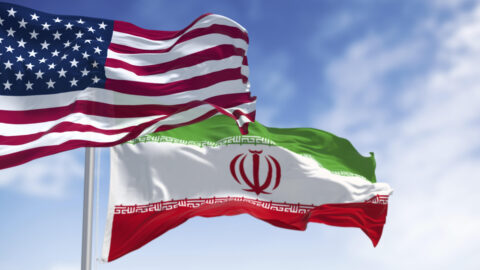
In recent weeks, an unusually large US military presence has built up around Iran. Two American aircraft carriers are now stationed in the region, supported by US boats, tanker planes and other equipment. The media also report the deployment of heavy transport aircraft, reconnaissance platforms and tanker aircraft to US bases in the region.
In addition, US President Donald Trump recently escalated the tone: if no agreement is reached on the Iranian nuclear program within 15 days, “bad things will happen”.
A new phase of the crisis
The tensions between the US and Iran have thus entered a new, potentially more dangerous phase. At the same time, many experts seem to agree: Neither Washington nor Tehran are interested in an all-out war. Nevertheless, the risk of escalation has increased. The financial markets are currently pricing in a high probability of a negotiated solution between the two parties to the conflict.
The increased uncertainty can nevertheless be seen above all in the rise in the price of oil – from around USD 60 per barrel of Brent at the start of the year to around USD 71.3 recently (as at 23.2.2026). In geopolitical crises, oil is often seen as an early warning signal of growing uncertainty.
Three factors are driving the situation in the Middle East
Three forces are central to the fragile situation in the Middle East:
- The unrest in Iran
Iran has been in a serious economic crisis for some time. High inflation, unemployment and falling purchasing power have led to nationwide mass protests since December 2025. These were violently suppressed by the regime. According to reports in Time Magazine, up to 30,000 people died in the process, citing local health authorities.
This unrest has considerably weakened the regime and increased the pressure on the political leadership.
- Growing pressure from the US
The attacks by the US and Israel last year have already weakened Iran’s deterrent and its network of regional allies. The current massive increase in troop and naval presence is reinforcing this development.
The aim of the USA is to protect its own interests and allies in the region – including military bases, oil facilities and the strategically important Strait of Hormuz. At the same time, the military threat is intended to force Iran into negotiations.
However, Iran continues to reject key US demands, such as restrictions on missile programs, uranium enrichment and regional activities.
- Nuclear insecurity
An enrichment level of around 90% uranium is required to build nuclear weapons. Iran had already increased its production to 60 percent in the previous year. The International Atomic Energy Agency (IAEA) has largely lost control of this stockpile.
Last year, the IAEA described the cooperation with Tehran in reviewing Iran’s nuclear program as “unsatisfactory”. The risk of Iran using the enriched uranium to build nuclear weapons has increased. Experts refer to this as the proliferation risk. There are also warnings that chaos in Iran could lead to the loss or theft of nuclear material.
What scenarios are conceivable?
Theoretically, three possible scenarios emerge:
- Negotiated solution. The talks in Oman find a solution acceptable to both sides. The US deterrent was sufficiently credible.
- Because Iran is refusing to make key concessions, the USA is launching targeted, short attacks. The limited US military strikes mean a moderate and temporary escalation. In this case, the risk lies in Iran’s response (e.g. a possible “closure” of the Strait of Hormuz).
- Greater escalation. In the event of escalation, the USA would probably respond with major counter-strikes.
In all three scenarios, there is also the risk of a nuclear crisis in the medium term. In the event of a loss of uranium material, a nuclear incident could occur at some point / somewhere.
What do these scenarios mean for the stock markets?
Derived for the financial markets, this constellation implies three possible developments. The impact channels are firstly the degree of uncertainty, secondly the oil price and thirdly the price of liquefied natural gas (LNG).
In the event of a negotiated solution, the oil price is likely to settle at a lower level again. This would reduce inflation slightly (positive for bonds). The resulting small increase in purchasing power would be positive for economic growth (positive for equities). The reduced uncertainty would also be positive for market sentiment.
Around a quarter of global maritime oil transportation takes place through the Strait of Hormuz. The mere risk that the strait could become impassable would lead to a further rise in the price of oil. Inflation and uncertainty on the markets would rise temporarily (negative for bonds and equities). In addition, around a fifth of global LNG transportation also flows through the strait. In the event of a feared bottleneck, Asian and European gas prices would probably be affected.
Safe havens could become more attractive, government bonds from Gulf states would lose out
An actual escalation would make the so-called safe havens appear more attractive. These include: the euro money market, the US dollar, the Swiss franc and gold. Government bonds from developed economies (US government bonds and German government bonds) are unlikely to be safe havens in this environment because inflation will rise, at least temporarily. At the same time, risky assets such as equities would become less attractive.
Government bonds could come under pressure, particularly in the Gulf states, as the increased country risk would be reflected in higher risk premiums. A look at the recent past rather suggests that
In the past, however, geopolitical events have often not had a lasting impact on the financial markets. It is therefore possible that an escalation with a backlash from Iran would only affect the markets for a limited period of time.
Is inflation threatening a comeback?
Nevertheless, the risk of longer-term effects remains – especially in the event of a major military escalation. The impact channels are similar to the previous scenario, only more powerful. Sharp rises in oil and gas prices and a sharp increase in uncertainty could create a stagflationary shock.
Lurking in the background is the risk of a permanent rise in inflation and inflation expectations. This is because inflation has been on the rise since 2021. Another – albeit initially only temporary – rise in inflation could damage the credibility of central banks in the fight against inflation. In this case too, safe havens such as the money market or gold would be in demand.
Conclusion
In his book “On War”, the general and military theorist Carl von Clausewitz describes the fundamental characteristics that characterize every war. One of these pillars is chance, which plays a central role for Clausewitz. In war, hardly anything is clear: incomplete information, misjudgements, deceptions and contradictory situation reports characterize the environment.
This sounds familiar. This uncertainty explains why risk aversion on the markets has increased recently: equities are under pressure and the US dollar is firmer. A balanced, broadly diversified approach therefore remains more important than ever for private investors.
Legal disclaimer
This document is an advertisement. Unless indicated otherwise, source: Erste Asset Management GmbH. The language of communication of the sales offices is German and the languages of communication of the Management Company also include English.
The prospectus for UCITS funds (including any amendments) is prepared and published in accordance with the provisions of the InvFG 2011 as amended. Information for Investors pursuant to § 21 AIFMG is prepared for the alternative investment funds (AIF) administered by Erste Asset Management GmbH pursuant to the provisions of the AIFMG in conjunction with the InvFG 2011.
The currently valid versions of the prospectus, the Information for Investors pursuant to § 21 AIFMG, and the key information document can be found on the website www.erste-am.com under “Mandatory publications” and can be obtained free of charge by interested investors at the offices of the Management Company and at the offices of the depositary bank. The exact date of the most recent publication of the prospectus, the languages in which the fund prospectus or the Information for Investors pursuant to Art 21 AIFMG and the key information document are available, and any other locations where the documents can be obtained are indicated on the website www.erste-am.com. A summary of the investor rights is available in German and English on the website www.erste-am.com/investor-rights and can also be obtained from the Management Company.
The Management Company can decide to suspend the provisions it has taken for the sale of unit certificates in other countries in accordance with the regulatory requirements.
Note: You are about to purchase a product that may be difficult to understand. We recommend that you read the indicated fund documents before making an investment decision. In addition to the locations listed above, you can obtain these documents free of charge at the offices of the referring Sparkassen bank and the offices of Erste Bank der oesterreichischen Sparkassen AG. You can also access these documents electronically at www.erste-am.com.
Our analyses and conclusions are general in nature and do not take into account the individual characteristics of our investors in terms of earnings, taxation, experience and knowledge, investment objective, financial position, capacity for loss, and risk tolerance. Past performance is not a reliable indicator of the future performance of a fund.
Please note: Investments in securities entail risks in addition to the opportunities presented here. The value of units and their earnings can rise and fall. Changes in exchange rates can also have a positive or negative effect on the value of an investment. For this reason, you may receive less than your originally invested amount when you redeem your units. Persons who are interested in purchasing units in investment funds are advised to read the current fund prospectus(es) and the Information for Investors pursuant to § 21 AIFMG, especially the risk notices they contain, before making an investment decision. If the fund currency is different than the investor’s home currency, changes in the relevant exchange rate can positively or negatively influence the value of the investment and the amount of the costs associated with the fund in the home currency.
We are not permitted to directly or indirectly offer, sell, transfer, or deliver this financial product to natural or legal persons whose place of residence or domicile is located in a country where this is legally prohibited. In this case, we may not provide any product information, either.
Please consult the corresponding information in the fund prospectus and the Information for Investors pursuant to § 21 AIFMG for restrictions on the sale of the fund to American or Russian citizens.
It is expressly noted that this communication does not provide any investment recommendations, but only expresses our current market assessment. Thus, this communication is not a substitute for investment advice.
This document does not represent a sales activity of the Management Company and therefore may not be construed as an offer for the purchase or sale of financial or investment instruments.
Erste Asset Management GmbH is affiliated with the Erste Bank and austrian Sparkassen banks.
Please also read the “Information about us and our securities services” published by your bank.
More on the topic

Between uncertainty and stability – a half-year full of contrasts
The stock market has been dominated by geopolitical tensions and trade disputes so far this year. Despite this, the markets have proven surprisingly resilient. However, the environment remains challenging, which is why a balanced and broadly diversified portfolio is crucial right now. Read more in the latest market commentary by Gerald Stadlbauer, Head of Discretionary Portfolio Management.