
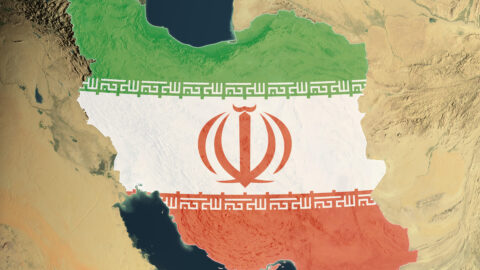
The geopolitical situation in the Middle East has continued to escalate in recent days. US President Donald Trump did emphasise that the USA and Iran were communicating “directly and indirectly” and expressed confidence that the new Iranian leadership would act “reasonably”. However, in an interview, Trump also openly stated that the United States could “take the oil in Iran” and was considering occupying Kharg Island, Iran’s most important oil export terminal.
At the same time, the Houthi militias from Yemen have officially joined the conflict, and the USA has deployed naval units to the region. This suggests that the United States is preparing for a military operation against Kharg Island or measures to control the Strait of Hormuz or is at least threatening to do so.
Stagflationary impulse
The potential implications of the war for the economy and the financial markets are well known, as they are reminiscent of patterns seen in previous energy crises:
- Rising energy prices and disruptions to global supply chains
- Increasing inflationary pressure
- Restrictive central bank policy and rising interest rates
- Falling real income and subdued demand
- Slowdown in global growth
- Tightening financial conditions (rising interest rates, falling share prices, widening spreads, higher risk premiums in emerging markets).
Extent of the shock unknown
Whilst the mechanism behind stagflation is well understood, the duration and scale of the shock remain highly uncertain. What is certain, however, is that the forces on energy prices have intensified since the start of the war, and with them the knock-on effects.
The key risk now lies in further escalation. Should the Strait of Hormuz be blocked for an extended period of time, or should civilian infrastructure come under increased attack – ranging from oil and gas terminals and chemical plants to power generation, data centres, and desalination plants – energy and commodity prices could rise significantly once again. The repercussions would extend far beyond oil and gas, affecting, for example, fertilisers or specialised industrial raw materials such as helium.
Falling market prices
The reaction of the market since the outbreak of the war has followed the classic pattern of an energy price shock. Prices for crude oil and natural gas, and for commodities derived from them, have increased, whereas both bond and share prices have fallen. The price of gold has also fallen significantly. The expectations of future price volatility priced into the equity market have risen sharply.
Falling economic indicators and rising inflation
The first economic indicators for March have now been published, revealing the impact of the war on the economy. The preliminary Purchasing Managers’ Indices for industrialised nations have fallen significantly overall, as have the German Business Climate Index and consumer confidence in the United States. At the same time, the sub-indicators for inflation contained in the reports (corporate purchase and sales prices, consumer inflation expectations) have risen. The flash estimates for consumer price inflation published for Spain and Germany also show sharp increases.
Revised forecasts
Last week, the OECD became the first multilateral organisation to issue an assessment of the impact of the energy price shock. The economic growth forecast remains resilient (for now). However, the inflation forecast has been revised significantly upwards.
For the Eurozone, the growth forecast was lowered by 0.4 percentage points to 0.8%. Meanwhile, the inflation forecast was raised by 0.7 percentage points to 2.6%. The macroeconomic impact is therefore noticeable, but not yet overwhelming.
Note: Prognoses are not a reliable indicator of future performance.
Central banks between a rock and a hard place
Central banks face a classic dilemma: should they raise key-lending rates to curb the spill-over to sectors outside the energy sector and dampen second-round effects (higher wage increases)? Or should they ease their monetary policy to mitigate the economic slowdown?
In many countries, inflation has now been above the central bank’s 2% target for around five years. Most central banks have therefore – at least in their rhetoric – opted for the first option. For example, in numerous statements, some central bankers have advocated for a focus on low inflation. That is the case because a further energy price shock increases the risk of a renewed wave of inflation, which would undermine the credibility of central banks to ensure low inflation in the medium term.
Consequently, a revaluation took place on the interest rate markets. For example, the European Central Bank is expected to raise its key-lending rate by 0.76 percentage points by the end of the year (currently: 2%). For the US Federal Reserve, the interest rate cuts previously priced in have disappeared. In summary, the energy price shock is forcing central banks to adopt a restrictive – and thus growth-dampening – stance.
The role potential negotiations could play
At least in the short term, Iran’s negotiating position appears to be stronger than the USA and Israel had anticipated. The reasons for this are clear: the fallout from the war is more painful for the USA (higher energy prices and falling share prices). Also, Iran still retains control over the vital Strait of Hormuz.
There are arguments in favour of official direct or indirect negotiations between the USA and Iran: the risk of military escalation, potentially involving the deployment of ground troops; the potential spread of the conflict to other countries; and the Iranian regime’s interest in political survival.
On the other hand, Iran appears to be speculating on its ability to retain control of the most important lever – namely, control of the Strait of Hormuz. Added to this is the low popularity of war in the USA, Congress’s reluctance to provide funding, and the high political costs of a possible ground deployment.
If negotiations were indeed to take place officially, the markets could react with relief in the short term: falling oil prices and risk premiums, rising share prices. However, should said negotiations fail or military operations escalate even more – particularly around Kharg Island or the Strait of Hormuz – further market turmoil would be conceivable. One key argument for the failure of negotiations is that Iran might believe it could lose the war militarily but win the energy war.
Portfolio management: focus on risk management
As early as in mid-March, we reduced the equity portion in our portfolios to below the strategic target allocation and shifted more funds into safe-haven money market instruments. We also reduced the proportion of gold in favour of the money market, as several central banks in emerging markets are selling off gold reserves to stabilise their currencies.
In an interview, the President of the European Central Bank outlined three guiding principles for tackling the crisis.
1. Assess the nature, scale, and duration of the crisis.
2. Focus on the risk rather than just the base-case scenario.
3. Have a range of response options ready.
These principles are not only applicable to monetary policy – but also to the management of a robust portfolio in the current climate.
Legal disclaimer
This document is an advertisement. Unless indicated otherwise, source: Erste Asset Management GmbH. The language of communication of the sales offices is German and the languages of communication of the Management Company also include English.
The prospectus for UCITS funds (including any amendments) is prepared and published in accordance with the provisions of the InvFG 2011 as amended. Information for Investors pursuant to § 21 AIFMG is prepared for the alternative investment funds (AIF) administered by Erste Asset Management GmbH pursuant to the provisions of the AIFMG in conjunction with the InvFG 2011.
The currently valid versions of the prospectus, the Information for Investors pursuant to § 21 AIFMG, and the key information document can be found on the website www.erste-am.com under “Mandatory publications” and can be obtained free of charge by interested investors at the offices of the Management Company and at the offices of the depositary bank. The exact date of the most recent publication of the prospectus, the languages in which the fund prospectus or the Information for Investors pursuant to Art 21 AIFMG and the key information document are available, and any other locations where the documents can be obtained are indicated on the website www.erste-am.com. A summary of the investor rights is available in German and English on the website www.erste-am.com/investor-rights and can also be obtained from the Management Company.
The Management Company can decide to suspend the provisions it has taken for the sale of unit certificates in other countries in accordance with the regulatory requirements.
Note: You are about to purchase a product that may be difficult to understand. We recommend that you read the indicated fund documents before making an investment decision. In addition to the locations listed above, you can obtain these documents free of charge at the offices of the referring Sparkassen bank and the offices of Erste Bank der oesterreichischen Sparkassen AG. You can also access these documents electronically at www.erste-am.com.
Our analyses and conclusions are general in nature and do not take into account the individual characteristics of our investors in terms of earnings, taxation, experience and knowledge, investment objective, financial position, capacity for loss, and risk tolerance. Past performance is not a reliable indicator of the future performance of a fund.
Please note: Investments in securities entail risks in addition to the opportunities presented here. The value of units and their earnings can rise and fall. Changes in exchange rates can also have a positive or negative effect on the value of an investment. For this reason, you may receive less than your originally invested amount when you redeem your units. Persons who are interested in purchasing units in investment funds are advised to read the current fund prospectus(es) and the Information for Investors pursuant to § 21 AIFMG, especially the risk notices they contain, before making an investment decision. If the fund currency is different than the investor’s home currency, changes in the relevant exchange rate can positively or negatively influence the value of the investment and the amount of the costs associated with the fund in the home currency.
We are not permitted to directly or indirectly offer, sell, transfer, or deliver this financial product to natural or legal persons whose place of residence or domicile is located in a country where this is legally prohibited. In this case, we may not provide any product information, either.
Please consult the corresponding information in the fund prospectus and the Information for Investors pursuant to § 21 AIFMG for restrictions on the sale of the fund to American or Russian citizens.
It is expressly noted that this communication does not provide any investment recommendations, but only expresses our current market assessment. Thus, this communication is not a substitute for investment advice.
This document does not represent a sales activity of the Management Company and therefore may not be construed as an offer for the purchase or sale of financial or investment instruments.
Erste Asset Management GmbH is affiliated with the Erste Bank and austrian Sparkassen banks.
Please also read the “Information about us and our securities services” published by your bank.
More on the topic

Between uncertainty and stability – a half-year full of contrasts
The stock market has been dominated by geopolitical tensions and trade disputes so far this year. Despite this, the markets have proven surprisingly resilient. However, the environment remains challenging, which is why a balanced and broadly diversified portfolio is crucial right now. Read more in the latest market commentary by Gerald Stadlbauer, Head of Discretionary Portfolio Management.