
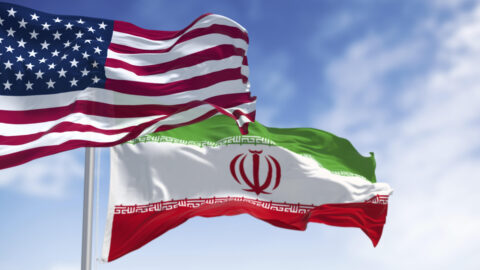
There are signs of an easing of tensions in the Iran war. The warring parties, the USA, Israel and Iran, have agreed to a two-week ceasefire. A key condition for the USA was that Tehran agreed to the immediate opening of the Strait of Hormuz. Pakistan has mediated between the parties to the conflict and, according to the US President, Iran has presented an “implementable ten-point peace proposal” that could serve as a basis for negotiations. However, the political hurdles for a lasting solution are high.
Market reaction
The immediate market reaction was textbook: Equity and bond markets rose, while oil prices and the US dollar fell. Market expectations for future key interest rates, which had risen significantly in recent weeks, also fell.
The pattern is typical of an increasing appetite for risk, driven by the hope that one of the most central geopolitical bottlenecks in the global economy will calm down.
Lines of conflict
However, the path to a lasting and resilient peace plan is challenging. On the one hand, the ceasefire has only been agreed for two weeks. On the other hand, the negotiating parties have diametrically opposed opinions on the most important points:
- Control over the Strait of Hormuz
- Iran’s nuclear program
- Iran’s missile program
- The sanctions against Iran
- US military presence in the Gulf region
- Reparation or compensation payments to Iran
- Security guarantees for Iran
These issues affect the geopolitical balance of power in the entire region. The risk of individual issues blocking or delaying the negotiation process is correspondingly increased. Market activity could therefore continue to be driven by the news published: rallies towards détente are just as conceivable as abrupt setbacks.
Even if there is a rapid political breakthrough, the macroeconomic after-effects of the energy price shock will continue to be felt for some time.
In the short term, a ceasefire is likely to lead to a noticeable increase in shipping through the Strait of Hormuz. Nevertheless, even in the favorable case of a negotiated solution, it can be assumed that it will take months for shipping traffic to return to pre-war levels. Logistical bottlenecks, damaged infrastructure, safety requirements and insurance issues will have a delayed effect.
In addition, the energy price increases that have already taken place will generate pass-on effects from the higher energy prices to other products and services. Overall, the effect can be described as significant, but not large.
Type of negotiated settlement
Even if a lasting negotiated solution is reached, the question arises as to whether this will result in a genuine, sustainable peace process. For a stable peace, the negotiating framework would probably need to be broader. In addition to the USA and Iran, Europe, Israel, the other Gulf states and China would have to be involved as key stakeholders. Without such a multilateral approach, the region is likely to remain politically unstable. The long-term risk posed by the region to energy supplies, derived products, global supply chains and assets is unlikely to disappear.
Above all, one conceivable outcome of the negotiations could be that Iran retains control of the Strait of Hormuz. Products that are shipped (crude oil, liquefied natural gas, petrochemical precursors, fertilizers) could remain structurally more expensive than in the past, partly due to higher insurance premiums and possible transit fees that Iran (illegally) levies.
The war in Iran has probably furthered the fragmentation of the world into spheres of influence and the need to become less dependent on bottlenecks. This is because other states or actors could also use the Iranian approach as a blueprint and use geopolitical chokepoints as leverage.
Favorable for assets in the medium term
In the medium term, the decisive factor for the markets is that the energy price-driven, stagflationary impetus of recent weeks was probably not strong enough to fundamentally overturn the overarching base scenario of inflationary growth. Here, economic growth is at or above potential and inflation is slightly above the central bank target of 2%. This environment is generally favorable for risky assets such as equities.
Still cautious in the short term
Overall, however, it is premature to bet on a permanent market recovery. The negotiations could prove to be bumpy and the time frame is short at two weeks. For the time being, we will therefore remain defensively positioned. Above all, this means that equities and bonds remain positioned below the long-term orientation, while the money market remains overweighted.
Please note: investing in securities involves risks as well as opportunities.
Legal disclaimer
This document is an advertisement. Unless indicated otherwise, source: Erste Asset Management GmbH. The language of communication of the sales offices is German and the languages of communication of the Management Company also include English.
The prospectus for UCITS funds (including any amendments) is prepared and published in accordance with the provisions of the InvFG 2011 as amended. Information for Investors pursuant to § 21 AIFMG is prepared for the alternative investment funds (AIF) administered by Erste Asset Management GmbH pursuant to the provisions of the AIFMG in conjunction with the InvFG 2011.
The currently valid versions of the prospectus, the Information for Investors pursuant to § 21 AIFMG, and the key information document can be found on the website www.erste-am.com under “Mandatory publications” and can be obtained free of charge by interested investors at the offices of the Management Company and at the offices of the depositary bank. The exact date of the most recent publication of the prospectus, the languages in which the fund prospectus or the Information for Investors pursuant to Art 21 AIFMG and the key information document are available, and any other locations where the documents can be obtained are indicated on the website www.erste-am.com. A summary of the investor rights is available in German and English on the website www.erste-am.com/investor-rights and can also be obtained from the Management Company.
The Management Company can decide to suspend the provisions it has taken for the sale of unit certificates in other countries in accordance with the regulatory requirements.
Note: You are about to purchase a product that may be difficult to understand. We recommend that you read the indicated fund documents before making an investment decision. In addition to the locations listed above, you can obtain these documents free of charge at the offices of the referring Sparkassen bank and the offices of Erste Bank der oesterreichischen Sparkassen AG. You can also access these documents electronically at www.erste-am.com.
Our analyses and conclusions are general in nature and do not take into account the individual characteristics of our investors in terms of earnings, taxation, experience and knowledge, investment objective, financial position, capacity for loss, and risk tolerance. Past performance is not a reliable indicator of the future performance of a fund.
Please note: Investments in securities entail risks in addition to the opportunities presented here. The value of units and their earnings can rise and fall. Changes in exchange rates can also have a positive or negative effect on the value of an investment. For this reason, you may receive less than your originally invested amount when you redeem your units. Persons who are interested in purchasing units in investment funds are advised to read the current fund prospectus(es) and the Information for Investors pursuant to § 21 AIFMG, especially the risk notices they contain, before making an investment decision. If the fund currency is different than the investor’s home currency, changes in the relevant exchange rate can positively or negatively influence the value of the investment and the amount of the costs associated with the fund in the home currency.
We are not permitted to directly or indirectly offer, sell, transfer, or deliver this financial product to natural or legal persons whose place of residence or domicile is located in a country where this is legally prohibited. In this case, we may not provide any product information, either.
Please consult the corresponding information in the fund prospectus and the Information for Investors pursuant to § 21 AIFMG for restrictions on the sale of the fund to American or Russian citizens.
It is expressly noted that this communication does not provide any investment recommendations, but only expresses our current market assessment. Thus, this communication is not a substitute for investment advice.
This document does not represent a sales activity of the Management Company and therefore may not be construed as an offer for the purchase or sale of financial or investment instruments.
Erste Asset Management GmbH is affiliated with the Erste Bank and austrian Sparkassen banks.
Please also read the “Information about us and our securities services” published by your bank.
More on the topic
Market update: Economists see Germany economy regaining momentum
In football, things have been going well for the European Championship host country Germany recently with its place in the round of 16, but the economy has been in the doldrums in recent quarters. According to leading economists, this could now change. Positive signals from industry and private consumption indicate that the German economy is regaining momentum.
Weekly Winzer: Escalation in Middle East
After the weekend, energy prices continued to rise significantly amid the Iran war. How risky is the conflict for the global economy and how do we act in portfolio positioning? Chief economist Gerhard Winzer assesses the market situation at the start of the week.

Weekly Winzer: Cash is king
The events in the Middle East continue to have the markets in their grip: both equities and bonds suffered further losses. The price of gold is also falling in anticipation of rising interest rates. The duration of the fighting and the impact on the energy infrastructure in the region remain crucial.