
Since the beginning of the year alone, the unorthodox measures taken by the US government under President Donald Trump have been so numerous that they could make your head spin. Just a week ago, the main topic was the subpoena issued by the US Department of Justice to the US central bank to examine the statements made by Federal Reserve Chairman Powell about the costs of the Federal Reserve’s renovation project before the Senate. This calls into question the independence of what is by far the most important central bank for the global financial system. This is a key issue for the financial markets.
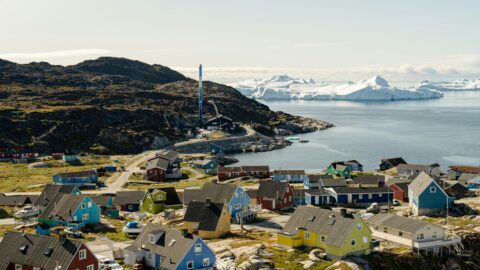
Since last weekend, however, a new topic has dominated the news: the demand for US control over Greenland.
What happened?
The US President has repeatedly emphasized that the USA must possess the Arctic island because the national security of the USA is at risk. The argument is objectively difficult to understand because the expansion of the military presence on Greenland by the USA or NATO would also work without possession. The UK, Norway and the six EU countries Germany, France, the Netherlands, Denmark, Sweden and Finland have underlined this by sending military personnel to Greenland.
The US President has responded with a threat to increase tariffs on goods imports from these countries by an additional 10 percent if they do not agree to the purchase from Greenland. From June 1, the tariffs are to be raised to 25 percent if no agreement has been given by then.
What does that mean?
In principle, there are two scenarios. The starting point is that the US government uses the means of intimidation. The two scenarios differ in terms of how the European Union reacts.
Can Europe take a coordinated approach?
In any case, the issue of Greenland is likely to be a key topic at this week’s World Economic Forum. There will be numerous diplomatic talks with the US President around the meeting in Davos. If no agreement is reached here, the EU special summit next Thursday would be the first test for the EU. After all, “only” six EU countries are affected by the threatened tariffs. If the EU succeeds in jointly announcing further steps, this would be a signal of strength.
As a soft measure, the tariffs already negotiated between the USA and the EU may not be adopted by the EU Parliament for the time being. It is also possible that the package prepared last year to tax goods imports from the USA will be activated. This would affect imports to the tune of 93 billion euros.
The activation of the Anti-Coercion Instrument (ACI) would be an escalation level above this. This instrument is intended to protect EU member states from economic coercion by third countries. The range of measures intended to act as a deterrent is diverse: US market access could be restricted (e.g. through higher tariffs and import restrictions), companies’ access to the services market or to investment opportunities could be limited, access to public tenders could be excluded or other administrative requirements could be imposed.
If the threat picture is credible, the US president could relent in a favorable scenario – as in the case of China last year. The fact that even politicians in his own party reject the unorthodox approach also speaks in favor of the US president giving in. The counter-pressure could become too strong.
What impact will the Greenland dispute have?
The EU states may also choose a more pragmatic approach due to disagreement and try to appease the US, which is likely to play into the hands of the US in the dispute over Greenland. If the dispute escalates further and a trade war between the US and the EU threatens, this would be negative for the markets.
Regardless of what happens next, some of the effects of the US government’s geopolitical course are already becoming clear:
- The transatlantic alliance and the relationship between the EU and the US is suffering.
- The NATO defense alliance is also suffering, as the US is pressuring Denmark to give up the island of Greenland. Both countries are NATO members.
- The rules-based, Western-style world order is visibly eroding. Territorial integrity is being respected less and less by world powers (USA, Russia).
- The incentive for all countries to invest in defense continues to increase.
- Because not all EU countries are subject to tariffs, the unity of the EU is also burdened.
Conclusion
In recent years, the impact of negative geopolitical developments on the markets has been overestimated. This could also be the case this time. However, the following applies:
▶️ A trade war between the US and the EU would be clearly negative for both economies.
▶️ The US approach is eroding the attractiveness of US assets – negatively for the US dollar.
▶️ Alternative and relatively safe havens such as gold are rising in value.
▶️ The country risk in Europe could increase if the dispute escalates.
The emerging new world order, which could be described as the “division of the world into spheres of interest”, entails one thing above all: higher costs and more uncertainty.
Nevertheless, as was the case last year, geopolitics is unlikely to play a dominant role for the markets in the most likely scenario. Global economic growth is close to trend, corporate profits are rising strongly and liquidity remains abundant. This is supporting the equity markets and keeping credit risk premiums low.
Please note: investing in securities involves risks as well as opportunities.
Legal disclaimer
This document is an advertisement. Unless indicated otherwise, source: Erste Asset Management GmbH. The language of communication of the sales offices is German and the languages of communication of the Management Company also include English.
The prospectus for UCITS funds (including any amendments) is prepared and published in accordance with the provisions of the InvFG 2011 as amended. Information for Investors pursuant to § 21 AIFMG is prepared for the alternative investment funds (AIF) administered by Erste Asset Management GmbH pursuant to the provisions of the AIFMG in conjunction with the InvFG 2011.
The currently valid versions of the prospectus, the Information for Investors pursuant to § 21 AIFMG, and the key information document can be found on the website www.erste-am.com under “Mandatory publications” and can be obtained free of charge by interested investors at the offices of the Management Company and at the offices of the depositary bank. The exact date of the most recent publication of the prospectus, the languages in which the fund prospectus or the Information for Investors pursuant to Art 21 AIFMG and the key information document are available, and any other locations where the documents can be obtained are indicated on the website www.erste-am.com. A summary of the investor rights is available in German and English on the website www.erste-am.com/investor-rights and can also be obtained from the Management Company.
The Management Company can decide to suspend the provisions it has taken for the sale of unit certificates in other countries in accordance with the regulatory requirements.
Note: You are about to purchase a product that may be difficult to understand. We recommend that you read the indicated fund documents before making an investment decision. In addition to the locations listed above, you can obtain these documents free of charge at the offices of the referring Sparkassen bank and the offices of Erste Bank der oesterreichischen Sparkassen AG. You can also access these documents electronically at www.erste-am.com.
Our analyses and conclusions are general in nature and do not take into account the individual characteristics of our investors in terms of earnings, taxation, experience and knowledge, investment objective, financial position, capacity for loss, and risk tolerance. Past performance is not a reliable indicator of the future performance of a fund.
Please note: Investments in securities entail risks in addition to the opportunities presented here. The value of units and their earnings can rise and fall. Changes in exchange rates can also have a positive or negative effect on the value of an investment. For this reason, you may receive less than your originally invested amount when you redeem your units. Persons who are interested in purchasing units in investment funds are advised to read the current fund prospectus(es) and the Information for Investors pursuant to § 21 AIFMG, especially the risk notices they contain, before making an investment decision. If the fund currency is different than the investor’s home currency, changes in the relevant exchange rate can positively or negatively influence the value of the investment and the amount of the costs associated with the fund in the home currency.
We are not permitted to directly or indirectly offer, sell, transfer, or deliver this financial product to natural or legal persons whose place of residence or domicile is located in a country where this is legally prohibited. In this case, we may not provide any product information, either.
Please consult the corresponding information in the fund prospectus and the Information for Investors pursuant to § 21 AIFMG for restrictions on the sale of the fund to American or Russian citizens.
It is expressly noted that this communication does not provide any investment recommendations, but only expresses our current market assessment. Thus, this communication is not a substitute for investment advice.
This document does not represent a sales activity of the Management Company and therefore may not be construed as an offer for the purchase or sale of financial or investment instruments.
Erste Asset Management GmbH is affiliated with the Erste Bank and austrian Sparkassen banks.
Please also read the “Information about us and our securities services” published by your bank.
More on the topic
Section 899: How Trump’s tax plans could affect international investors
With the ‘One Big Beautiful Bill Act’, US President Donald Trump wants to push through extensive tax cuts. Section 899, among others, is viewed critically. The passage could primarily affect foreign investors in the US and thus also weaken the US capital market.