
Articles about “Fed”
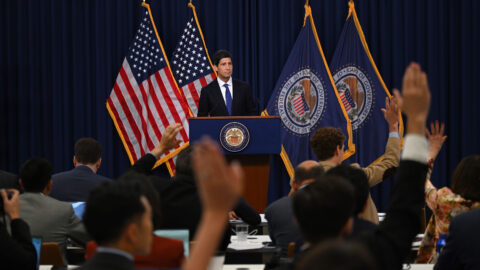
Weekly Winzer: Monetary and fiscal policy are out of step with the economic cycle
The US Federal Reserve (Fed) has raised its key interest rate by 25 basis points in response to persistently high inflation. But it is not only in the US that the outlook points to higher interest rates. Read our latest post on our Investment Blog to find out why central banks are tightening monetary policy and what “higher for longer” means for the economy and financial markets.

Weekly Winzer: Fed Signals Rate Cut – What Jerome Powell’s Words Mean for Markets
The U.S. Federal Reserve is signaling a possible rate cut in September. What’s behind Powell’s message—and what does it mean for markets and investors?

Rising inflation expectations and yields: a risk for market sentiment?
Two developments on the stock markets have stood out since the beginning of the year: rising inflation expectations and significant increases in government bond yields. Could market sentiment soon turn frosty in view of this?
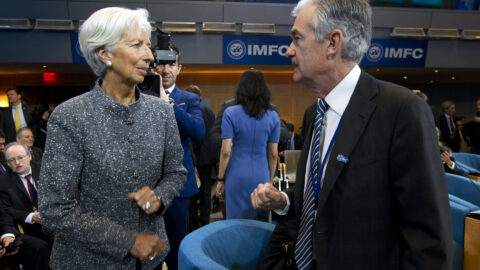
Interest rate cuts at the door
After the rapid and sharp interest rate increases in 2022 and 2023, the pendulum is now swinging in the opposite direction. After the European Central Bank (ECB), the US Federal Reserve will cut key interest rates for the first time this Wednesday, thus initiating a new cycle of interest rate cuts. What does all this mean for the economy and what conclusions can be drawn from it for investments?

Soft landing beats political uncertainty
With the surprising fall in inflation in the US, the scenario of a “soft landing” has become more likely. Meanwhile, the shocking attempted assassination of US presidential candidate Donald Trump at the weekend will likely have an impact on the current election campaign.

Market commentary: What will the second half of 2024 bring?
The second half of 2024 has already kicked off on the financial markets – but what can investors expect from it? After expectations of interest rate cuts in the US were pushed back further and further in the first half of the year, the scope for the US Federal Reserve could increase again in the remainder of the year. The main focus is likely to be on upcoming political decisions – which could also lead to greater fluctuations.

Signs of a slowdown: more scope for central banks?
Economic and political uncertainty is increasing. Nevertheless, inflation is falling in the USA and the eurozone. This increases the scope for central banks to react to a slowdown in economic growth by lowering key interest rates.
ECB interest rate policy: First rate cut, and then?
The European Central Bank is likely to cut its key interest rate tomorrow for the first time since the interest rate turnaround in 2022. But what comes next? Will the first cut herald a series of interest rate cuts or will the monetary guardians remain cautious? Chief economist Gerhard Winzer takes a look at the ECB’s possible future interest rate policy.

Favorable indicators: Soft landing on approach?
More and more indicators are pointing to good global growth. Even regions and sectors that had recently weakened are likely to return to growth. The soft landing after the sharp rise in inflation and the turnaround in interest rates could succeed. The decline in inflation is pausing at the same time, as yesterday’s US inflation data shows.
US interest rates: What are we to expect in the coming months?
As the latest data shows, the US economy continues to grow strongly – despite the significant interest rate hikes in the past two years. What impact will this have on the Federal Reserve’s future interest rate policy and when could the first rate cuts follow?

Inflation, interest rates, markets: 10 topics for 2024
After the price rally at the end of last year, the markets started 2024 with price losses. The ongoing positive correlation between bonds and equities is striking. Both asset classes have fallen equally recently, which makes diversification in a portfolio more difficult. But the year has only just begun. We therefore take a look at 10 key topics for 2024 that could be helpful when putting together a portfolio.

Increasing optimism for a “soft” economic landing
While equities have recently risen, yields on the bond market have weakened. The markets are being supported by increasing hopes of a “soft” landing for the economy. What are the chances of this scenario?

Phillips curve: Is there a risk of structurally higher inflation?
Inflation rose sharply in 2021 due to several supply shocks. Although there is a clear downward trend. However, the supply shocks could also have a structural effect on inflation. A look at the Phillips curve model can shed light on this.

What are the lasting results of the central bank meeting in Jackson Hole?
At the annual meeting of central bankers in Jackson Hole Federal Reserve Chair, Jerome Powell, summed up the uncertain environment as “navigating by the stars in a cloudy sky”. This relates, among other things, to the uncertainty about the level of the neutral interest rate, the lagged effect of key-lending rate hikes on economic growth and inflation, and the drivers of inflation.

How high do key interest rates still climb?
Both the European Central Bank and the Federal Reserve in the USA raised the key interest rate by 25 basis points last week. However, both central banks signalled that the end of the cycle is near – or may even have already been reached after the recent rate hikes.

Strong first half of the year: What`s next for the stock markets?
The stock markets look back on a strong first half of the year. In addition to the already familiar factors of inflation and key interest rates, the trend topic of artificial intelligence (AI) came into focus. In this interview, fund manager Tamás Menyhárt looks back on the past six months and tells us what has to happen for 2023 to end as happily as the first half of the year did.

Recession, inflation, key interest rates: Economic outlook for the second half of the year
The feared recession has so far failed to materialise and inflation is also falling. Nevertheless, the risks remain on the downside. What could be in store for the markets in the second half of the year?

Fight against inflation: Monetary policy remains restrictive
Central banks remain on a restrictive course and hold out the prospect of further key interest rate hikes. Although there are some signs of a further decline in inflation, it is falling more slowly than expected. You can read where the journey could lead in the blog post.
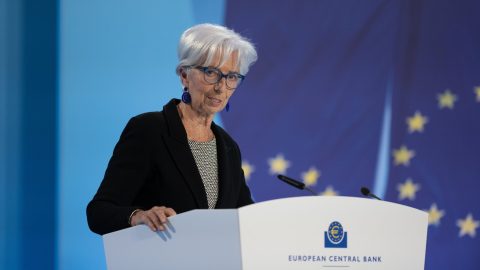
Interest rate decisions in focus: what will the central banks do?
This week, the markets are eagerly awaiting the upcoming interest rate decisions. The Fed in the USA will make the first move today, Wednesday. For the first time in the current cycle, no increase in the key interest rate is expected. For tomorrow’s interest rate decision by the ECB, on the other hand, the market expects a further rate hike of 25 basis points.

US labour market: strong employment growth
Surprisingly good figures came from the US labor market in the previous week. Despite the strong growth in employment, however, economic growth has recently been rather meager. Recession risks also remain at an uncomfortably high level.
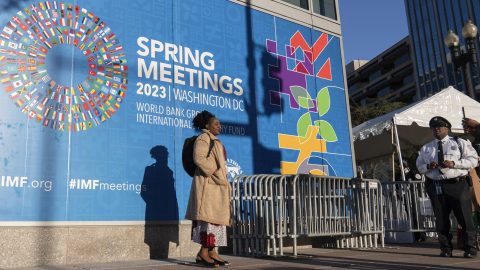
International Monetary Fund/World Bank Group Spring Meetings 2023
The annual Spring Meetings of the International Monetary Fund and the World Bank bring together high-ranking representatives from business, the financial sector and politics. Fund manager
Tolgahan Memişoğlu reports on his impressions.

Banking problems support share prices
Since the banking problems in the US emerged in March, share prices have risen and expectations for future key interest rates have fallen significantly. However, inflation dynamics remain the most important factor for the markets, but unfortunately also one that is difficult to assess.

Game Changer
The current crisis of confidence continues to dominate market activity and has significantly increased uncertainty about the future development of economic indicators. Read more in the current market commentary by Chief Economist Gerhard Winzer.
Risk inflation persistence
Inflation, which remains too high, continues to be the dominant macroeconomic issue. Hopes that inflation will fall as quickly as it has risen have been dampened, as Chief Economist Gerhard Winzer explains in his market commentary.

Calibration
Central banks and markets are in a calibration phase. The question is how many key rate hikes are needed to be able to confidently expect inflation to fall in the direction of 2%. Particular attention is therefore once again being paid to the US inflation data, which will be published today, Tuesday.

Positive January on the markets
On the stock markets, the first month of the year was positive. The recent softer tones of the central banks give rise to hopes that interest rate hikes are slowly coming to an end. Read more about the current market assessment in our Investment Update.
Party Crashers
Improved growth prospects for China and Europe and hopes of a sustained decline in inflation have supported the markets since the beginning of the year. However, sharp central bank rhetoric and weak growth indicators in the USA could prove to be spoilers.

Stock Exchanges Carefully Optimistic for 2023 After Year of Losses
The turn of the year marked the end of a difficult and lossy year on the stock markets. After two years of Corona pandemic, 2022 was dominated by Russia’s invasion of Ukraine, with many stock exchanges suffering double-digit losses.
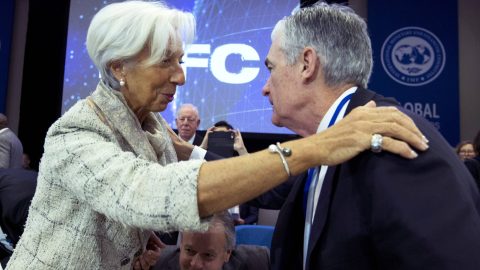
Thrilling decisions before Christmas
This week, the financial markets are once again in for an exciting ride: The European Central Bank and the US Federal Reserve will decide to what extent interest rates will be raised again.

One month is not yet a trend
The rise in inflation in the USA was recently lower than expected, which led to a significantly brighter mood on the markets. However, a favourable inflation report is not yet a trend, as Chief Economist Gerhard Winzer emphasises.

Reduction in the pace of key interest rate increases
More and more central banks are signalling a reduction in the pace at which they are raising key interest rates. However, as Chief Economist Gerhard Winzer explains, this does not necessarily mean that central banks are softening their focus on fighting inflation. Rather, a pause in the rate hike cycle would require a change in inflation dynamics.
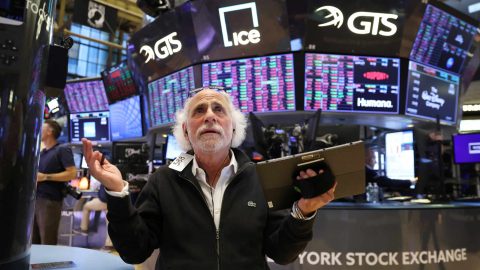
Is now the right time to invest in equities?
Global equity markets have been under pressure for several months. The short recovery phase in the summer did not last long. What are the reasons for the bear market and when could be a good time to enter?

Emerging Markets Credit Conference – a sentiment snapshot among investors
The mood among investors in the bond sector in emerging markets is mixed, as this year’s Emerging Markets Credit Conference held by US investment bank J.P. Morgan showed. Thomas Oposich, Senior Fund Manager, reports on the conference and his impressions.

Fed remains on course
The latest US labor market data suggest that the Fed will remain on its course of more restrictive monetary policy. “As long as job growth remains strong and unemployment and participation rates remain low, the Fed will maintain its basic restrictive stance”, writes Head Economist Gerhard Winzer in his market commentary.

Good nerves and stamina required
The mood on the capital markets has deteriorated further over the last months. In a comprehensive market update, Gerald Stadlbauer, Head of Discretionary Portfolio Management at Erste Asset Management, explains why stamina is needed in the current situation.

For some time valid: Elevated recession risks and restrictive monetary policy
The central banks want to achieve their long-term inflation target of 2%. In order to achieve this goal, they have raised key interest rates and are implementing a restrictive monetary policy. The higher key interest rates will weaken economic growth and also the labour market. Whether this can be achieved without a recession or whether there will be a “soft landing” is currently the subject of heated debate.

Increasing growth risks
Inflation, the war in Ukraine and monetary policy are driving the markets and stoking fears of an impending recession. Initial economic indicators also point to gloomy growth prospects.

Way Out Recession?
The prices of risk asset classes are subject to downward pressure. Is an inflation spiral likely to occur? Will the increase in key interest rates trigger a recession?

Hawkish and bearish
Expectations of key interest rate hikes have been the most important driving factor for the capital markets since the beginning of the year. The Federal Reserve Chairman reiterated the Fed’s hawkish and bearish stance. How will the financial environment change in the second half of the year?

Tightening of financial condition
The global economy has been confronted with two stagflationary events in the last two years: the Covid-19 pandemic and the war in Ukraine. What factors are influencing the uncertainty in the markets? Erste Asset Management Chief Economist Winzer analyzes which scenarios are conceivable in the future.
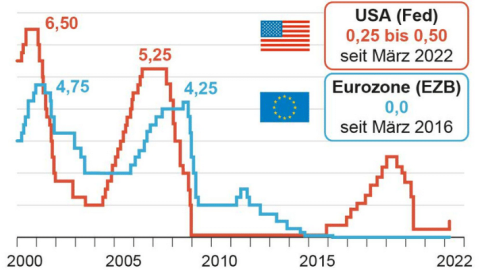
How far will the interest rates be rising, Mr. Zemanek?
With the first interest rate hike in five years, the US Federal Reserve has ushered in a new era. Is the period of cheap money now over? When will the European Central Bank follow suit?
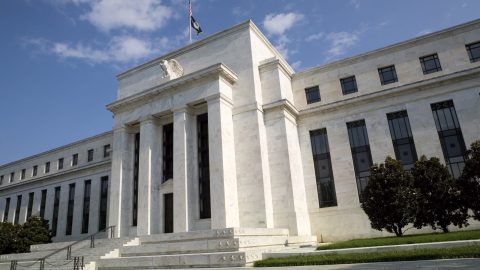
The hour of the hawks
In the US, interest rate hikes to a level of 3% by the end of 2023 have become likely. When will the European Central Bank follow? Erste Asset Management Chief Economist Gerhard Winzer analyses the interest rate policies of the central banks.
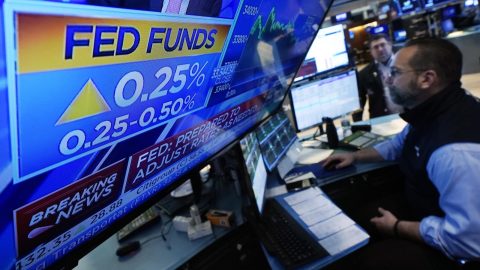
Investment update: Some stabilization despite ongoing bombardment
Although volatility and uncertainty remain particularly high in the capital markets, there has been some stabilization and, most recently, a slight recovery in the equity markets since last week.

Investment Update: First steps to interest rate hikes and volatility in the stock markets
Stocks posted significant gains on Wednesday after U.S. Federal Reserve Chairman Jerome Powell signaled that the central bank would begin raising interest rates this month. Stock markets interpreted this as a positive signal in the sense that the threat to growth posed by the war in Ukraine did not justify a change of course in monetary policy at the moment.

Stock markets off to a bumpy start in 2022
Inflation has risen sharply and the first interest rate hikes are expected from the Federal Reserve in the USA. What impact could this have on stocks?

10 theses for 2022
Waves of infections will continue to influence economic activity and the markets. What will happen in China, what are the inflation risks and will it be volatile? Our chief economist Gerhard Winzer has drawn up 10 theses for the year 2022.
Pandemic year three: what are the challenges ahead?
We are now into the third year of the pandemic. Since the spring 2020 collapse, economic activity and markets have shown exceptional resilience. This is not to be taken for granted. After all, the list of potential negative influences (“challenges”) is long.

Investors bought the dip. Again.
Just when it looked like a quiet end to the year on the stock markets, the emergence of Omicron shook investor confidence and led to a sell-off lasting several days. How has market optimism evolved since then? Our stock expert Tamás Menyhárt gives an outlook.

Inflation at its peak – what are the reasons?
At 5.2% y/y, consumer price inflation for the OECD region reached the highest value in October since 1997. Has inflation peaked, or are we at the outset of a sustained period of high inflation?
Inflationary Boom – A thin red line towards welfare
The global view on inflation has turned completely since Spring 2020. While low inflation has been an issue between the Great Financial Crisis and the start of the pandemic, multi-year-highs in inflation were reached in Spring 2021. What will happen next?